Morocco's Football Ascendancy Sparks Debate Over Fairness in Africa
Morocco's rise as Africa's football powerhouse has led to questions about hosting rights and institutional fairness within CAF.
By Madison Darwish ·
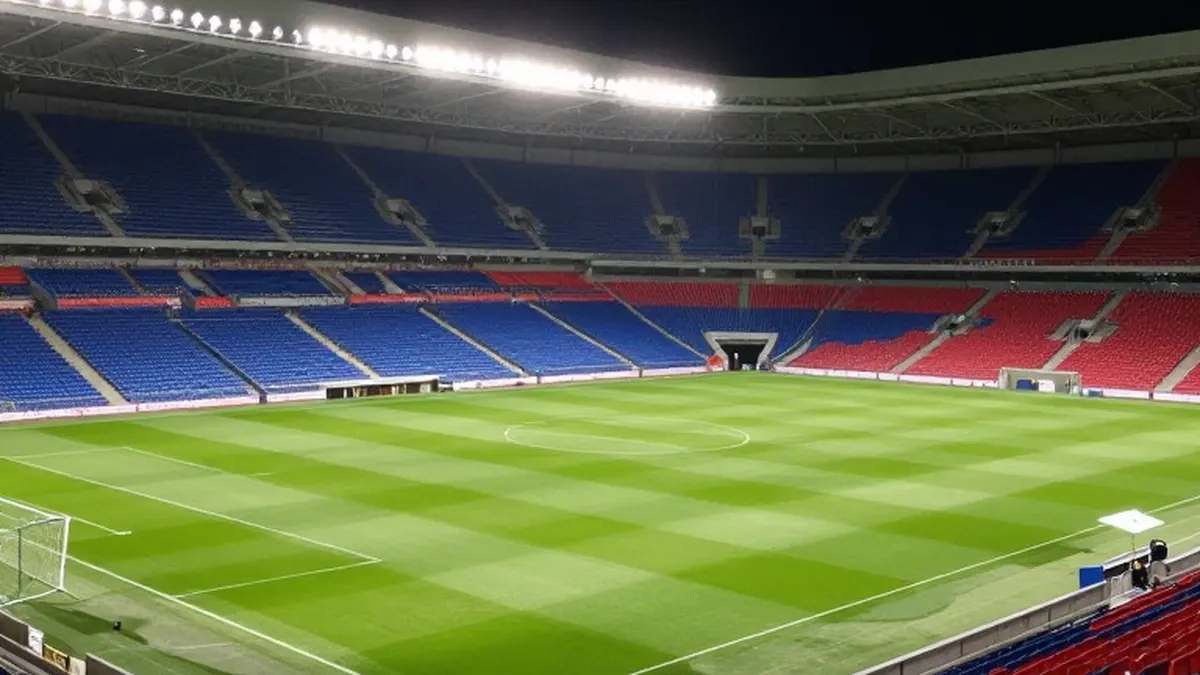
Morocco has emerged as the dominant force in African football, a status that is increasingly difficult to overlook for its continental rivals. The nation's rise is marked by significant milestones, including a historic run to the semifinals of the 2022 FIFA World Cup and successful bids to host major continental events. Morocco is set to cohost the 2030 World Cup and will welcome the 77th FIFA Congress in Rabat in March 2027. Additionally, the country hosted the last two editions of the Confederation of African Football Awards, and three of its players are currently on the shortlist for the 2026 men's Player of the Year award.
While some view Morocco's success as the result of strategic planning and sustained investment, others question whether the concentration of hosting opportunities in one country creates an imbalance within the continent. Kamilla Swart, a professor at Hamad Bin Khalifa University in Qatar, attributes Morocco's position to a long-term strategy rather than sudden luck. She points to the inauguration of the Mohammed VI Football Academy in 2010 as evidence of a deliberate effort to build expertise over time.
Swart notes that Morocco's previous unsuccessful World Cup bids allowed the country to identify weaknesses and build necessary infrastructure. However, she acknowledges that the repeated selection of Morocco for CAF events has led to skepticism about whether other African nations are receiving adequate opportunities. She expressed that while the choice is understandable given Morocco's capabilities, there is a valid concern that the rest of the continent may not be benefiting proportionally from these institutional shifts.
Tensions were heightened by the controversy surrounding the 2025 Africa Cup of Nations final between Senegal and Morocco. Although Senegal initially won the match 1-0 after extra time, a late penalty award to Morocco led to a protest where Senegalese players left the pitch. CAF's Appeal Board later declared Senegal forfeited the final under specific regulations and awarded Morocco a 3-0 victory. This decision was eventually overturned by the Court of Arbitration for Sport, which reinstated Senegal as champions in a ruling issued this week.
Khayran Noor, a Kenyan sport lawyer, emphasized the need to distinguish between Morocco's genuine progress and CAF's responsibility to maintain transparent decision-making processes. Noor argued that the current process for awarding hosting rights, which involves an assessment of facilities by the CAF Executive Committee, would benefit from greater transparency. She suggested implementing published evaluation criteria, independent technical assessments, and clearer explanations for final decisions to avoid perceptions of preferential treatment.
Noor also warned against allowing financial strength to translate into disproportionate political influence, noting that Article 17 of the CAF Statutes grants each member association one vote regardless of its financial capacity. She stated that while Morocco deserves to benefit from its investments, other federations must have meaningful opportunities to demonstrate their own capabilities to build institutional confidence.
The commercial aspect of hosting is also a factor in Morocco's prominence. Gerard Akindes, a sports management scholar, noted that CAF relies heavily on broadcasting and sponsorship revenues, making the quality of competitions critical for financial sustainability. He suggested that the concentration of events in Morocco is partly due to uneven infrastructure and broadcasting standards elsewhere in Africa. Akindes observed that Morocco has strengthened its relationship with CAF by stepping in to host events when other countries were unable or unwilling to do so.
The debate continues over the 2026 CAF Awards shortlist, which features three Moroccan players, including the reigning winner Achraf Hakimi. The ceremony is scheduled to return to Lagos, Nigeria, on December 2, marking the country's first time hosting the event since 2014. However, the absence of prominent Nigerian players from the shortlist has drawn criticism. Adeniyi Adebanjo, a CAF-accredited journalist, rejected the idea that the rescheduling was a strategic move to influence voting, calling such theories a conspiracy that does not account for the broader dissatisfaction following the 2025 AFCON final.
Victor Damilola Ademola, a Nigerian exercise physiologist, believes Morocco's success reflects systematic player development and effective integration of diaspora talent. He highlighted the country's investment in training facilities and sports science infrastructure, such as the Mohammed VI Football Complex in Rabat. While cautioning against interpreting every achievement as evidence of favoritism, Ademola argued that Morocco's progress should serve as a benchmark for other African nations to examine their own administrative and developmental strategies.
Ultimately, experts agree that while scrutiny is warranted when concerns about fairness repeatedly emerge, these controversies should not be used to excuse shortcomings in other African football administrations. The balance between recognizing Morocco's merit and ensuring equitable opportunities across the continent remains a central issue for African football governance.