Report reveals harsh treatment of asylum seekers on UK deportation flights
An HMIP report details the use of force and intimidating behavior against asylum seekers during UK deportation flights to France and other countries.
By Alina Marshall ·
A new inspection report has revealed that asylum seekers deported under the United Kingdom’s controversial one in, one out scheme were subjected to unnecessary and intimidating force. The findings detail instances where vulnerable individuals, including one person in restraints, were carried onto flights. This scheme operated on the principle that one asylum seeker arriving in the UK by small boat would be returned to France in exchange for another individual in northern France being brought legally to the UK to claim asylum.
Data obtained through freedom of information requests indicates that 26 use-of-force incidents were recorded on 26 charter flights between July and September 2026. These flights primarily went to France, with others heading to Albania, Lithuania, and Romania. While not every deportation flight involved an incident, the volume of recorded force highlights ongoing concerns about the process. The Home Office’s own inspectorate reviewed body-worn footage from previous flights and identified additional incidents that had not been formally documented by escort staff.
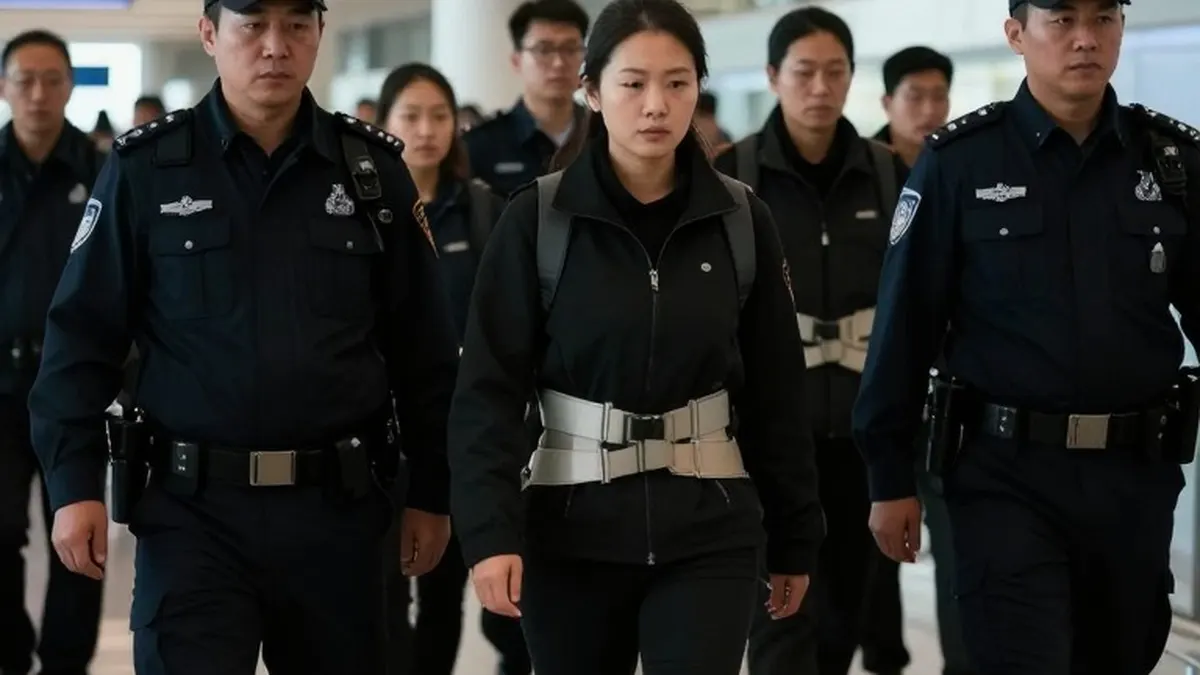
The report focused specifically on a charter flight to France on September 4. Inspectors documented three distinct cases of force on that single journey. In one instance, a man described as fragile and not eating consistently was removed from his cell. He had no history of active resistance and posed no threat. Despite this, staff in full protective gear, including helmets and riot shields, placed him in a waist restraint belt and leg restraints. The techniques used to carry him were deemed poorly applied and disproportionate, and he remained slumped and non-communicative during the flight.
Two other men on the same flight also experienced significant restraint. One man, who was on constant suicide watch, was carried out with a waist restraint belt along with leg and ankle restraints. The third man was placed in a waist restraint belt after stating he would not comply with his removal. These specific examples illustrate the physical measures taken to ensure the deportations proceeded, often without active resistance from the individuals involved.
Medical professionals have long raised alarms about the condition of those returned to France. A report commissioned by a French regional health agency found signs consistent with recent physical and psychological violence among the returned asylum seekers. The study linked these conditions explicitly to the implementation of the France-British agreement. It noted that the consequences of prolonged detention in degrading conditions were evident in the patients seen by healthcare providers.
The Her Majesty’s Inspectorate of Prisons noted that while inspectors mostly observed caring and respectful interactions, the leadership of collection teams was not always active enough to address intimidating behavior. A body-worn camera that also served as an interpreting tool was found to be ineffective. Consequently, many asylum seekers were unable to access adequate interpretation services or legal representation. Inspectors also observed that individuals were referred to by numbers rather than names and were given bags to urinate into while being transported to the plane by van.
Although the scheme ended in October, reports indicate that removals continued to occur. Emma Ginn, director of the charity Medical Justice, stated that the findings were not surprising. She emphasized that the government’s treatment of vulnerable people during immigration enforcement has caused severe and avoidable harm. Ginn noted that independent clinicians found clinical evidence of torture in most of their clients detained under the scheme, describing the situation as a source of shame for the system.
The Home Office has been approached for comment regarding the specific findings in the report. The inspection highlights the complex and often difficult conditions faced by those caught in the crossfire of international immigration agreements. The combination of physical restraints, limited communication, and medical evidence of trauma paints a detailed picture of the deportation process under the one in, one out policy.