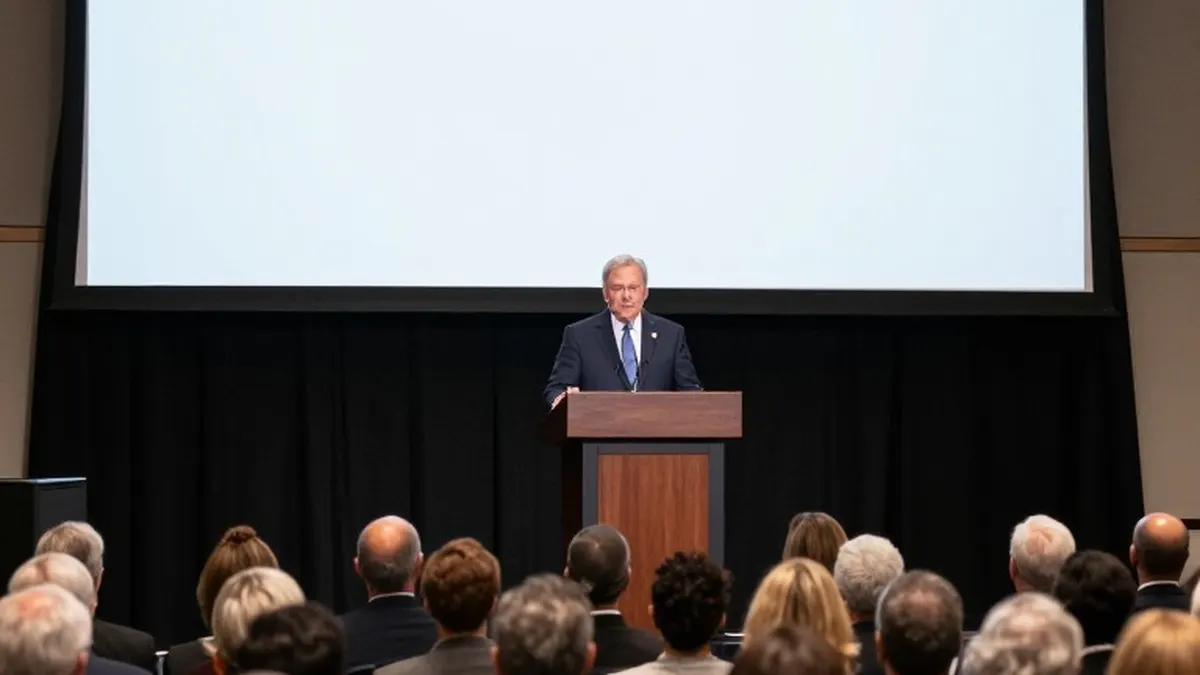
US Envoys Head to Berlin for Key Ukraine Peace Talks
Steve Witkoff and Jared Kushner are scheduled to meet with Ukrainian and European officials in Berlin to discuss security guarantees and economic reconstruction.
By Alina Marshall ·

US diplomatic representatives Steve Witkoff and Jared Kushner are expected to arrive in Berlin on November 19 to engage in high-level discussions with Ukrainian officials and European negotiators. The visit comes at a critical juncture in the ongoing diplomatic efforts to resolve the conflict in Ukraine. According to a US government official cited by Reuters, these meetings are designed to address several core issues that have been central to recent negotiations.
The agenda for the Berlin talks is focused on three primary objectives. First, the delegations intend to further elaborate on what the US describes as credible post-war security guarantees for Ukraine. Second, the discussions will aim to promote a broad economic reconstruction plan for the country. Third, the talks are expected to lay the groundwork for an upcoming round of multilateral negotiations involving all key parties.
The US delegation has been maintaining frequent contact with its counterparts in Ukraine and Europe. The official noted that conversations occur several times a day, with the shared goal of advancing proposals for a durable peace. This intensive communication reflects the urgency with which the US is approaching the diplomatic process in the lead-up to the Berlin summit.
The timing of the US envoys' visit is particularly significant as it coincides with a meeting of the Coalition of the Willing in Berlin on the same day. This alignment suggests a coordinated approach to leveraging multilateral support for Ukraine. The official emphasized that the Berlin meetings are part of a broader, coordinated diplomatic effort that also includes President Trump's engagements in China.
In a statement regarding the strategy, the US official said, "The Berlin meetings and President Trump's engagements in China are part of a coordinated diplomatic effort." This comment underscores the interconnected nature of global diplomatic activities currently underway to influence the trajectory of the war and the potential path toward a peace agreement.
Prior to this scheduled trip, Jared Kushner indicated on November 15 that several new ideas had emerged during the preparation for a new round of trilateral negotiations. He suggested that these developments could either lead to a significant breakthrough or evolve into fresh proposals for the parties involved. This statement signals that the diplomatic landscape is shifting, with new concepts being tested and refined.
Recent reports have highlighted the complexity of the negotiations. The New York Times reported that during talks in Abu Dhabi aimed at ending the war, Russia demanded that NATO withdraw its forces to the positions they occupied in 1997. This demand has introduced a new layer of difficulty to the discussions, as it touches on long-standing security architectures in Europe.
President Volodymyr Zelenskyy has warned about the dangers posed by Russia's desire to revise Europe's security architecture. His comments highlight the stakes involved in the current talks, where the future shape of European defense and security is being negotiated. The coming days in Berlin are likely to be pivotal in determining whether these diplomatic efforts can bridge the remaining gaps between the parties.
As the world continues to monitor these developments, the focus remains on the potential outcomes of the Berlin summit. The collaboration between US, Ukrainian, and European officials represents a concerted effort to find a sustainable solution to the conflict. The success of these talks may depend on the ability to translate the newly emerged ideas into concrete agreements that all parties can accept.