Iran Introduces Quiet Bread Quotas Amid Economic Pressure
Iran has quietly introduced bread purchase quotas in three provinces, drawing criticism from hard-line media and economists despite presidential defense.
By Madison Darwish ·
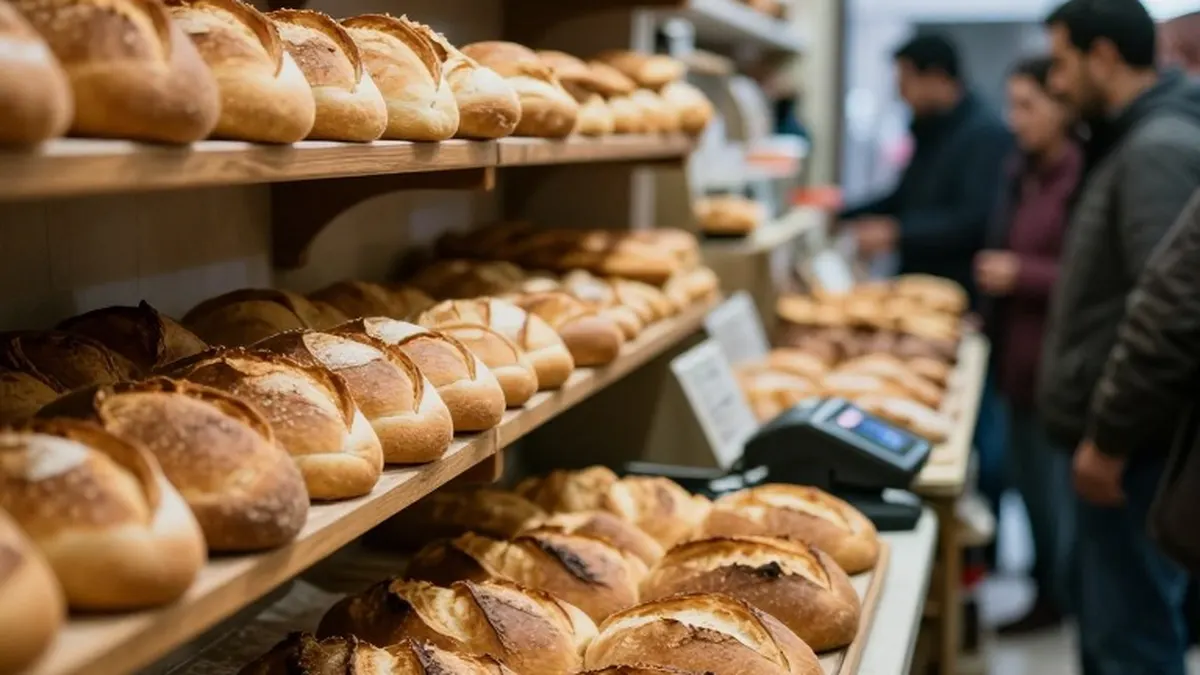
Iranian authorities have begun implementing limits on the amount of subsidized bread that households can purchase in at least three provinces. The new measure, which took effect without a formal public announcement, has triggered confusion and criticism from both economists and hard-line media outlets. Under the scheme, once a specific monthly quota is exhausted, consumers must pay a significantly higher price for additional bread.
The initiative, designated by the Interior Ministry as a bread purchase management system, was activated through card readers at bakeries in Markazi, Khuzestan, and Zanjan provinces. Local reports from November 18 indicated that neither bakers nor customers were briefed in advance about the change, leading to mixed reactions and conflicting official explanations regarding the scope and intent of the policy.
According to the plan, each individual is allotted approximately 8 kilograms of subsidized flour per month. This flour is priced at 23,000 rials per kilogram, a sum that equates to less than one US cent. Any consumption beyond this limit is charged at the free-market rate of 126,500 rials, or roughly five cents per kilogram. While these figures appear modest in dollar terms, they reflect the severe devaluation of the Iranian currency, where the US dollar trades at around 2.7 million rials on the open market.
The economic context is stark. The current monthly minimum wage in Iran is approximately 166 million rials, which translates to roughly 61 US dollars. This disparity highlights the financial strain on citizens, for whom the cost of basic staples represents a significant portion of their limited income. The lack of clarity in official communications has led to a debate in the media over whether the policy constitutes formal rationing or a more flexible management strategy.
Criticism of the move has been particularly sharp from within Iran's political establishment. Keyhan, a hard-line daily newspaper whose editor is appointed by the supreme leader, accused President Masud Pezeshkian's government on November 16 of a secret and suspicious implementation of bread rationing. The paper claimed that the sudden change had caused long lines and rushes at bakeries. The reformist daily Sharq also voiced concerns, describing the rollout as quiet and unannounced.
In defense of the policy, President Pezeshkian spoke on November 18, pointing to widespread abuse of cheap energy and staple goods. He cited examples such as repeated fuel purchases at petrol stations in a single day and cryptocurrency miners operating on subsidized power. He also mentioned specific cases of individuals purchasing up to 18 tons of subsidized bread per month, arguing that tighter controls were necessary to curb such excesses.
Ahmad Alavi, an Iranian economist based in Sweden, told RFE/RL's Radio Farda that the new curbs follow a familiar pattern of economic contraction. He noted that with oil and export revenues shrinking and recession making tax increases difficult, the government is turning to rationing. Alavi described a cycle where goods are initially rationed, the ration is subsequently cut, and consumers are pushed toward the free market.
Alavi argued that the resources freed up by these measures are primarily used to finance the establishment's priorities, including the war with the United States, regional proxies, and domestic security forces. He criticized the flat per-capita quota for ignoring the diverse needs of different households, a approach he said mirrors the failures of Soviet-style central planning. He warned that this method leads to inverse allocation, where those who do not need the subsidy receive it, while those who do are left out.
The economist emphasized that bread is a public good that should be accessible to all at a low price without discrimination. He suggested that the state is targeting the end of the supply chain because it is the easiest point to control in an economy with a large informal sector. However, he warned that the long-term costs would manifest as lost social capital, deeper poverty, and malnutrition, which would ultimately burden the state through increased health care expenses.
Alavi concluded that the current approach is efficient neither in its execution nor in saving money. He highlighted that the policy risks repeating the mistakes of previous cash handout programs that began in 2010. As Iran continues to navigate its economic challenges, the impact of these bread quotas on daily life and social stability remains a focal point of public and political discourse.