France shrinks as euro zone growth cools to 0.4%
Eurostat data released Friday shows the 21-nation bloc grew slower than expected, while Germany and Italy barely expanded.
By Alina Marshall ·
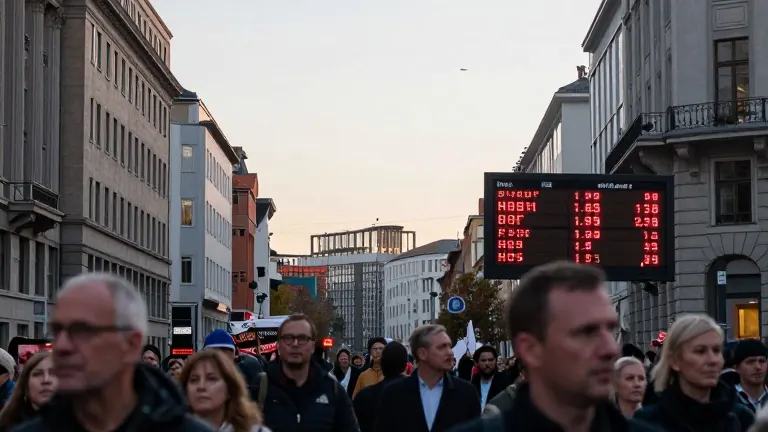
France's economy contracted by 0.1% in the third quarter, a decline that dragged down performance across the broader euro area. The statistics agency Eurostat reported on Friday that the 21-nation currency bloc expanded by 0.4% from July through September. This figure fell short of the 0.6% growth recorded in the previous quarter, when the region rebounded from a period of stagnation in early 2026.
Economists polled by Reuters had predicted a weaker result, forecasting only 0.2% growth for the third quarter. The final data beat that estimate, yet the pace of expansion remains modest. France, a major contributor to the bloc's output, faced specific headwinds. Rising borrowing costs weighed on the economy as investors expressed concern over political disagreements regarding the country's budget deficit and national debt.
Domestic pressures in France intensified in October. Nationwide unrest over the cost of life and other grievances spread across the country. These protests occasionally turned violent, leading to costly rioting that further strained the public sector. The economic slowdown in Paris contrasts with the performance of other major economies in the group.
Germany, the largest economy in the euro zone, grew by just 0.2% in the third quarter. Italy, the third-largest economy, saw no change in its output. In contrast, Spain expanded by 0.6%. The country has recently held mass protests over housing and living costs, which prompted a snap election scheduled for next month. Spain continues to outperform the regional average, supported by a healthy tourism sector, strong domestic demand, and a solid fiscal position.
Ireland reported growth of 5.5% for the period. However, analysts note that this headline number is often volatile. The figure is subject to revision because many multinationals are registered in Ireland but conduct their primary business elsewhere. The European Central Bank held interest rates steady on Thursday. The central bank stated that higher energy prices had not yet triggered secondary effects on the wider economy. It also indicated that downside risks to growth had increased.
Joe Nellis, head of economic research at MHA, described the euro area as showing unexpected resilience despite economic and geopolitical uncertainty. He warned that this stability might mask deep structural issues. These include weak productivity growth, low investment expenditure, and demographic pressures. Nellis noted that the outlook for 2027 is complicated by potential inflationary pressures. He said that unless the Middle East crisis resolves soon, energy and transportation costs will rise. This increase will pressure household finances at a time when consumer confidence is already weak.
Source: CNBC
More Business · Watch Your Wallet · Report a business · Got a Story?