Israeli forces seize equipment in Hebron during crackdown on illegal water drilling
Israeli forces in Hebron confiscated four trucks used for illegal water drilling on Monday night, marking a continued expansion of enforcement operations into Palestinian controlled areas.
By Madison Darwish ·
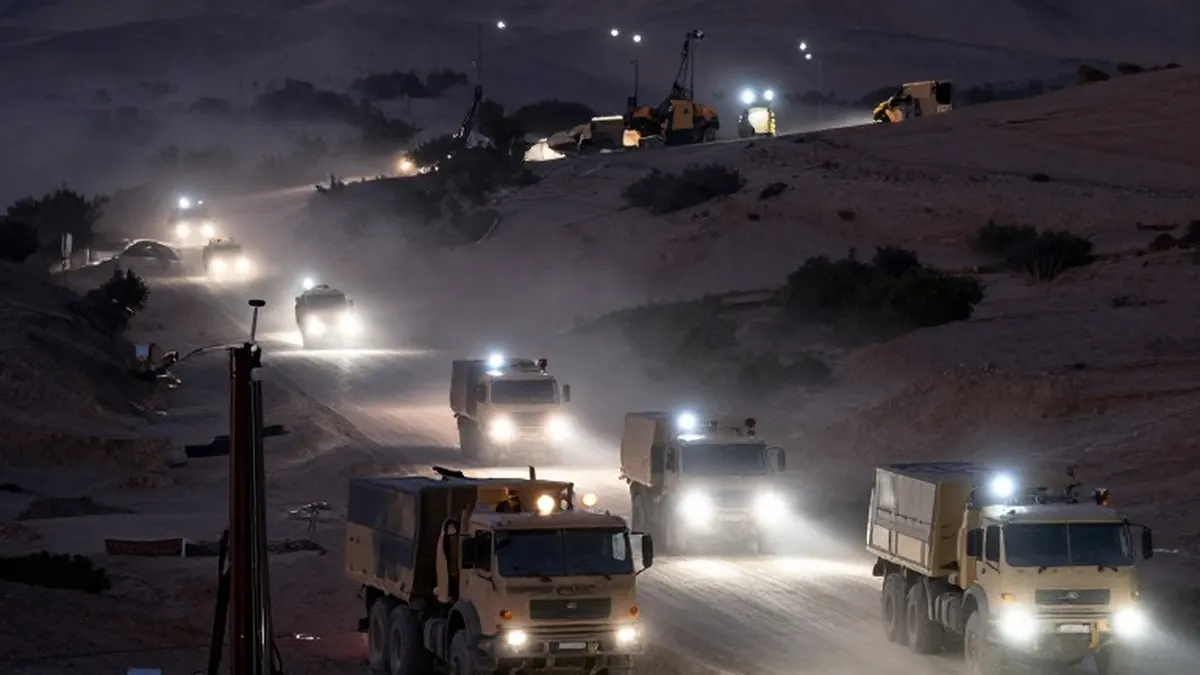
Israeli authorities conducted a targeted enforcement operation in the West Bank city of Hebron on Monday night, resulting in the confiscation of four vehicles used for unauthorized water extraction. The Civil Administration announced that the action took place in Area A of the city, a zone where the Palestinian Authority holds civilian and security jurisdiction under the Oslo Accords.
The operation was executed by officers from the Judea District Coordination and Liaison Office. They worked in close coordination with the Civil Administration's enforcement unit and troops from the IDF Judea Regional Brigade. Officials stated that the intervention followed specific intelligence indicating ongoing and unauthorized drilling activities at the site.
Upon arrival, Israeli personnel identified two trucks equipped with generators and two dedicated drilling trucks. All four vehicles were seized as part of the effort to halt the illegal operations. The Civil Administration emphasized that the action aligns with its mandate to enforce existing procedures and protect regional water resources.
This incident in Hebron is part of a broader series of enforcement actions across the West Bank. Just days earlier, on Thursday, Israeli forces halted illegal water pumping and drilling in the Palestinian village of Biddya. During that operation, authorities confiscated related equipment while targeting unauthorized construction and land seizures in various sectors under IDF regional brigade oversight.
The expansion of these enforcement activities into Areas A and B was approved by the Israeli security cabinet in February. The decision specifically aimed to address water-related violations, environmental hazards, and damage to archaeological sites. Prior to this approval, such operations were more commonly associated with Area C, where Israel retains full civilian and security control.
Water management remains a persistent source of tension between Israel and the Palestinian Authority. In 2017, both parties agreed to reactivate the Joint Water Committee after a seven year hiatus, establishing a framework for cooperation on infrastructure projects. However, disagreements over resource allocation and infrastructure development continue to shape the political landscape.
In September 2025, the Coordinator of Government Activities in the Territories, known as COGAT, informed Reuters that Israel supplies the Palestinian Authority with 90 million cubic meters of water annually. Officials attributed ongoing shortages to water theft by Palestinian entities, a claim that has been a central point of debate in bilateral discussions.
Palestinian officials and various human rights organizations offer a different perspective. They argue that water shortages in Palestinian communities are largely caused by restrictions on developing new infrastructure. Additionally, they frequently cite attacks by extremist Israeli settlers on water facilities as a significant contributing factor to the crisis.
The IDF has previously acknowledged receiving reports of Israeli civilians deliberately damaging water infrastructure. Military officials stated that they are actively working to prevent further incidents of such damage. The recent operations in Hebron and Biddya underscore the continued focus on balancing enforcement of regulations with the management of these sensitive resources.
The Civil Administration indicated that it would continue its efforts to monitor and prevent illegal drilling throughout the West Bank. These actions are designed to ensure compliance with existing legal procedures while safeguarding the water resources available in the region for both parties.