Jimmy Stewart Admitted Fearing Audience Rejection Before Filming Capra Classic
A new biography by Sam Wasson reveals the deep anxiety the actor felt about returning to Hollywood after World War II service.
By Alina Marshall ·
Actor Jimmy Stewart confessed to friends in 1946 that he was "scared as hell" about returning to movie screens after his World War II service. The admission appears in "Frank Capra: A Life," a new biography by Hollywood historian Sam Wasson published by Harper. Stewart feared audiences had moved on from him during his five-year absence.
Stewart's contract with Liberty Studios included a specific clause regarding his wartime experience. The document stated that the corporation would not mention his service as an officer in the U.S. Army in any advertising or publicity. Despite this protection, Stewart struggled with the psychological impact of his military service. He told one journalist in 1946 that it had gotten pretty rough overseas at times. He also noted that he had rolled two thousand hours in planes and doubted he would ever fly again.
Director Frank Capra shared Stewart's nervousness, though the director kept his fears private. Capra described the writing process for "It's a Wonderful Life" as the most chaotic of his career. He lacked his usual writing partners, including Robert Riskin and Jo Swerling, who were unavailable to help polish the script. Capra characterized this professional isolation as unprecedented in his history.
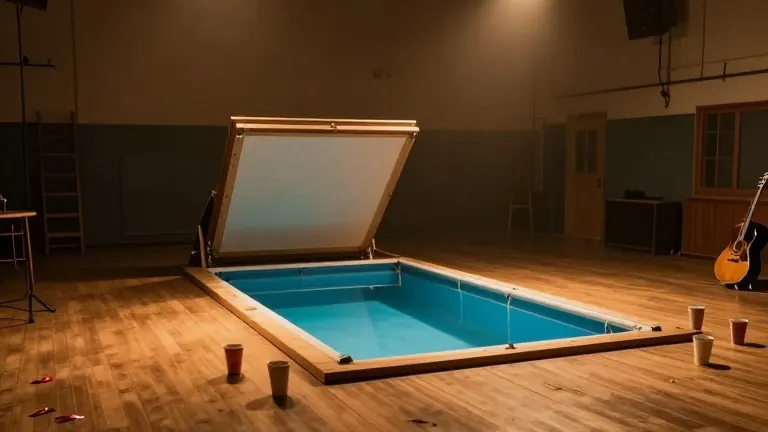
Filming began on April 15, 1946, at Beverly Hills High School. The first scene involved a party where George and Mary fall into a swimming pool beneath the gymnasium floor. Capra chose to shoot the production in sequence, a method that allowed for naturalistic performances. He cast Donna Reed as Mary Hatch after seeing her in John Ford's 1945 film "They Were Expendable." Capra believed Reed's fresh appearance was essential for the character.
During the first day of shooting, Capra intentionally threw Stewart off his guard. The director asked Stewart if he would walk Reed home, a question that was not in the script or the final cut. Stewart, meeting Reed for the first time, responded with a stuttering, "N, n, no." Capra called cut after this single take, noting that Stewart had not acted the scene but simply lived it. The interaction set the tone for the character's development in the film.
Source: KCNC-TV