Endurance swimmer crosses Strait of Hormuz to spotlight war damage to marine life
British swimmer Lewis Pugh completed a 15-kilometer swim in the conflict zone to draw attention to the environmental threats facing dolphins and coral reefs.
By Madison Darwish ·
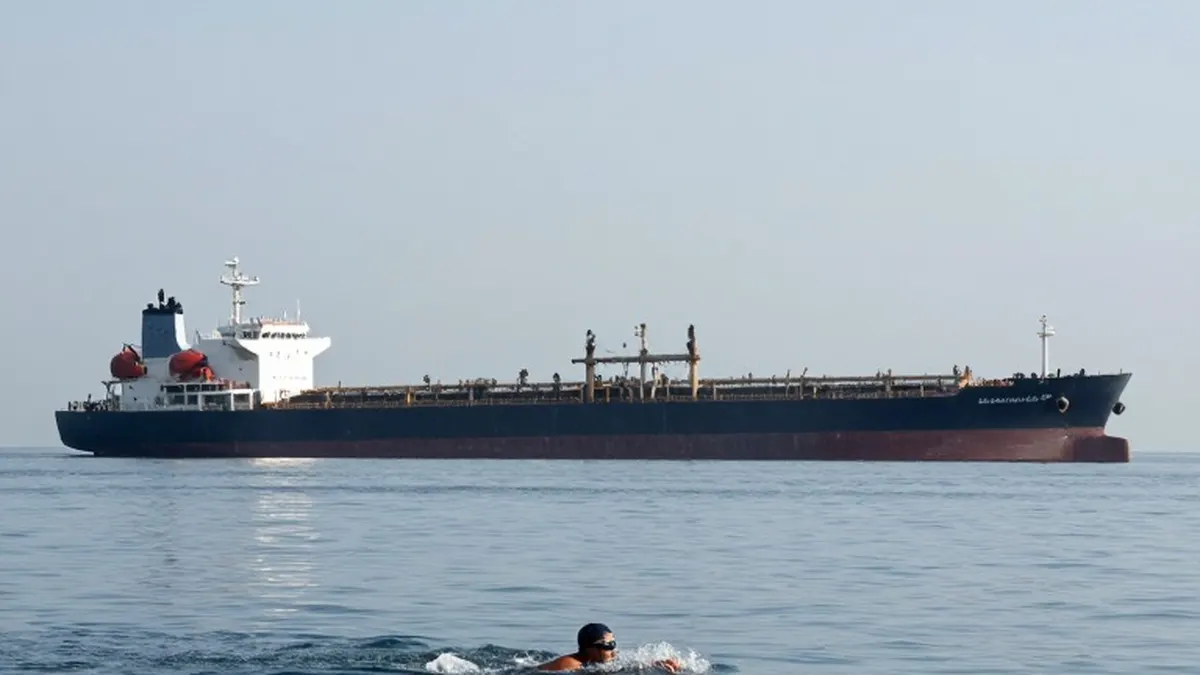
British endurance swimmer Lewis Pugh has previously tested his limits in the freezing waters of the North Pole and Antarctica, yet he described his recent feat in the Strait of Hormuz as a uniquely challenging experience. Unlike his past missions which focused on extreme temperatures, this expedition required navigating a dangerous waterway while tankers were being attacked and exploding nearby. Pugh, who serves as a United Nations Patron of the Oceans, spent three days this week swimming parts of the strait to highlight how the ongoing war with Iran threatens the region's delicate habitat and wildlife.
Wearing only swimming trunks, goggles, and a cap bearing the UN logo, the athlete began his journey from the Musandam peninsula located on the southern tip of the strait. He concluded his swim by rounding the Cape of Hormuz, covering a total distance of approximately 15 kilometers, or 9.3 miles. Pugh is believed to be the first individual to undertake a long-distance swim in this area since the war commenced.
The swimmer recounted that just minutes after entering the water on Monday, he heard two loud explosions that shook the sea. He later told The Associated Press that he looked up to see an oil tanker roughly four kilometers away that had been struck. The double boom was followed by the arrival of fighter jets, prompting him to realize they needed to exit the area immediately. Despite these initial scares, Pugh, 56, managed to complete his challenge after several stops and starts, including passing another vessel that sent fireballs into the sky after sustaining damage.
Pugh noted that while many view the Strait of Hormuz primarily as a critical shipping lane, it is also one of the most beautiful and biologically rich areas he has ever visited. He described it as a treasure trove of the natural world that is now under severe threat due to the sinking of numerous ships. He warned that it will likely take years or even decades for the ecosystem to recover from the damage sustained during the conflict.
In recent weeks, Iran has increased its attacks on vessels it claims traveled along unauthorized routes, seeking to impose control over the waterway. Before the US and Israel launched the war on February 28, approximately one-fifth of all traded oil passed through this corridor. Several tankers have also hit sea mines laid by Tehran, with some exploding and bursting into flames. One such incident last month involved a tanker carrying over 2 million barrels of oil.
Pugh expressed concern over the oil leaking from the dozens of tankers damaged since February. He warned that this pollution could create lasting problems for the region's animals, coastlines, coral reefs, and mangrove forests. During his approach, he observed large numbers of dolphins following his boat, along with turtles and ospreys. He also recalled seeing hundreds of turtles while swimming along the Omani coast before the war began. He stated that once oil and chemical pollution enter these ecosystems, the cleanup process becomes extremely difficult and the effects can last for generations.
Although Pugh has experience facing extreme conditions and predators such as great white sharks, swimming in a conflict zone presented new dangers. To ensure safety, the challenge was divided into sections over three days, totaling about six and a half hours in the water. On the second day, he witnessed a gas carrier being struck as he returned to harbor. He described the scene as unforgettable, noting the smell of chemicals and flames rising like fireballs, with the water around the ship appearing to be on fire.
Pugh has spent the past 40 years using swimming to advocate for marine protection in locations ranging from Antarctica to the English Channel. He was the first athlete to swim across the North Pole and complete a long-distance swim in every ocean. In 2023, he swam the entire 315-mile length of the Hudson River to highlight the importance of clean rivers. His foundation reports that these challenges have helped secure agreements to protect more than 3.5 million square kilometers of vulnerable ocean. His approach has been dubbed Speedo diplomacy, as he believes sport opens doors for dialogue on critical environmental issues. His message remains simple: the war must stop, the strait must be opened, and the pollution must be cleaned up.