Serbia Holds Snap Election Amidst Student-Led Challenge to Vucic
Serbians voted on October 25 in a snap parliamentary election that pits President Aleksandar Vucic against a reformist movement fueled by student protests and calls for anti-corruption measures.
By True Media Live Staff ·
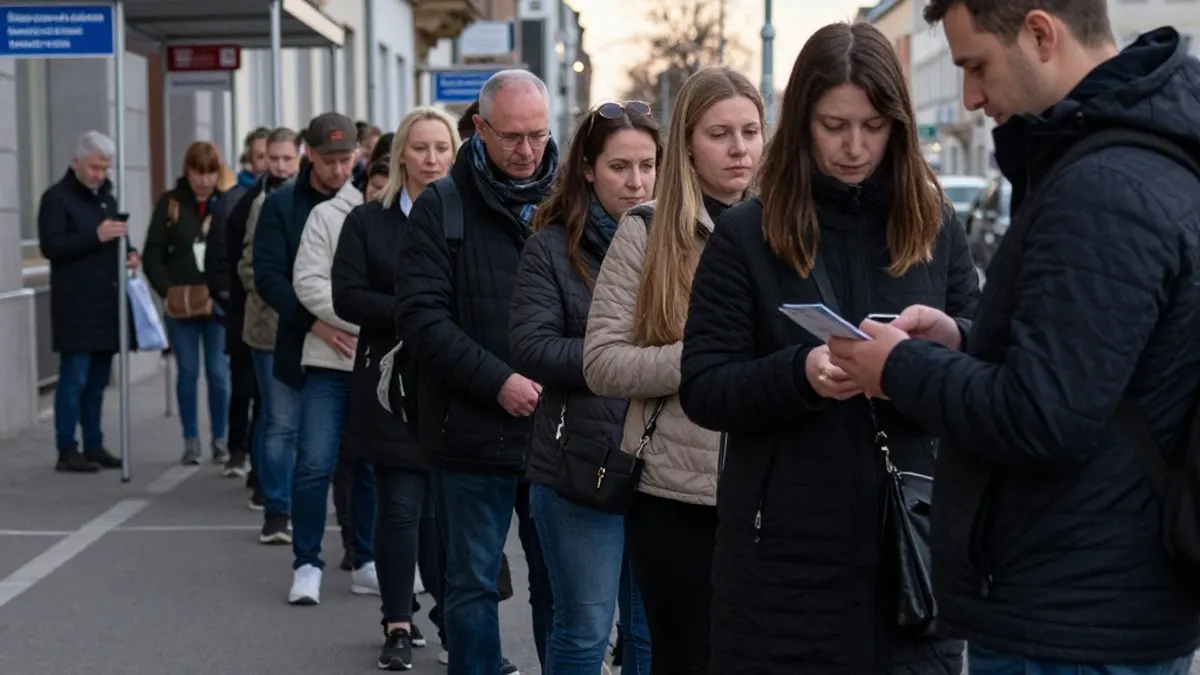
Serbian citizens began casting their ballots on October 25 in a snap parliamentary election called by the country's long-time leader, Aleksandar Vucic. The vote marks a significant moment for the Serbian populist, who faces his most substantial challenge to his leadership in recent years due to widespread student-led demonstrations. Long lines of voters formed outside polling stations in the capital, Belgrade, during the early hours of the day, reflecting high engagement in the process.
The election has drawn particular attention in Novi Sad, where voters also queued at local stations. This city remains a focal point of national sentiment following a tragic event two years ago in which a train station canopy collapsed, killing 16 people. Reports suggested that corruption played a role in the construction flaws that led to the accident, sparking national fury and contributing to the momentum behind the current political unrest.
These grievances, combined with suspicions that Vucic was steering the nation toward authoritarianism, have powered a wave of student-led protests and the emergence of new political candidates. In response to the growing pressure, Vucic called for the early vote in September. He subsequently resigned from his second term as president to run for the position of prime minister again, a strategic move to consolidate his power in the face of the opposition.
Despite the intensity of the demonstrations, many Serbians continue to credit Vucic with driving economic growth. His supporters point to significant government spending on infrastructure projects, including the construction of new highways and schools, as evidence of his effective leadership. This perception has helped maintain a strong base of support for the Serbian Progressive Party even as the opposition gains ground.
The main challenger to Vucic is the Students' List, a coalition that has fielded 250 largely unknown candidates. The group includes a diverse range of individuals such as farmers, university professors, and actors, and is led by a cardiologist. Their agenda focuses on eliminating corruption and improving the quality of schooling, appealing to voters who are dissatisfied with the status quo.
Vucic and his party have actively pushed back against accusations of corruption and repression. He has alleged that the student movement is funded by foreign agents, a claim aimed at undermining the opposition's domestic credibility. At a rally on October 22, Vucic described the campaign as one of the most difficult but emotional he had ever faced, stating that they had stood against those who wanted to destroy Serbia.
Opinion polls indicate a tight race between the two main factions. An Ipsos poll published on October 22 showed the Serbian Progressive Party leading with 47 percent of likely votes. The student-led reformers trailed slightly with 40 percent. These figures suggest that the election outcome remains uncertain, with both sides vying for a decisive mandate.
Voting is scheduled to end at 8 p.m. local time. Voters are encouraged to head to their respective stations to ensure their participation in this critical democratic exercise. The atmosphere in polling stations across the country has been described as orderly, with long queues forming in urban centers and smaller towns alike.
First results are expected to be announced by 10 p.m. local time. Political analysts will closely monitor the early returns from key districts to gauge the direction of the final outcome. The election is seen as a referendum on Vucic's leadership style and his ability to balance economic development with calls for greater transparency and accountability.
Source: RFE/RL