Tibetan Quake Shakes Nagqu, Leaving Families Homeless
A powerful tremor triggered widespread structural failures in northern China, prompting an urgent logistical response as winter weather approaches.
By Alina Marshall ·
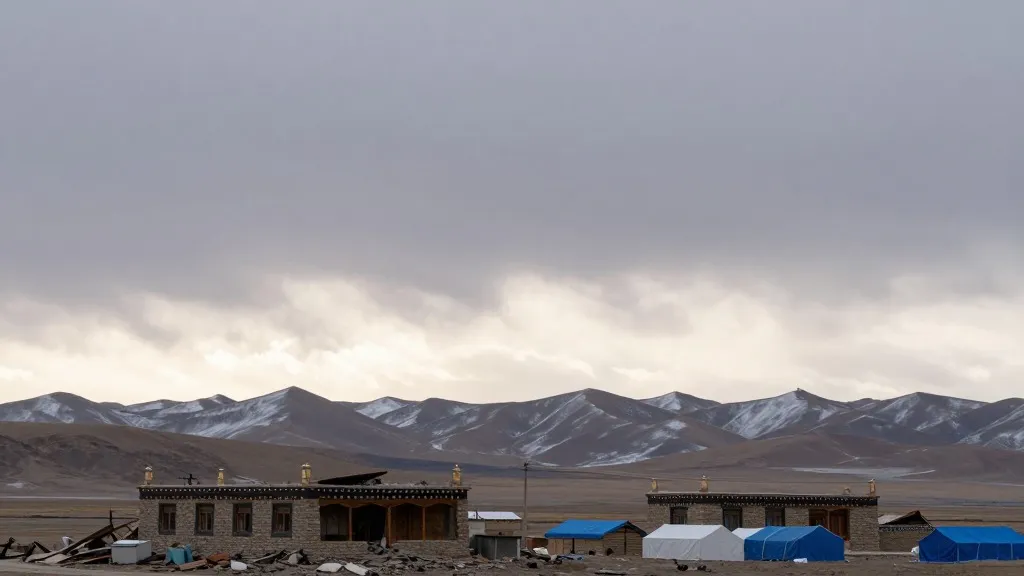
For residents in the high-altitude regions of northern Tibet, the routine of daily life was suddenly upended on Thursday evening when a major seismic event struck the area. The immediate reality for thousands of families is a landscape of broken infrastructure and displaced populations. As the dust settles, the focus has shifted from the initial shock to the urgent need for shelter and medical care in a remote and rugged terrain.
The seismic activity registered at a magnitude of 7, shaking the ground with enough force to cause extensive destruction. According to official media reports, at least 16 people have lost their lives in the disaster, while 46 others sustained injuries. The hardest-hit zone appears to be around Nagqu, a city situated in the northern part of the region. Here, the structural integrity of local housing failed under the stress of the tremors, resulting in the collapse of hundreds of dwellings.
City government officials, speaking through the local media office, provided specific figures on the extent of the damage. They confirmed that 339 homes and 20 livestock sheds had completely fallen. Among the injured, the severity varies significantly. Eleven individuals are in critical condition and require intensive medical attention, whereas the other 35 victims suffered minor wounds. Search and rescue teams are currently active in the zone, continuing their efforts to locate any remaining survivors amidst the rubble.
The scale of the response has been substantial, involving more than 1,600 personnel from the local county. These workers are on the ground, coordinating the extraction of victims and the stabilization of damaged structures. To support these operations, a significant influx of relief supplies has been dispatched to the area. The shipment includes 1,000 prefabricated housing units designed for rapid assembly. Additionally, approximately 3,000 tents and folding beds have been delivered, along with essential items such as flashlights and winter clothing to help those who have lost their homes.
Logistical challenges have emerged as a major concern in the aftermath. Xinhua, the state news agency, noted on Friday that communication networks remained down in sections of the affected region. This disruption has complicated coordination efforts between rescue teams and central authorities. In a move to prevent further accidents on the tracks, local railway authorities implemented emergency protocols to halt train traffic through the impacted corridor.
The physical damage has also affected key roadways. Rockfalls triggered by the quake forced officials to close a segment of National Highway 317. Access to this route is now strictly limited to emergency, rescue, and official support vehicles. These restrictions remain in place while engineering crews work to clear the debris and assess the safety of the roadbed for general traffic.
Weather conditions are expected to add another layer of difficulty to the recovery process. Meteorological forecasts indicate that intermittent snow will fall across the earthquake zone over the next three days. This precipitation could slow down rescue operations and make conditions more hazardous for both personnel and survivors waiting for assistance in the cold highlands.
CCTV, the national broadcaster, characterized this event as the most significant seismic shock the region has experienced in the last five years. This classification underscores the rarity and intensity of the tremor for the local population, who may not have faced such a powerful force in recent memory. The event serves as a stark reminder of the geological risks inherent to the region.
Technical data from the U.S. Geological Survey provides further context on the quake's mechanics. The tremor occurred at 10:33 p.m. local time and had a depth of 18 kilometers. The epicenter was located 191 kilometers to the east-northeast of Nagqu, in a sparsely populated, high-altitude section of northern Tibet. For geographic perspective, Nagqu itself is situated more than 300 kilometers north of Lhasa, the capital of the Tibetan region, highlighting the remoteness of the affected area.
Source: CBC News