Burnham calls for closer EU relations, saying Brexit has fallen short
Britain’s prime minister seeks a reset with the European Union ahead of a Brussels summit, while remaining bound by Labour’s limits on closer integration.
By Alina Marshall ·
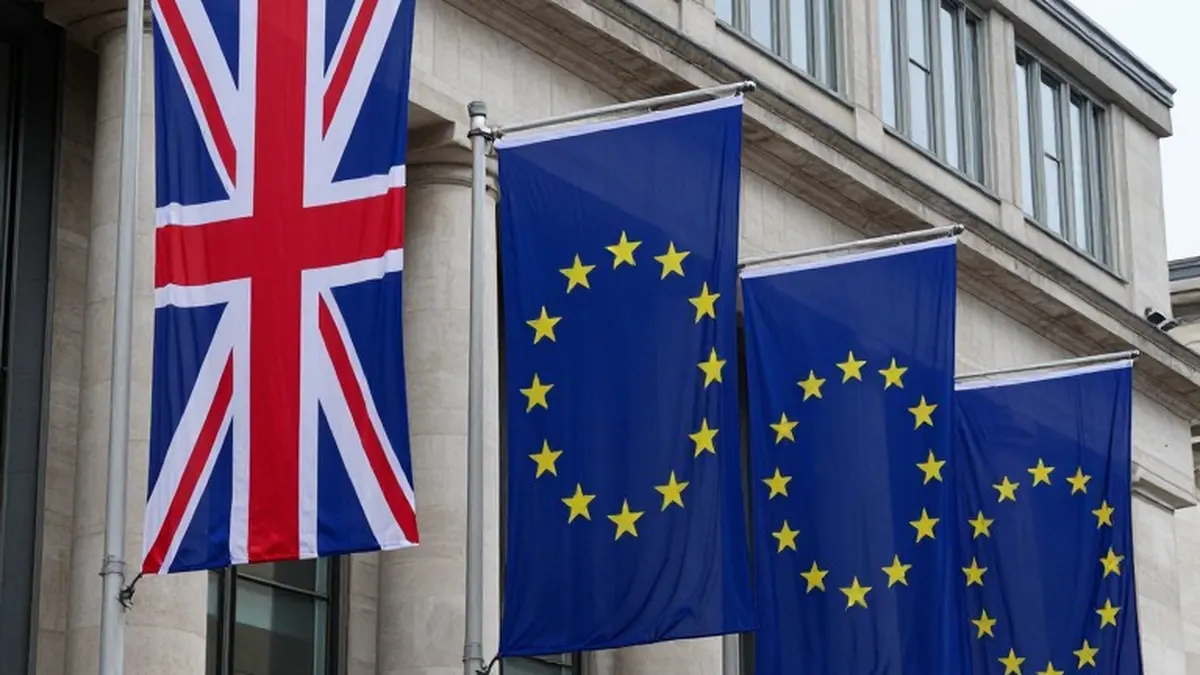
British Prime Minister Andy Burnham has called for a closer relationship with the European Union, arguing that Brexit has failed to fulfil its promises and that Britain must respond to a global shift towards isolationism. His comments preceded a UK-EU summit in Brussels on Friday, where the two sides are expected to pursue agreements in several areas.
Speaking at the Lord Mayor’s Banquet in London on Monday, Burnham used Hans Christian Andersen’s fairy tale “The Emperor’s New Clothes” to describe the reluctance to acknowledge Brexit’s shortcomings. He said Britain had suffered more losses than gains over the past decade and argued that the form of Brexit delivered to the country was inadequate.
The Brussels meeting marks a significant stage in Burnham’s effort to rebuild relations with the 27-country bloc. It comes 10 years after the referendum on EU membership and six years after Britain formally left in 2020. The UK is expected to conclude an agreement covering food and drink trade, alongside arrangements on energy and emissions and a plan allowing young people to work temporarily in Britain and the EU.
Burnham said any agreement would need to meet three conditions. It must respect Labour’s election manifesto and negotiating limits, improve the existing Brexit settlement in line with what voters sought in 2016, and satisfy what he calls the Makerfield Test. That benchmark requires tangible benefits for people in areas of Britain that have long felt overlooked. He said Friday’s summit offered an opportunity to improve their daily lives.
The prime minister argued that the Leave campaign’s pledge to restore control over Britain’s borders, laws and economy had not been fulfilled. According to Burnham, trade with EU members has declined sharply, while estimates put the economic cost at between 4 percent and 8 percent of British gross domestic product.
Britain’s seventh prime minister since 2016, Burnham sought to move beyond a decade of political upheaval and presented the country as ready to take a leading international role. He argued that Britain’s experience since the referendum could help it lead renewed cooperation. He also described Brexit as the starting point of a broader shift towards protectionism and isolationism, saying Russia had wanted a divided NATO and a weakened Europe.
Burnham plans to begin talks with European partners about Britain’s longer-term relationship with the EU shortly after the summit. His spokesperson, Tom Wells, said on Monday that the government was making no assumptions about the outcome and that the British public would determine it.
Until the next national election, however, Burnham remains committed to the pledge made by his predecessor as Labour leader and prime minister, Keir Starmer, to stay outside the EU’s customs union and single market. Dropping that commitment would reopen a deeply divisive question. In the 2016 referendum, 52 percent voted to leave the EU and 48 percent voted to remain.