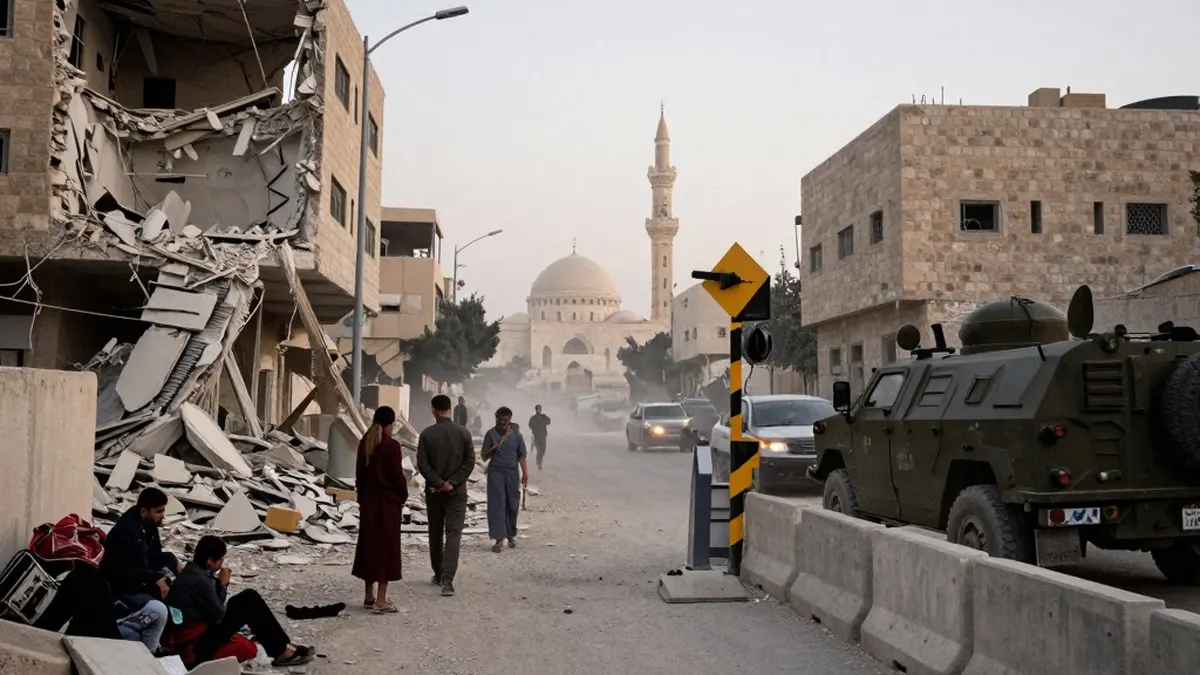
Washington Flags Advanced Iranian Threats
New intelligence indicates that Iran is preparing lethal strikes against US personnel, prompting a significant reduction in diplomatic staff across the Middle East.
By Kavya Kapoor ·
The threat to American lives in the Middle East has moved from potential to probable, according to the highest levels of the US intelligence community.
Secretary of State and National Security Adviser Marco Rubio received a formal warning on Friday. The document, authored by Director of National Intelligence Jay Clayton, outlines a sharp increase in Iranian efforts to harm US officials and citizens. Clayton stated that plans for lethal attacks are now in advanced stages. A copy of the memorandum was also provided to CIA Director John Ratcliffe.
The intelligence briefing was dated October 23. It details how multiple intelligence channels have converged to show that Iran has significantly ramped up its targeting of American personnel. Clayton noted in the memo that these lethal plotting efforts are active in the Middle East and in other unspecified countries. The assessment suggests a shift from broader strategic positioning to specific operational readiness against US targets.
However, the memo includes important caveats regarding the distribution of this information. Clayton explained that the intelligence is currently relevant to a wider group of people than those who currently have the necessary security clearance. The underlying data has been shared with senior, cleared members of the State Department team. Clayton offered Rubio an additional briefing to cover the finer details of the threat assessment.
One key action item in the memorandum involves declassification. Clayton promised to work hard to lower the classification of as much of the intelligence as possible. This step is designed to allow the Secretary of State to share the threat information more broadly with State Department staff who may be at risk. The memo itself was marked unclassified to facilitate this internal sharing. It deliberately avoided naming specific targets, detailing attack methods, or identifying countries outside the Middle East where plots are developing.
This warning arrives as the State Department begins to scale back its diplomatic footprint in the region. Officials cited fears of Iranian retaliation and the possibility of renewed US military operations as the primary drivers for these changes. Washington recently ordered nonessential government employees and their family members to leave Saudi Arabia. This move followed an escalation in attacks by the Iranian-backed Houthis.
Further reductions have been ordered at US embassies in the United Arab Emirates, Lebanon, Qatar, and Jordan. Media reports indicate that the United States is speeding up the departure of diplomats and their families from several regional posts. Some of these personnel had only recently returned to their duties following earlier evacuations during the Iran war. The pace of these departures has increased significantly in the last few days.
Diplomatic and military options are being weighed simultaneously in Washington. Reports suggest that Israel has urged the US to launch new strikes on Iran sooner. So far, these efforts to accelerate military action have not succeeded. The administration is balancing the need for a diplomatic solution with the pressure to demonstrate military resolve.
President Donald Trump kept the door open for further kinetic action on Friday. He stated that the US could conduct another operation similar to the previous campaign if Tehran fails to reach an agreement. "We may do another little Epic Fury. Or they'll agree," Trump said. The administration remains focused on securing a deal with Iran while preparing for the possibility of conflict.
The new intelligence memorandum underscores a growing concern for the safety of American diplomatic personnel. As Washington weighs additional military options, the focus on protecting staff on the ground has intensified. The coordination between the intelligence community and the State Department highlights the seriousness with which the threat is being viewed. For now, the US continues to pursue diplomacy while bracing for potential Iranian action.
Source: The Jerusalem Post