Zimbabwe Mining Boom: $8.5bn in Exports, Yet Local Infrastructure Lags
While platinum prices hit record highs and export revenues surged, residents in mining districts cite poor roads, schools, and water quality as persistent problems.
By Alina Marshall ·
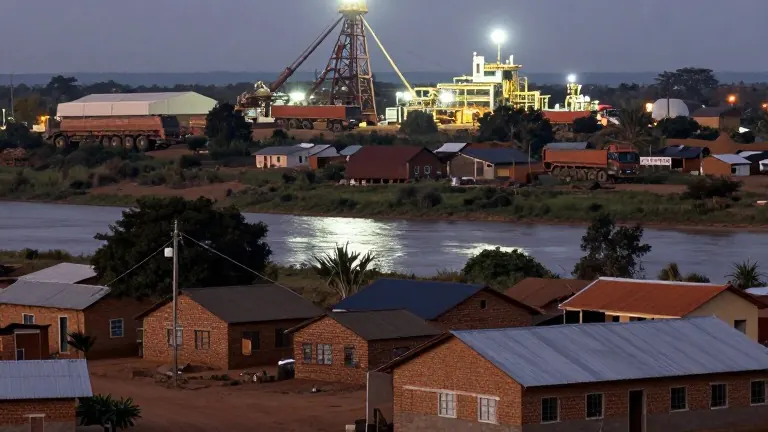
Zimbabwe possesses the world's second-largest known deposits of platinum group metals, trailing only South Africa. The nation's mining sector generated a record $8.5 billion in export earnings in 2025, a sharp increase from $5.9 billion in the previous year.
John Musekiwa, then-president of the Chamber of Mines of Zimbabwe, attributed the financial jump to strong output and favorable prices. Mining accounts for roughly 75 percent of the country's exports and 14.5 percent of its gross domestic product, according to the International Trade Administration in the United States.
Platinum prices reached an all-time high of $2,923 per ounce on January 26 during a broader precious metals rally. The price spike was driven by concerns over supply and general market movements, according to the World Platinum Investment Council.
The revenue surge has not always translated into local development in mining communities. Residents in districts like Mhondoro-Ngezi, home to the Great Dyke geological formation, report that basic services have failed to keep pace with the wealth extracted from the land.
Ernest Denhere, headman of Denhere village, called on Zimplats and other mines to build a road linking Kadoma and Kwekwe to Turf, Benhura, Mamina, Murambwa, and Kadhani. He stated, 'We call upon Zimplats and other mines to build a road.. linking to the Harare-Masvingo highways.'
Educational infrastructure remains under strain in these areas. Ward 3 Councillor Emmah Chikwai noted that children in Jompani, Majoki, Maleti, and Makwavarara walk between 15km and 25km to reach Musinambi Secondary School. She appealed for mine assistance to set up a satellite school in Makwavarara.
Water quality issues have also emerged. Edson Mabure, whose family was relocated as mining expanded, said the Ngwazani River is now flooded with sewage from the mine. He crossed the waterway daily and noted that residents no longer have a tangible legacy from the operations that displaced them.
Agnes Handidikundiona, who crosses the river with her children, said the water is no longer clean for domestic use. She explained that flooding prevents children from reaching school and that a footbridge is needed. 'Before the sewage spill, we used to use this water for domestic purposes,' she said.
Sakina Lice supports her family by collecting plastic waste near mining operations. She has 11 children and nine grandchildren and earns approximately $20 a month reselling the materials. 'Picking up plastics is the only way I survive,' Lice said. She wants the mine to empower women with projects to support families.
Other mining regions face similar demands. In Shurugwi, Bulle Madzitire, chairman of the Shurugwi Residents Association, called on Unki Platinum Mine to assist with classroom blocks, water, sanitation, and roads. In Zvishavane, Kamino Simango urged the Mimosa Platinum Mine to focus more on infrastructure benefiting the wider community.
Unki Platinum Mine told Al Jazeera it has invested an average of $1.5 million annually in community development over the past five years. Its public relations manager, Evelyn Mawimba, said the mine built 63 boreholes and supported 32 schools through its STEP-UP programme. Unki also pays about $130,000 a year in municipal levies to the Shurugwi Town Council.
Mimosa Platinum Mine did not respond to questions despite several attempts to contact the company. Alderman Ephraim Pepukai Chengeta, chairperson of the Mhondoro-Ngezi Rural District Council, promised to respond but did not return calls. Zimplats's head of corporate affairs, Hama Saburi, also said he would respond but did not do so by publication.
Source: Al Jazeera
More Business · Watch Your Wallet · Report a business · Got a Story?