Director Poh Si Teng Discusses Her Debut Feature American Doctor at Film Festival
The Malaysian-born filmmaker reveals how personal loss and a desire for action drove her to document the relationships between American and Palestinian doctors in Gaza.
By Emmanuel Faure ·
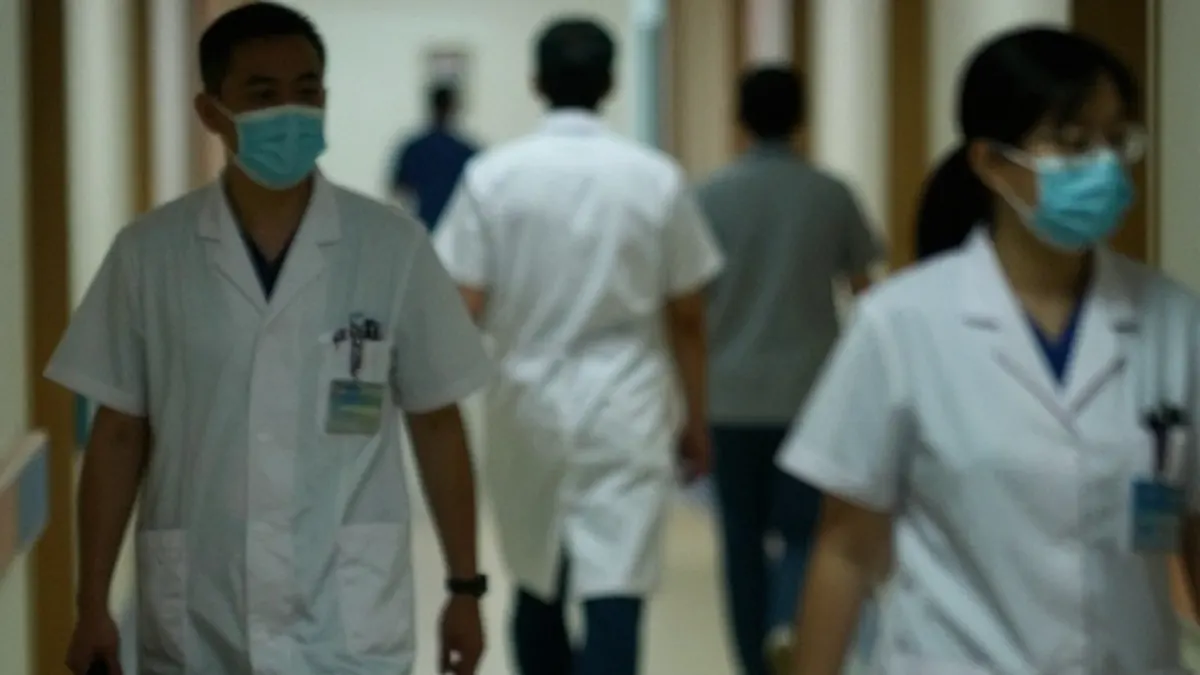
Poh Si Teng recently addressed the core themes of her documentary American Doctor during an appearance at the SCAD Savannah Film Festival. Although the title highlights the three American physicians featured in the film, Teng clarified that the narrative is fundamentally about their professional and personal connections with their Palestinian colleagues. She noted that these relationships serve as the primary lens through which the story is brought back to a United States audience.
The film, which made its debut at the Sundance Film Festival in January, was released earlier this year by Watermelon Pictures. It was selected for the Docs to Watch sidebar at the SCAD Savannah Film Festival, a distinction that led to a packed screening at the SCAD Museum of Art. Teng also participated in a panel discussion featuring ten directors of outstanding 2026 documentaries.
Before American Doctor, Teng had never directed a feature-length project. Born in Malaysia and now based in the United States, she built a substantial career in journalism and media production. Her previous roles included working as a cameraperson for the Associated Press, a reporter for The New York Times, and a documentary commissioner for Al Jazeera. She also served as a studio executive at ABC and as a grants director for the International Documentary Association.
Teng explained that she spent approximately 22 years believing her role was best served by supporting other directors rather than directing herself. However, the ongoing genocide and the targeting of her former colleagues at Al Jazeera changed her perspective. She stated that seeing her peers executed made her feel it was finally time to use her own voice as a director to tell a story that mattered to her.
When she first met the three American doctors, a Jewish physician, a Palestinian physician, and a Zoroastrian physician, she was struck by how different their backgrounds were. She wondered how such diverse individuals could work effectively together. This curiosity became a driving force behind her decision to seek funding for the documentary, despite finding that few institutions were willing to financially support a film about the current turmoil in the Middle East.
Faced with limited institutional backing, Teng emptied her personal savings of $150,000 to finance the project. She gathered additional support from various artists, musicians, and activists. The production team included individuals from eight different countries and spent over 50 days filming between the Christmas holidays of 2024 and 2025. Because Teng could not enter Gaza herself, she relied on local filmmakers who worked under the strain of the Israeli blockade to capture scenes inside and around the hospitals.
The film opens with a scene in which Dr. Mark Perlmutter, one of the American doctors, criticizes Teng for hesitating to include a photograph of children killed in an airstrike. Teng recalled that this moment set the tone for the entire project. After that initial exchange, she committed to using the material her team captured without hesitation, aiming to present a story that was both horrifying and inspirational in a way few others had documented so personally.
To ensure the film remained narratively engaging, Teng drew structural inspiration from television series and films such as The Pitt, Chernobyl, and The Babadook. These sources helped her shape the pacing and emotional arc of the documentary. She emphasized the importance of making the subject matter accessible to a broad audience while maintaining the gravity of the events depicted.
Teng concluded her remarks by reflecting on the power of empathy. She argued that if viewers were to see Palestinians as they would see themselves, they would be more willing to advocate for them. She added that this empathy is particularly relevant when considering that taxpayer money is being used in ways that directly impact the people in Gaza.
The film continues to find audiences as it travels through various festival circuits. Teng’s background in journalism and her firsthand experience with the subject matter have been cited as key factors in the documentary’s impact. The project stands as a significant entry in the 2026 documentary landscape, offering an intimate look at medical care in a conflict zone.
More News · National news · Report a business · Got a Story?