Hegseth makes unannounced visit to Venezuela, pledges deeper military ties with Rodríguez government
Defense Secretary Pete Hegseth traveled to Caracas on Wednesday for talks with acting President Delcy Rodríguez, announcing expanded defense cooperation between Washington and Caracas.
By Madison Darwish ·
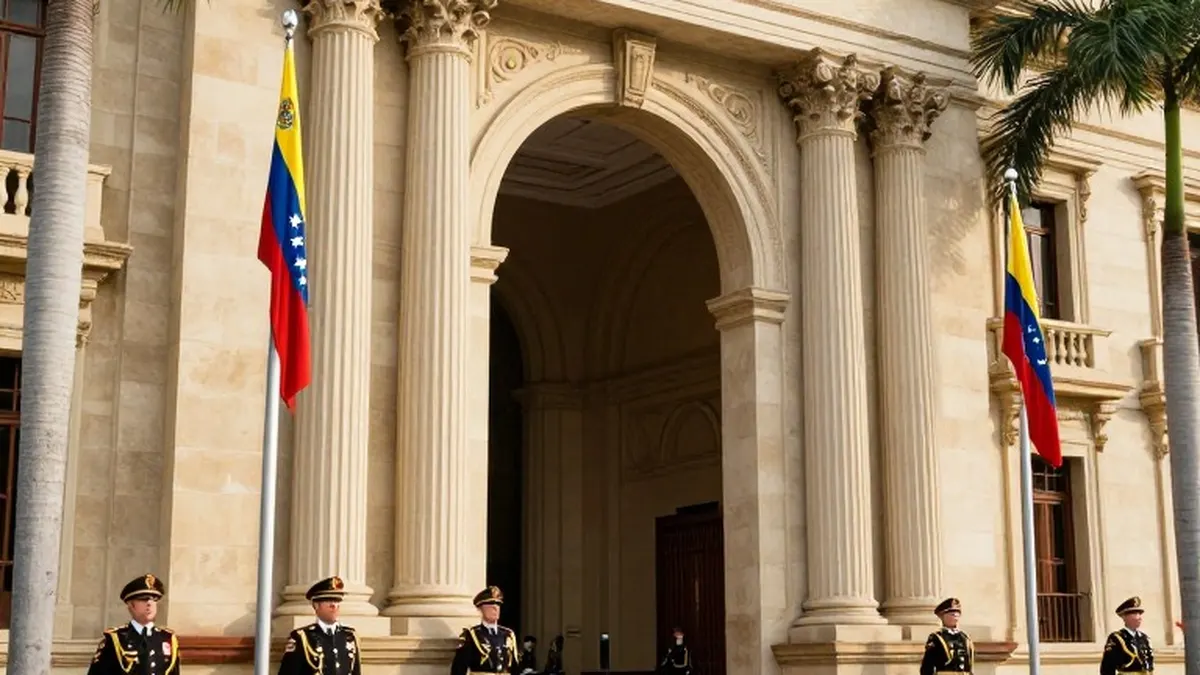
Defense Secretary Pete Hegseth made an unannounced trip to Caracas on Wednesday, meeting with Venezuelan acting President Delcy Rodríguez at the Miraflores Palace and declaring that the United States intends to expand its military partnership with Venezuela to counter foreign actors and what he described as narco-terrorists.
The visit was not publicly disclosed by the Pentagon beforehand and came to light through Venezuelan state television coverage. The Pentagon did not respond to a request for comment from The Hill.
Speaking at the palace, Hegseth said Washington looked forward to deepening defense cooperation in a way that pairs U.S. military expertise with Venezuelan capabilities, so that Venezuelans are not threatened by foreign actors, narco-terrorists or criminals and can remain safe inside sovereign borders.
Hegseth also emphasized economic cooperation, pointing to Venezuela's natural resources. He said the prosperity, peace and stability of Venezuela would mean a safer hemisphere and a safer America, adding that the renewed partnership would show the world what is possible when two countries with a long shared history rebuild their relationship.
The trip is the latest in a series of visits to Venezuela by senior Trump administration officials. Energy Secretary Chris Wright, Interior Secretary Doug Burgum and CIA Director John Ratcliffe have each made similar trips in recent months.
Hegseth's stop in Caracas came one day after he visited U.S. Southern Command headquarters in Florida, where he met with Southcom commander Gen. Francis Donovan. It also follows the capture of Venezuelan leader Nicolás Maduro by U.S. forces earlier this year and a deal brokered by the Trump administration giving Washington control over some of the country's oil reserves.
Rodríguez said in late August that the oil arrangement is a 25-year bilateral project covering the development of 17 strategic fields, with a production target of more than 1.5 million barrels per day. "Each party contributes what it does best. Venezuela contributes oil, its industry and the experience of its workers accumulated over more than 100 years," she said at the time. "The United States contributes the capital and technology needed to recover and develop those assets." The agreement drew criticism from some Democrats on Capitol Hill.
The defense secretary's visit also comes after The New York Times reported earlier this month that Washington is in talks with Caracas about establishing a permanent U.S. military presence in the country. Secretary of State Marco Rubio told the Times in a Nov. 5 interview that the U.S. would like a presence agreement at some point, largely to ensure American troops operating jointly with Venezuelan forces have legal protections.
The cooperation push fits into the administration's broader regional security campaign. The U.S. launched the Americas Counter Cartel Coalition, a military and security initiative under the Shield of the Americas framework, aimed at fighting drug cartels and transnational gangs across the Western Hemisphere. Since September of last year, the U.S. military has destroyed alleged drug trafficking boats in the Caribbean and Eastern Pacific, and U.S. forces have interdicted at least eight large vessels the Pentagon labeled floating refueling stations off Ecuador's coast. American service members and law enforcement have also embedded with Ecuadorian security forces during raids against traffickers on the ground in September.
More News · National news · Report a business · Got a Story?