How voters navigated the 2026 midterm election logistics
State-by-state poll hours and ID rules shaped the turnout for the Democrats' decisive win in Congress and governorships.
By Emmanuel Faure ·
The 2026 midterm elections concluded on Tuesday, November 3, with Democrats securing majorities in both the U.S. House and the U.S. Senate. The party picked up at least 43 House seats and seven Senate seats, all of which were previously held by Republicans. As of 4:00 PM ET on November 6, Democrats held a projected 250-157 majority in the House and a 54-44 majority in the Senate. This net loss of at least seven Senate seats places the election in the top 20% of historical swings against a president's party, a threshold often defined as a wave election. While the House net loss of 42 seats fell short of the 48 needed to qualify as a full wave, uncalled races could still alter that total.
Voters in 46 states cast ballots on November 3, with results determining trifecta status in 44 of those states by the November 6 update. Democrats won a plurality of state government trifectas and state legislative chambers. They also secured a majority of governorships for the first time since before the 2010 elections. The logistical framework for this election included specific poll hours and identification requirements that varied by state, influencing how millions of independents and partisans navigated the voting process.
Poll hours were a critical factor in voter access, with many states operating from 6:00 AM to 7:00 PM local time. Some states extended hours to accommodate early morning or late evening workers. The uniformity of these hours was not absolute, and voters were required to check their specific county or state guidelines. The use of vote.gov allowed many citizens to verify their registration status and find their polling location before the day of the election. This digital tool became a central resource for first-time voters and those moving to new districts.
Identification rules presented a significant hurdle for some voters, as states required different forms of government-issued ID. In some jurisdictions, a driver's license or state ID card was sufficient, while others accepted utility bills or bank statements. The variation in these rules led to increased scrutiny at polling places, where election officials verified documents against state statutes. Voters who arrived without the correct identification were often given the opportunity to cure the deficiency or cast a provisional ballot. This process added time to the voting experience, particularly in high-traffic precincts.
The United States Postal Service played a vital role in processing mail ballots, which remained a popular option for many voters. The Postal Service reported high volumes of incoming ballots in the days leading up to Election Day, requiring extended processing hours at local post offices. Voters who chose to mail their ballots had to adhere to strict deadlines, often requiring postmarks by November 3 or receipt by a specific date. The efficiency of the Postal Service in sorting and delivering these envelopes was a key component of the overall election integrity.
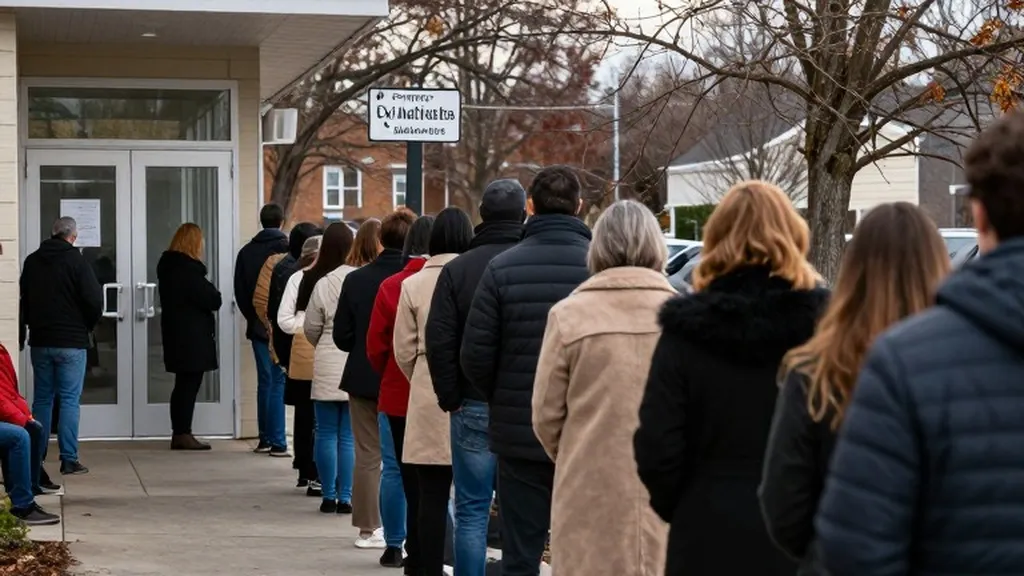
Staying in line was a common experience for voters, with some reporting wait times exceeding an hour. Long lines were particularly prevalent in urban areas and in states with high turnout expectations. Voters used the time to discuss the day's events and to prepare for the questions they might face at the polling place. The presence of volunteers and poll watchers helped manage the flow of traffic and ensured that the lines remained orderly. Some voters brought snacks, books, and entertainment to pass the time, turning the wait into a communal event.
The results of the election reflected the diverse voting patterns seen across the country. In California, Xavier Becerra won the governor's race, becoming the state's fifth consecutive Catholic governor. His victory was supported by a significant portion of Catholic voters, particularly Latino Catholics. About 6 in 10 Catholic voters in the state supported Becerra, while about 4 in 10 voted for his Republican opponent, Steve Hilton. This outcome highlighted the complex political dynamics within the Catholic community, where theological beliefs and ethnic identities intersected with partisan loyalty.
The election results also had immediate implications for federal legislation, particularly regarding the U.S. Department of Education. Democrats, now holding majorities in both chambers of Congress, expressed their intent to use their new power to oppose President Donald Trump's education agenda. This included the dismantling of the Department of Education and the end of diversity, equity, and inclusion policies. Rep. Bobby Scott of Virginia, the top Democrat on the House Committee on Education and the Workforce, stated his plan to leave no rock unturned in his investigation of the administration's actions.
President Trump, who faced a significant defeat for his party, reacted to the election results by addressing the impeachment threat against Defense Secretary Pete Hegseth. Rep. Thomas Massie of Kentucky moved to force a vote to impeach Hegseth, citing the war in Iran and other military actions. Trump called Massie a loser who has a lot of hatred in his heart, highlighting the internal divisions within the Republican party. The impeachment resolution focused on Hegseth's role in carrying out military actions in Iran, Yemen, and Venezuela, with Massie arguing that these actions amounted to high crimes and misdemeanors.
The logistical challenges of the 2026 midterm election were met with a high level of civic engagement, as voters navigated poll hours, ID rules, and mail ballot deadlines. The Democrats' victory in the House and Senate, along with their gains in state governorships, marks a significant shift in the political landscape. The election results underscore the importance of practical voting information and the role of institutions like the Postal Service in ensuring that every eligible voter can participate in the democratic process. The coming months will see the new Congress begin its work, with Democrats poised to use their legislative power to address key national issues.