
Drought in Kenya deepens milk shortage and drives up consumer prices
Prolonged dry conditions have reduced dairy production in Kenya, causing supply disruptions and price increases for milk products in major cities.
By Madison Darwish ·
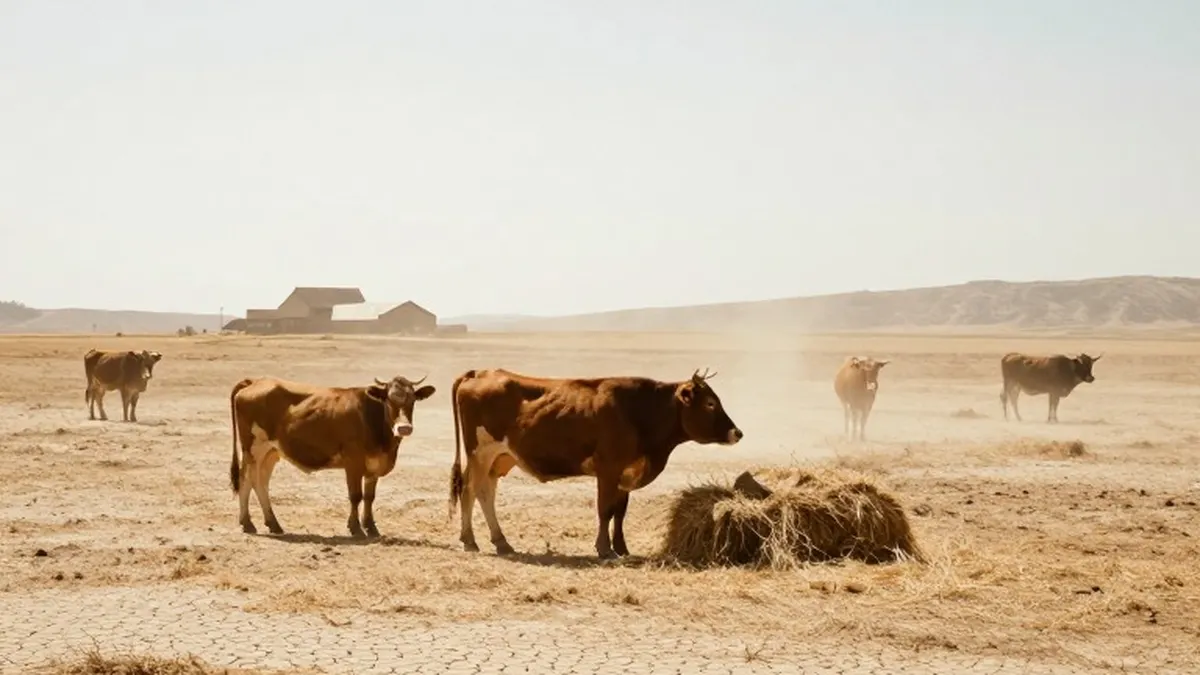
Milk supplies are becoming increasingly scarce in parts of Kenya as extended dry weather takes a significant toll on the dairy sector. The disruption has reached major urban centers, where popular brands are harder to locate in retail shops. In Nairobi, a standard 500ml packet of well-known brands such as Tuzo, Dairy Best, or Mt Kenya currently retails between 79 and 89 Kenyan shillings. While new brands have entered the market at lower prices, some local shops are charging up to 100 shillings for the same quantity, reflecting the tightness in the market.
The strain on the supply chain is evident at the farm level, where producers are struggling to maintain animal health and output. In Kajiado County, southwest of the capital, farmers report a sharp decline in milk yield over the past three months. Jennifer Leshinka, a farmer in Bisil, noted that her daily production has dropped from 120 litres to just 50 litres. As natural grazing land dries up, she has been forced to purchase expensive hay to feed her herd, with some animals even relocated to neighboring counties to find adequate pasture.
Leshinka highlighted the rising costs of maintaining livestock, stating that a bale of hay now costs between 100 and 150 shillings. She explained that this amount is insufficient to sustain a mature animal for a full day, forcing her to supplement the remaining natural grass with multiple bales. These challenges are not isolated to Kajiado but affect pastoralists in arid regions as well as highland farmers, who are also critical to the national milk supply.
Jackson Sinkeet, a supplier of raw milk to hotels in the Nairobi metropolitan area, faces similar difficulties. He reported that falling yields have made it impossible to fulfill existing orders, even from clients prepared to pay a premium. Sinkeet warned that the situation may deteriorate further if the dry conditions continue, leaving businesses unable to secure the quantities they require.
The decline in farm production is also impacting dairy cooperatives, which serve as a vital link between farmers and major processors. Jeremiah Ole Ncharo, a county official responsible for cooperatives in Kajiado, stated that at least five major women-led cooperatives have experienced a 50 percent drop in milk deliveries. This reduction is placing additional pressure on the formal market and limiting the volumes available for large-scale processing.
In urban areas, the shortage has led to long queues at processor depots, where businesses like those run by hotelier Joram Kamau spend hours waiting for rationed milk. Kamau expressed concern about the quality of alternative products, such as powdered milk, whose authenticity he questioned. He preferred to wait for genuine fresh milk, even at a higher cost, rather than risk disappointing customers with substandard goods.
Agriculture Cabinet Secretary Mutahi Kagwe attributed the current shortage to the prolonged dry spell, which has reduced access to pasture, fodder, and water. He noted that while national milk production has grown from 4.64 billion kilogrammes in 2021 to 5.52 billion kilogrammes in 2025, recent monthly deliveries to formal processors have fallen. September deliveries averaged 74.09 million litres, down from 83.45 million litres in the previous year.
The government is actively monitoring production levels and retail prices while facilitating regional transfers of milk within the East African Community. Kagwe indicated that farmers are benefiting from tighter supplies, with average producer prices rising to about 53.88 shillings per litre in July. The administration is also implementing measures to boost long-term resilience, including expanding fodder production, subsidizing artificial insemination, and distributing milk coolers to organized farmer groups.
To address future challenges, the government is exploring the introduction of Indian water buffaloes as an additional milk source. This initiative is still in its early stages, requiring the establishment of veterinary requirements and the assessment of breed adaptability. While India relies on buffaloes for a significant portion of its dairy output, Kagwe emphasized that this proposal is a medium to long-term strategy rather than an immediate solution to the current crisis.
For many farmers and business owners, the immediate focus remains on managing the rising costs of feeding animals and securing sufficient stock. As the dry season persists, the dairy sector faces the dual challenge of maintaining productivity while ensuring that consumers continue to have access to affordable and reliable milk products.