15 seats: the margin that could determine Israel's next government
Polls place the Palestinian bloc at 12 to 15 seats, leaving both the Netanyahu coalition and the Jewish opposition short of the 61 needed to govern.
By Alina Marshall ·
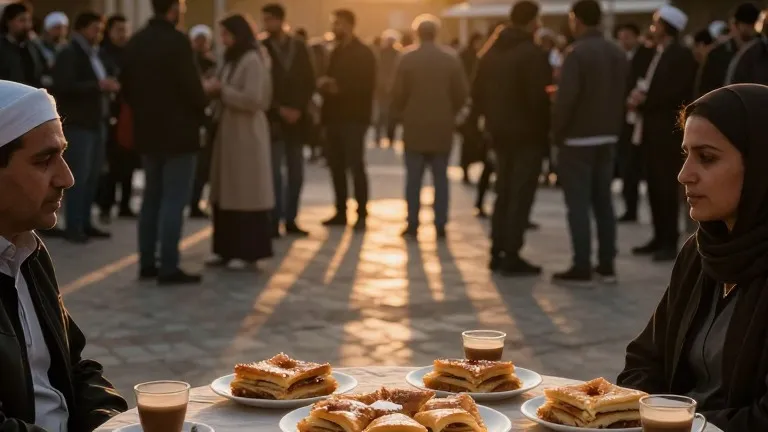
Palestinian citizens of Israel are projected to win between 12 and 15 seats in the upcoming Knesset elections. This number is the decisive variable in a fragmented legislative landscape. Most polls indicate that Benjamin Netanyahu's far-right coalition will lose its current majority. Simultaneously, the Jewish Israeli opposition bloc is forecast to fall short of the 61 seats required to form a government.
The 12 to 15 seats are split between the Islamist Ra'am party and the Joint List. The Joint List is an alliance of three smaller parties, including Ta'al. Ahmad Tibi, who heads Ta'al and has served in the Knesset for more than two decades, stated that high turnout among the Arab community is a primary tool to bring the current government down. He expressed determination to utilize this demographic weight to influence the final tally.
The Jewish opposition has generally ruled out forming a coalition with Arab politicians. Netanyahu and his allies have campaigned against such an alliance, using slogans like 'Bibi or Tibi' on posters. Despite these political stances, alliances have formed in the past. In 2021, Ra'am leader Mansour Abbas joined a historic coalition with Naftali Bennett, who now sits in the opposition bloc. Netanyahu himself previously opened coalition talks with Abbas.
Palestinian leaders describe the current political choice as a matter of mitigation rather than ideal alignment. Tibi characterized the decision as a choice between the Netanyahu, Smotrich, and Ben-Gvir coalition and the opposition. Sami Abu Shehadeh, leader of the Balad party, identified fear as the central motive for voters. He cited the destruction in Gaza, violence in the West Bank, and rising discrimination within Israel as factors driving voters to the polls.
The election takes place against a backdrop of recent legal and social shifts. Last month, Israel's supreme court effectively forced Abu Shehadeh out of the race over an article regarding the 7 October attacks. A motion to disqualify national security minister Itamar Ben Gvir for racist language was not upheld. Amjed Iraqi of the International Crisis Group noted that a returning far-right coalition would have a renewed mandate to speed up policies of annexation and ethnic cleansing.
The vote occurs two days before the town of Kfar Qasim marks the 1956 massacre. In that incident, border police killed 49 men, women, and children who had broken a curfew. Iraqi described the vote as a mechanism for Palestinians to see the difference between a right-wing and a far-right government. He observed that many voters feel powerless, yet the mathematical reality of the 12 to 15 seats places the decision in their hands.
Source: The Guardian
More Politics · World news · Report a business · Got a Story?