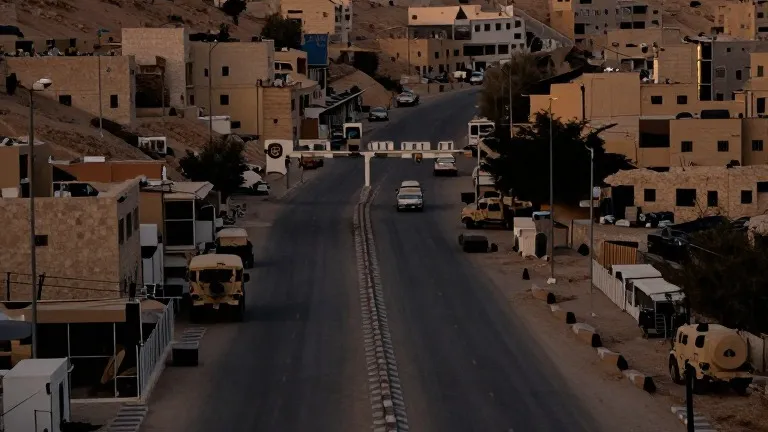
Houthi siege forces Taiz families to ration water and burn cardboard for heat
Supply lines are cut off in Yemen's third-largest city, driving up costs for essentials and straining local infrastructure.
By Alina Marshall ·
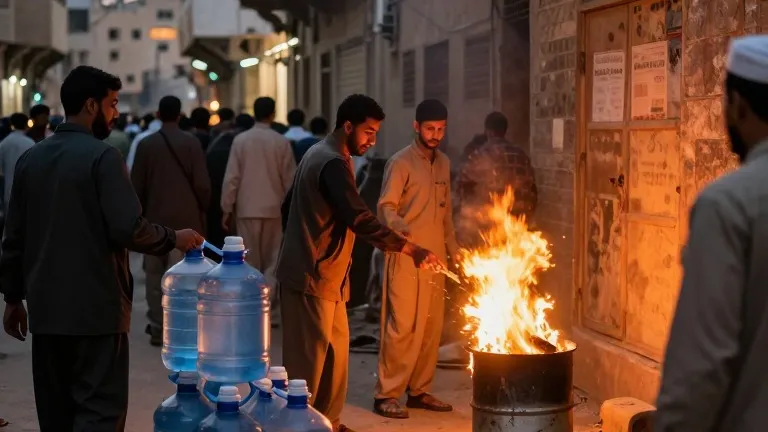
Humanitarian agencies report that daily life in Taiz, Yemen, has deteriorated sharply as the Houthi rebellion tightens its grip on the city. With supply routes blocked, residents face severe shortages of water, fuel, and food. The strain has pushed many households to rely on credit for basic necessities and to burn cardboard for warmth.
The conflict in Yemen dates back to 2014, when the Houthis seized the north and forced the government into exile. Taiz became a central battleground during that period. Over the past decade, groundwater levels dropped due to aging infrastructure, population growth, and drought. Residents adapted by purchasing water from trucks, a service that remained reliable until recently.
The situation worsened in late 2026. In September, Houthi forces captured the port city of Mokha, located 130 kilometers away. This move gave the rebels control over key Red Sea shipping lanes. Following the capture, the Houthis advanced on Taiz. By October, they had cut off access to nearby wells and restricted entry for water trucks.
Truckers who still deliver water into the city have raised their rates, with some tripling their fees. Local desalination plants and water utilities operate below capacity because fuel is scarce. As a result, the cost of bottled water has risen by as much as 75 percent in recent weeks. Families are stretching supplies to survive. Hadil al-Shahid, who lives with two young children, said her household now uses the same 10 liters of water that once lasted a day for four days. She stopped buying coffee and tea to conserve water. Some neighbors are buying water on credit.
The shortage extends beyond water. Fuel scarcity has made it difficult to run hospitals and sanitation services. Food prices have climbed as grocery shortages set in. Cooking gas prices have more than quadrupled, according to Hani Bafaqih of the aid group CARE. Many families now burn wood, charcoal, or cardboard to cook and heat their homes. Flour and rice costs are about 50 percent higher than they were in the summer.
The UN estimates that Taiz province has taken in 124,000 displaced people since August, roughly half of those moving within Yemen. Jens Laerke, a spokesperson for the UN emergency aid division, noted that many of these families live in tents or makeshift shelters. Some survive on one meal a day. Laerke warned that the cascading shortages increase the risk of disease, particularly cholera, as people use unprotected wells.
Ahmed Abdel Gaber, a displaced worker, said his income from hauling construction materials is no longer steady. He shelters with nine relatives in the ruins of a building. He relies on donations for food. Al-Shahid, who owns a hair salon, closed her business because customers prioritize food and water. Her children now eat mostly rice, bread, and cheese.
The government still holds the city center but faces resistance in the surrounding hills. Analysts say controlling Taiz is essential for the Houthis to push south toward Aden and Lahj. Ahmed Nagi of the International Crisis Group described any attempt to seize the city as a prolonged and costly battle. Three Houthi officials told The Associated Press that the group controls about 80 percent of the surrounding countryside and several neighborhoods inside the city. Foreign Minister Afrah al-Zouba has acknowledged the tightening siege.
Fighting has become a daily reality for civilians. Houthi missiles hit a residential area earlier this week, killing two teenage girls. Abdel Gaber hears explosions from battles about 5 kilometers away. He and his family will not return to their village. Al-Shahid says she cannot afford to leave her home. She described staying as inevitable, regardless of the risks.
Source: NPR