Amazon Launches New Team to Build Second Generation Home Robot
After the limited success of Astro, the company is assembling a new division to develop autonomous household devices using recent acquisitions and fresh engineering talent.
By Madison Darwish ·
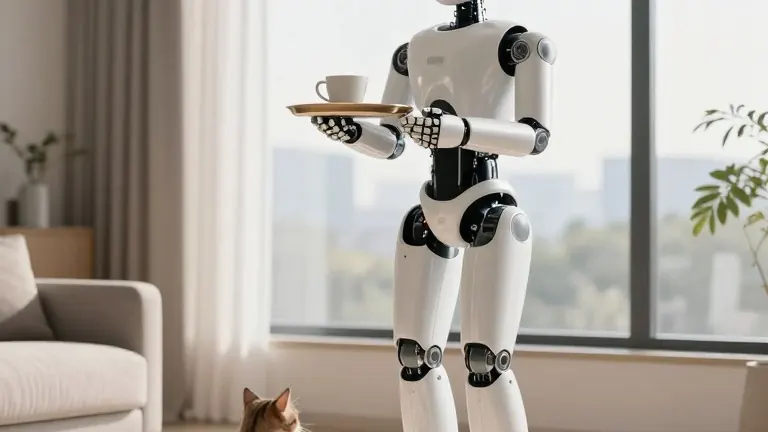
Amazon is building a new home robot after its first attempt, the Astro, failed to gain widespread adoption. The company formed a new team over the past several months to develop a "new-to-world robot product." This effort follows the discontinuation of the Astro business model and the acquisition of specialized robotics firms.
The company acquired Fauna Robotics in March. Fauna, based in New York, built a 3.5-foot-tall humanoid called Sprout. Amazon integrated Fauna into a new division named the Personal Robotics Group. This group includes staff from Lab126, the internal unit that previously created the Kindle and Echo devices. The acquisition provides Amazon with existing hardware to adapt for consumer use.
Job postings describe the new robot's capabilities. One listing for an engineer stated that robots are about to step out of movies and into homes. The product must navigate dynamic home environments and operate autonomously alongside family members. Another posting for a user experience designer focuses on defining what it feels like to live with a Fauna robot. The company aims to create devices that are functional and delightful in everyday spaces.
The Astro, launched in 2021, was an Alexa-equipped tablet on wheels. It cost $1,450 and could recognize faces and monitor security. Only a few thousand units shipped to customers. Amazon also released a business version in 2023 but ended that product line less than a year later. Owners report that the device has become a trip hazard or a party trick rather than a daily utility.
Emily Lugo Velez has owned an Astro since 2023. She uses the robot to check on her pets and appliances when she is away. However, she mostly returns it to its charging dock each day. Lugo Velez said she feels stuck with the device until it eventually dies. She described the experience as buying a product that does not fully deliver on its promise.
Former executives believe the initial project faced technological limitations. Ken Washington, who served as Amazon's VP of consumer robotics until 2023, said he advocated for a bipedal design. Leadership preferred the wheeled platform. Washington noted that Jeff Bezos was impressed by the robot's navigation abilities but disappointed by its lack of physical utility. The team could not attach an arm to pick up items without risking damage.
The robotics industry has advanced since the Astro's development. Colin Angle, co-founder of iRobot, said the tools available to the Astro team were primitive. Advances in AI models, sensors, and batteries have changed the field. Barclays forecasts the global humanoid market could reach $40 billion by 2035. Venture capital firms invested $33.4 billion in robotics and physical AI companies in the first half of 2026. This exceeds the $28.7 billion invested in all of 2025.
Amazon has a long history with warehouse automation. The company acquired Kiva Systems in 2012 for $775 million. It now operates over one million robots in its fulfillment centers. These machines pick, sort, and ferry items to workers. However, homes present unique obstacles such as children, pets, and stairs that warehouses do not have. Jeff Burnstein, president of the Association for Advancing Automation, said no home is set up exactly the same way, making navigation difficult for walking robots.
Amazon spokesperson Brad Glasser said the company is committed to tackling the challenges of the personal robotics category. He noted a substantial gap exists between controlled lab environments and living rooms. The company is working with the robotics community to solve these issues. Glasser said Amazon continues to support Astro customers. The company views personal robotics as a long-term bet where early entry provides a strategic advantage.