Beijing navigates delicate diplomacy ahead of potential trilateral summit
Beijing faces diplomatic challenges as a potential trilateral summit with the US and Russia looms, raising questions about the future of the Ukraine conflict and global power dynamics.
By Emmanuel Faure ·
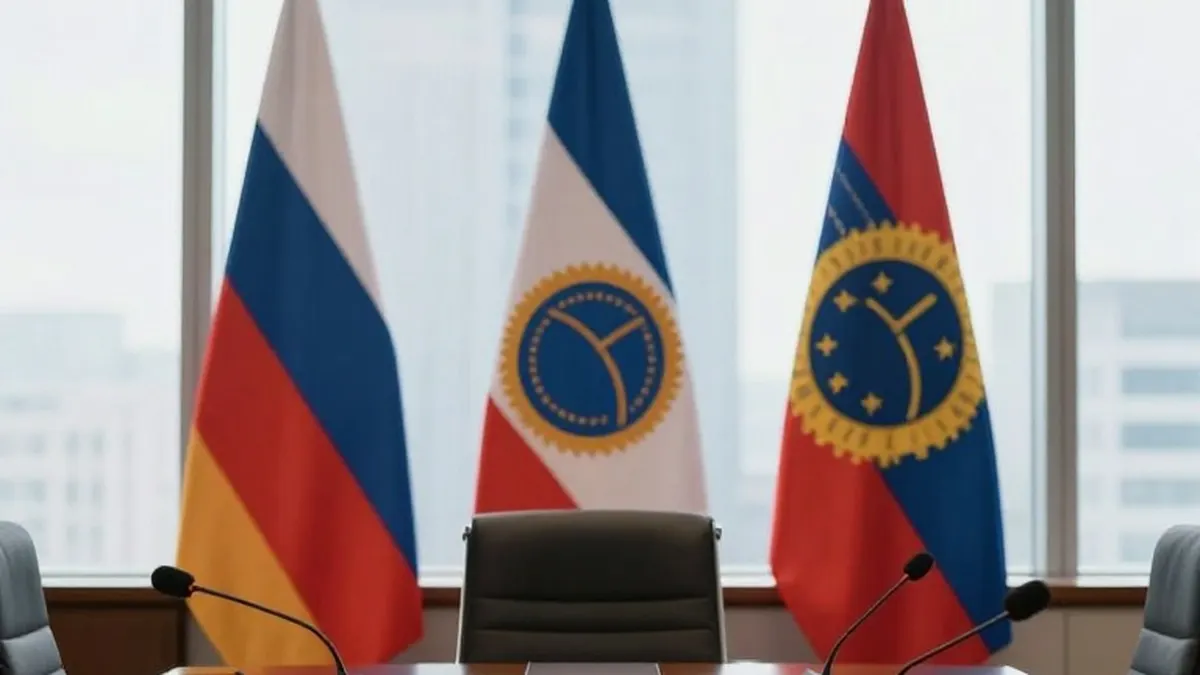
Speculation is growing that an unprecedented meeting between the leaders of the United States, China, and Russia could take place next week. The event may occur on the sidelines of the Asia-Pacific Economic Cooperation summit in Shenzhen, a major technology hub in China. While official confirmation remains pending, officials from all three nations have indicated that discussions are actively underway.
A representative from the Chinese Foreign Ministry stated that Beijing is in communication with the relevant parties. In Moscow, a Kremlin spokesperson confirmed that coordination efforts are progressing. The most direct signal regarding the potential summit came from US President Donald Trump. Speaking to reporters at an airport in Florida last weekend, Trump suggested that one of the planned APEC meetings would include Russian President Vladimir Putin and Chinese President Xi Jinping.
Media outlets have already labeled the prospective gathering a new Yalta, drawing a parallel to the 1945 conference where the US, UK, and Soviet Union leaders defined the post World War II geopolitical landscape. However, the specific agenda for the three leaders remains unclear. When asked about the topic of Russia's war in Ukraine, Trump mentioned Iran and denuclearization as possible discussion points but did not explicitly address the conflict in Europe.
The Chinese Foreign Ministry reported having no specific information about the substance of the talks earlier this week. For Russia, a successful trilateral meeting would represent a significant diplomatic victory. Since launching the full-scale invasion of Ukraine in February 2022, Putin has faced sustained diplomatic isolation from Kyiv's allies, particularly under the administration of US President Joe Biden. Reports indicate that Putin proposed the idea of this summit during a recent call with Trump, aiming to discuss an end to the war.
For the United States, the image of the president standing alongside the leaders of its primary rivals presents a complex diplomatic picture. Although Trump has personally greeted both leaders during his second term, the optics remain sensitive. China, as the host, faces an even more intricate position. While Beijing and Moscow are broadly aligned, China seeks to avoid being explicitly tied to Russia's war effort, which could undermine its goal of presenting itself as a stabilizing force in global affairs.
The European Union is also watching the situation closely, with concerns that a summit hosted by China to discuss Ukraine without the presence of Kyiv or Brussels could leave European powers feeling excluded. Alicja Bachulska, an Asia policy fellow at the European Council on Foreign Relations, noted that China appears uneasy about the potential meeting. She observed that Beijing's shift from silence to acknowledging contact seems deliberate, aiming to manage the negative optics of the Yalta comparison.
Bachulska warned that the trilateral meeting could trigger further escalation in already worsening relations between China and the EU if Ukraine is discussed without Europeans in the room. She added that even a photo opportunity could erode China's image, as it would show Xi standing with both his top rival and his partner in opposing the US. The relationship between China and Russia has deepened significantly since the two leaders declared a partnership with no limits in early 2022, just weeks before the invasion of Ukraine.
Throughout the war, which is now approaching its fifth year, Beijing has provided Russia with crucial markets for energy exports and supplies of dual-use goods, including high-tech components for modern weapons. Officially, China maintains neutrality and refuses to take responsibility for the war's outcome. Aurelio Insisa, a senior analyst at the Mercator Institute for China Studies, stated that China is more interested in reforming global governance to reflect its own preferences while maintaining a collegial appearance.
Insisa noted that China will likely avoid framing the meeting as a decision-making body for the rest of the world, as this would undermine its image as a champion of the Global South. A report by the US-China Economic and Security Review Commission in August described China as a decisive enabler of Russia's war, converting Moscow's dependence into lasting advantages while avoiding the obligations of a formal alliance. The report also highlighted limits to this support, noting that intelligence and security concerns remain constraints on deeper cooperation.
Strategic mistrust persists in key areas, such as Russian defense firms accusing Chinese companies of stealing intellectual property and Beijing's concern over Russia's growing ties with North Korea. The two nations also differ on nuclear doctrine, with Beijing maintaining a no first use policy while Moscow utilizes nuclear threats strategically. Despite these differences, the benefits of alignment continue, with China expected to gain a privileged vantage point on the evolution of land warfare in Ukraine.