Democrats Take Control of Both Chambers in Historic Midterm Sweep
A net loss of seven Senate seats and 42 House seats marks one of the largest shifts in power against a sitting president in recent decades.
By Alina Marshall ·
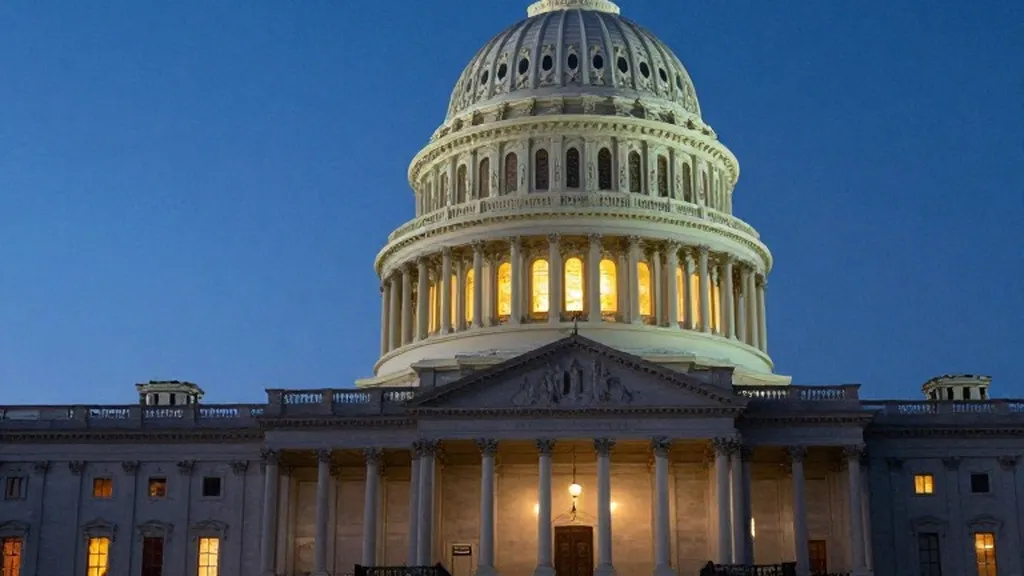
The 2026 midterm elections have concluded with a decisive victory for Democratic candidates across the country. According to compiled results from Ballotpedia, Democrats secured majorities in both the U.S. House of Representatives and the U.S. Senate. As of 4 p.m. EST on November 6, the party holds a majority of at least 250 seats to 157 in the House and a 54 to 44 majority in the Senate. This outcome represents a significant shift in the balance of power in Washington, as the party of the sitting president suffered substantial losses in both chambers of Congress.
The scale of the Democratic gain in the Senate is historically notable. Republicans lost a net of at least seven seats, a margin that places this election cycle within the top 20 percent of election years in terms of seat swings against a president's party. This threshold is often defined as a wave election. While the House results have not yet reached the same statistical definition of a wave, the net loss of 42 seats by Republicans is close to the 48 seats needed to qualify. Uncalled races may still alter these totals, but the current figures indicate a broad rejection of the incumbent party's performance by voters nationwide.
Beyond the federal level, Democrats achieved a majority of governorships for the first time since before the 2010 elections. In the 36 gubernatorial races on the ballot, Democrats won 22 while Republicans won 12. Two races remained uncalled as of the latest updates, with one previously held by a Democrat and the other by a Republican. Five of these governorships changed party control, with all five shifts moving from Republican to Democratic hands. This success at the state level mirrors the federal results, suggesting a cohesive national trend rather than an isolated occurrence.
The control of state legislative chambers also shifted dramatically in favor of Democrats. The party won 46 of the 88 state legislative chambers on the ballot, compared to 39 for Republicans and one for a bipartisan coalition. Twelve of these chambers changed party control, with all twelve moving to Democratic leadership and none moving to Republican leadership. This level of state legislative control provides the new congressional majority with significant leverage in future legislative battles and committee assignments.
The trifecta status of state governments, which involves control of the governorship and both legislative chambers, also saw substantial changes. In the 44 states where this status was decided, Democrats secured 20 trifectas, Republicans held 16, and eight states had divided governments. Eleven states changed their status, with six moving from divided governments to Democratic trifectas and five moving from Republican trifectas to divided governments. This indicates a widespread realignment of state power structures that will impact policy implementation across the country in the coming year.
President Donald Trump responded to these results with a major shake-up in his administration. On Friday, he announced that he was replacing his longtime adviser Susie Wiles with Stephen Miller to serve as the next White House chief of staff. Miller is known for architecting the administration's hard-line immigration policies and is considered a determined figure within the president's inner circle. This decision comes as the White House navigates a period of major transition following the party's deep losses in the midterms.
Trump also made headlines by offering the job of White House press secretary to UFC boss Dana White. In a social media post from his golf club in West Palm Beach, Florida, Trump described White as a violent fighter and warrior who would be a press secretary like none other. He suggested that White should bring along several UFC fighters as assistants to defend the administration against the lunatic left. The White House did not immediately confirm the offer, and White, who was in London for a boxing event, shared an image of himself at the White House press podium with the caption on to the next chapter.
The Mississippi U.S. Senate race remains a focal point of the post-election period. Democrat Scott Colom has not yet been declared the winner, but the local prosecutor is being welcomed as a historic figure in Jackson. If Colom defeats Republican Sen. Cindy Hyde-Smith, he would become the first Black senator from Mississippi since post-Civil War Reconstruction. The state is still tallying ballots, including absentee and provisional ballots, before deadlines next week. Colom expressed confidence in the local officials handling the count, while Hyde-Smith posted on social media that the election was not over and that her team was monitoring the remaining ballots.
The shift in power will have immediate implications for the legislative agenda. With Democrats controlling both chambers, they are positioned to advance a series of bills that were previously stalled or blocked by Republican leadership. The president's administration must now negotiate with a more unified opposition that holds the gavel in both the House and the Senate. The coming months will likely see increased tension as the two parties define their respective roles in the new congressional landscape.
State-level results further underscore the breadth of the Democratic victory. In addition to governors and legislative chambers, Democrats won 21 of 34 attorney general races and 21 of 33 secretary of state races. All three changes in party control for attorney general positions went to Democrats, and all six changes for secretary of state positions also went to Democrats. These offices play crucial roles in election administration and legal oversight, meaning the new Democratic leadership will have significant influence over the procedural aspects of future elections and legal proceedings within their states.
The election results mark a clear mandate for change, as voters in states across the country opted for Democratic candidates in high numbers. The historic nature of the sweep, particularly in areas that Republicans had held for decades, signals a potential long-term realignment in American politics. As the new Congress prepares to convene, the focus will turn to how the Democratic majority navigates its first session with the power to set the legislative pace and agenda.