Democrats Defy Midterm Curse as Republicans Lose Historic Ground
A wave of Democratic gains in Congress and governorships breaks the historical pattern of the president's party losing seats, driven by voter anger over costs and the Iran war.
By Emmanuel Faure ·

History has long suggested that the party holding the White House suffers in midterm elections. This cycle, that pattern held true in the most dramatic fashion possible, but with a twist that caught many strategists off guard. The president's party did lose seats, and it lost them in large numbers. Yet the outcome was not merely a standard correction but a sweeping takeover of power by the opposition. Democrats, who were expected to face a difficult map, instead secured control of both chambers of Congress and flipped a significant number of governorships, fundamentally altering the balance of power in Washington and across the states.
The final tallies show a decisive shift. In the U.S. House of Representatives, Democrats won a majority, taking control of the chamber from the Republicans who had held it since the 2024 elections. According to election data, Democrats claimed 238 seats while Republicans won 146, with 51 races remaining uncalled as of the latest updates. This represents a net gain of 33 seats for the Democratic Party, a margin far exceeding the typical losses seen in midterm cycles. The result means that the new Democratic leadership will have the power to set the legislative agenda and initiate investigations into the current administration's policies and business dealings.
The U.S. Senate saw a similar transformation. Before the election, Republicans held a 53 to 47 majority. After the votes were counted, Democrats won 20 of the 35 seats on the ballot, while Republicans won 13. With two seats still uncalled, both previously held by Republicans, the Democrats are projected to take control of the chamber. This shift is particularly notable because seven seats changed party hands, all in favor of the Democrats. States such as Iowa, Kansas, Maine, North Carolina, Ohio, South Carolina, and Texas saw their Senate representation flip from Republican to Democratic control, a breadth of geographic diversity that underscores the national scale of the Democratic victory.
Governors' races further illustrated the wave. Democrats won 22 of the 36 governorships up for election, while Republicans won 12. Five governorships changed party control, with Georgia, Iowa, Ohio, and Texas flipping to Democratic hands. This is a significant departure from recent trends, as Republicans had held a majority of governorships nationwide since 2010. The loss of these key states, several of which President Donald Trump won in the 2024 presidential election, signals a shift in the political landscape that extends beyond the federal government to statehouses where policies on infrastructure, education, and energy are decided.
Voters cited a combination of economic pressure and dissatisfaction with the administration's foreign policy as the primary drivers of this outcome. Exit polls indicated that record-high prices for diesel and gasoline played a critical role in pushing voters toward the Democratic Party. The cost of living, specifically the inflation that had persisted despite administration claims to the contrary, was a central concern. Approximately three-quarters of voters described the economy as poor or not so good, and about 80 percent reported that inflation caused moderate to severe financial hardship for their households. This economic anxiety translated into a desire for a change in leadership at the state and federal levels.
The war in Iran also weighed heavily on the electorate. The conflict, which had lasted for eight months, contributed to elevated gas prices and global economic uncertainty. Many voters viewed the conflict as a distraction from domestic issues and a source of financial strain. President Trump, in his post-election comments, acknowledged the difficulty of the situation but suggested that the political damage had been done and that the administration might feel less restrained in its next moves. Analysts noted that while the strategic calculus of the war had not changed, the political environment for the president had shifted dramatically, with a new Democratic Congress poised to scrutinize executive actions more closely.
Both parties had tried to beat the historical odds in their own ways. Republicans, aware of the typical midterm penalty, spent tens of millions of dollars on advertising and ground operations, particularly in states that President Trump had won handily in 2024. They hoped that a money advantage and the president's high-profile campaign appearances would stem the tide. Democrats, meanwhile, focused on turning out their base and appealing to moderate voters in competitive districts. They bet that discontent over the president's focus on capital projects and foreign wars would depress Republican turnout and drive their own voters to the polls. The data suggests that the Democratic strategy resonated more effectively with the electorate.
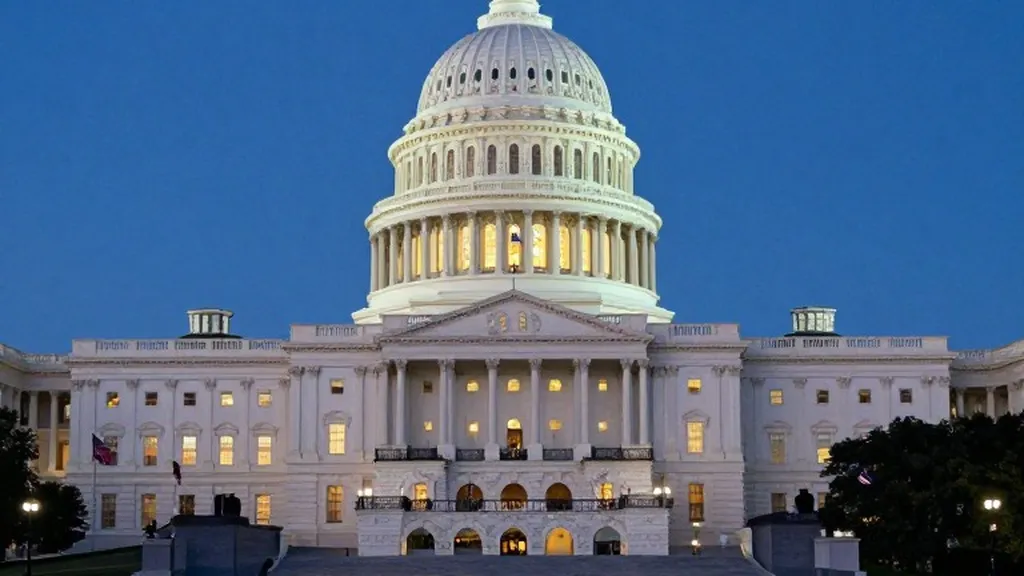
The result of this election is a divided government that will likely lead to intense oversight and legislative battles. With Democrats controlling both chambers, they have the tools to initiate subpoenas, hold hearings, and pass legislation that can override or check the executive branch. This dynamic is expected to bring a new level of scrutiny to the Trump administration's projects in Washington, D.C., and its foreign policy decisions. The new Democratic leadership has already signaled an intent to use their majority to advance their legislative priorities and hold the administration accountable for its actions, marking a new chapter in the relationship between the White House and Congress.
This election also marked a historic moment for representation in Congress. Voters elected a slate of candidates who reflected a broader diversity of the American population. The victory of Abdul El-Sayed in Michigan, who will be the first Muslim American U.S. senator, was a headline-grabbing result that drew attention from around the world. His victory speech, which included a playful address to Vice President JD Vance, became a cultural moment that highlighted the changing face of American politics. While the partisan shift was the dominant story, the election also delivered a wave of new voices to the federal government, promising a different style of governance and representation for the next two to six years.