LeVar Burton discloses bipolar diagnosis in new memoir
The actor also details why he went by the name Bob during his childhood in Sacramento.
By Madison Darwish ·
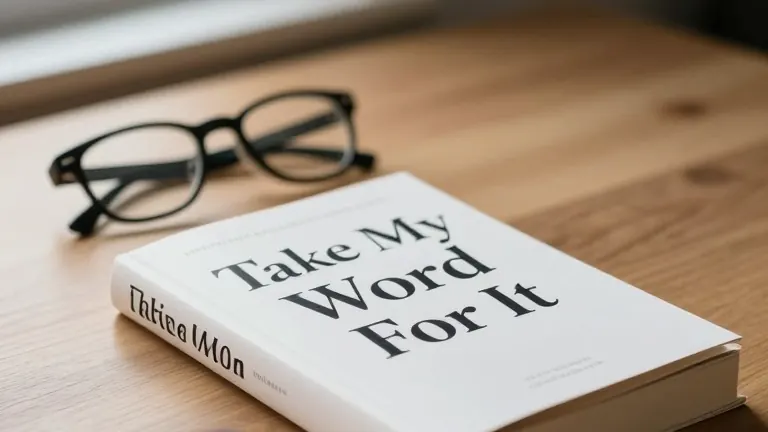
LeVar Burton has a bipolar diagnosis, a fact he reveals in his new memoir, Take My Word for It. The book, released this month, marks the first time the actor has publicly addressed his mental health condition in print.
Burton explains that he did not want to omit the detail from his life story. He notes that while his career has been successful, it is easy for observers to assume a life of constant ease. He argues that brain chemistry is inherited just like physical DNA and spiritual heritage. He states that he needs to acknowledge and manage these biological realities to remain productive.
The memoir offers a retrospective on Burton’s early years in Sacramento, Calif. He attended a Catholic school where he attended Mass and admired a local priest. Burton describes that figure as a source of calm for the community. He says he wanted to be a priest because he viewed the role as a way to be useful to others.
Before his acting career began, Burton also went by the name Bob. He adopted the nickname to assimilate into his predominantly white schools. He explains that his mother, Erma Gene, insisted on speaking the King's English in her home. Outside the family, Burton felt a pressure to act with a specific type of respectability to prove his worth to white society. He says the name Bob provided a comfortable entry point for his peers.
His path shifted during college at the University of Southern California. He auditioned for the 1977 miniseries Roots and was cast as Kunta Kinte. The character, a West African warrior enslaved and brought to America, resonated deeply with Burton. He says he felt aligned with Kunta and that the role allowed him to speak out on the state of race in America.
Burton went on to host Reading Rainbow on PBS from 1983 to 2006. The show was executive produced by Burton and designed to counter the summer slide in reading skills. He says adults frequently approach him in tears to discuss the show's impact on their lives. He describes the program as a central part of the personal ethos for several generations of viewers.
The actor also reflects on his role as Geordi La Forge on Star Trek: The Next Generation. He notes that fans often expressed relief when his character gained human eyes. Burton disagrees with that sentiment, arguing that Geordi's ability to see the entire electromagnetic spectrum was a superior form of vision. He loved the character for his ability to perceive the world in different ways.
Burton discusses his working relationship with co-star Patrick Stewart. He says laughter was their primary mode of communication. Stewart initially told the cast they were there to work, not to play. The cast responded by laughing at him, which Burton says helped them survive the production. He describes Stewart as the silliest of the knights and dames he has known.
The book also covers Burton's interactions with veteran actors on the set of Roots. He says he was not intimidated by sharing scenes with Cicely Tyson and Maya Angelou on his first day. He credits the makeup room with those elders for teaching him the behavioral aspects of professionalism. He says he learned how to treat crew members with respect and humanity from them.
Burton also recalls advice from Fred Rogers while filming Reading Rainbow. He asked Rogers about his secret to success and was told it was simply being his authentic self. Burton calls Rogers a bona fide saint who lived firmly in his purpose. He says Rogers taught him to be fulfilled in his work rather than looking to the trades for validation.