Musk Claims Suppliers Are Fast-Tracking Delivery for Terafab Chip Plant
Tesla and SpaceX executives state that equipment makers are accelerating shipments to meet a 2028 production target that many experts view as highly ambitious.
By Robert Hayes ·
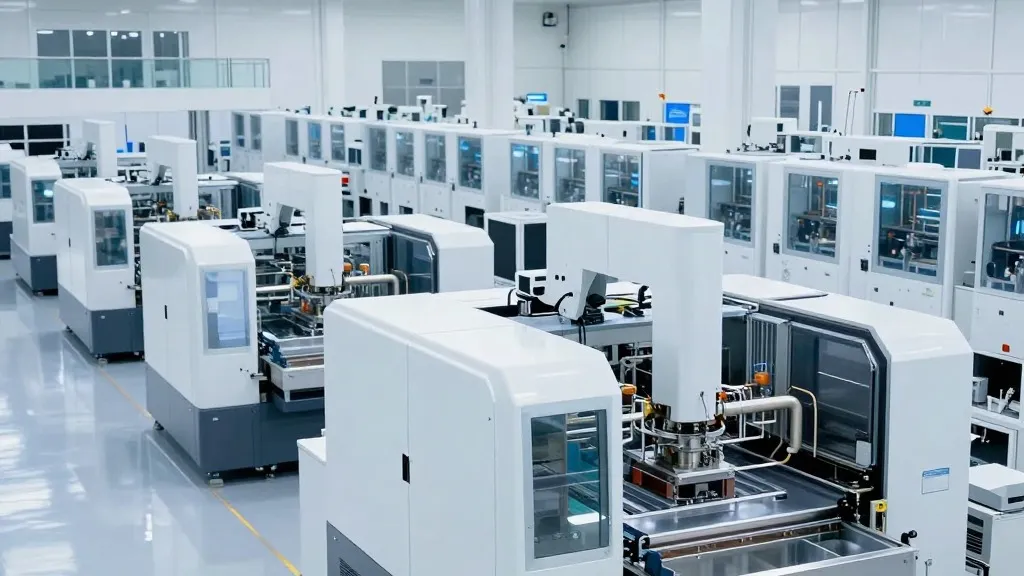
One trillion watts. That is the massive annual output target set for Terafab, a new semiconductor manufacturing facility planned for Texas. This figure represents the total computing power the plant aims to produce each year once it reaches full capacity. It is a number so large that it dwarfs the current global infrastructure for artificial intelligence computing.
On October 20, Elon Musk announced during a live earnings call that key suppliers are moving faster to deliver critical machinery for this joint venture between Tesla and SpaceX. The primary goal is to begin volume chip production at the Gibbons Creek, Texas facility by the third or fourth quarter of 2028. While Musk described this schedule as highly aspirational, he noted that partners are working to make these aggressive dates a reality. The announcement came as part of a broader update on the company's technological roadmap.
Musk stated that he is grateful to ASML and other vendors for accelerating equipment deliveries. ASML is a crucial partner because it is the only commercial provider of extreme ultraviolet lithography systems. These machines cost approximately 400 million dollars each and are essential for producing leading edge chips. Terafab plans to use Intel's 14A manufacturing node technology with these EUV tools. Intel officially joined the venture in April 2026 to help develop the necessary silicon fabrication processes.
The project involves a complex web of collaborations across the global supply chain. Beyond ASML and Intel, other major equipment providers include American firms Applied Materials, Lam Research, and KLA Corporation. Japanese company Tokyo Electron is also part of the network. These companies will supply front end processing and metrology machinery. Tesla and SpaceX are currently in discussions with about ten South Korean manufacturers. These include Hanmi Semiconductor for advanced packaging and HPSP for high pressure hydrogen annealing equipment.
The timeline for specific deliveries remains somewhat fluid. Unofficial sources indicated that the first EUV tool was originally scheduled for arrival in mid 2027. It is not yet clear if this date has been moved up as part of the expedited efforts Musk mentioned. The facility is designed to be vertically integrated, meaning it will handle logic, memory, and advanced packaging all in one location. This approach is intended to reduce reliance on external foundries like TSMC for cutting edge AI processors.
Musk also provided updates on related AI infrastructure projects during the same broadcast. He expects his AI companies to have between 2.5 and 3 gigawatts of computing capacity active by the end of 2026. He expressed high confidence in adding another 10 gigawatts in 2027, which would bring the total to 13 gigawatts. To support this growth, SpaceX and xAI are procuring next generation NVIDIA architecture. The plan includes launching a training cluster with 440,000 Nvidia Vera Rubin GPUs by the end of the second quarter in 2027.
The commercial potential of Terafab is described as immense. Musk claimed that the value of the chips produced in this single building could rival the GDP of a top 20 country. For comparison, Switzerland, which ranks 20th globally, has a GDP of about 1.14 trillion dollars. The chips from Terafab are intended to power xAI clusters, Tesla's self driving vehicles, Optimus robots, and SpaceX's orbital data centers.
Despite the bold claims, experts have raised questions about the feasibility of the one terawatt target. Gartner estimates that the total global AI optimized data center capacity is roughly 44 gigawatts as of late 2026. This means Terafab's planned output would be more than twenty times the current global total. While AI capacity has grown by roughly 3.3 to 3.4 times per year since 2022, scaling to a single facility of this magnitude presents significant engineering challenges.
The project aims to mitigate future shortages of high performance processors. However, the tight capacity across the semiconductor supply chain poses a risk. Critics note that ASML has often had a backlog of orders, making expedited deliveries difficult unless other customers change their plans. Whether the 2028 deadline is realistic remains an open question, but the announcement signals a major push toward self sufficiency in advanced chip manufacturing.
Source: Tom's Hardware