Tesla Q3 2026: Revenue Holds Steady While AI Spending Deepens Profit Decline
Tesla reported third-quarter revenue in line with forecasts, but operating income fell 56% year-over-year due to surging capital expenditures on artificial intelligence and robotics.
By Ken Adams ·
Tesla’s third-quarter financial report, released after the market close on Tuesday, confirmed that the automaker has stabilized its top line but continues to sacrifice near-term profitability for long-term technological bets. The company delivered $28.05 billion in revenue, essentially flat year-over-year and matching Wall Street estimates, while non-GAAP earnings per share came in at $0.48, slightly above the $0.45 consensus but down 4% from the prior year.
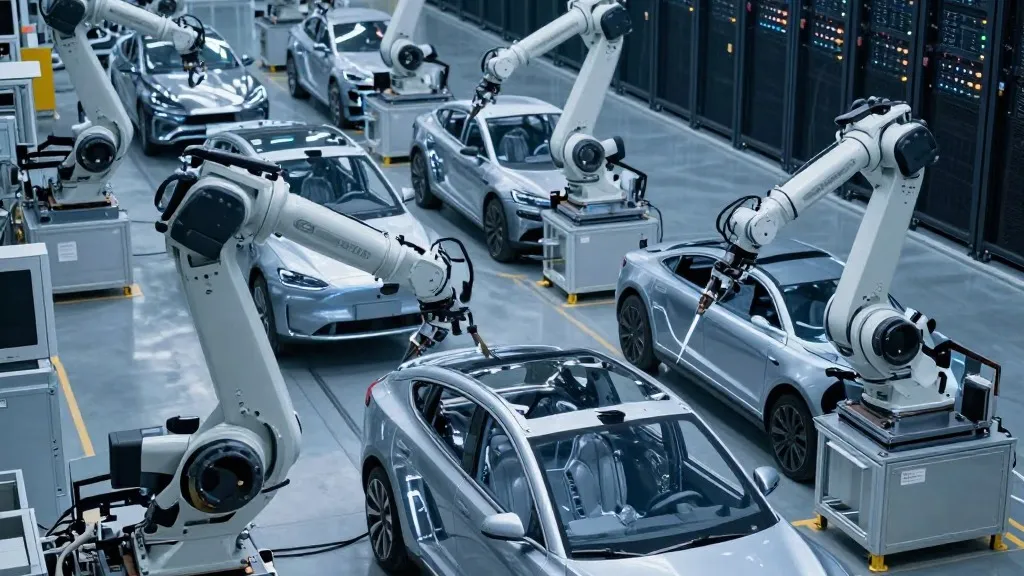
The primary driver of the profit decline was a significant increase in operational spending. Operating income dropped 56% to $718 million, resulting in an operating margin of 2.6%, down from 5.8% a year ago. This contraction was fueled by operating expenses that rose 39% to $4.78 billion, with research and development costs jumping 69% to $2.76 billion as the company invests heavily in its 'Super Intelligence' initiatives, the Optimus robot, and the Cybercab. Additionally, stock-based compensation surged to $1.17 billion, partly driven by the 2025 CEO pay package.
Capital allocation remains a point of scrutiny for investors. Tesla spent $4.73 billion on capital expenditures this quarter, more than double the amount spent a year ago, yet this figure is only a fraction of the 'more than $25 billion' annual guidance management set earlier. With $13.01 billion spent in the first nine months of 2026, the company would need to deploy roughly $12 billion in the final quarter to meet its target, a pace that seems unlikely given that spending actually decreased from the previous quarter. This heavy capital outlay contributed to free cash flow of $1.53 billion, a sharp decline from $3.99 billion in the same period last year, though the company ended the quarter with a robust $45.4 billion in cash and investments.
On the operational side, automotive gross margin excluding regulatory credits improved to 18.1%, up from 15.4% a year ago, aided by a better product mix and increased FSD subscription revenue. However, the energy segment faced headwinds, with revenue falling 16% to $2.88 billion due to tariff-related customer refunds, even as deployments rose to 13.7 GWh. In contrast, the services segment became a bright spot, with revenue growing 33% to $4.61 billion and gross profit hitting a record $734 million driven by charging, insurance, and parts sales.
Tesla attributes its flat vehicle deliveries of 486,532 units primarily to battery availability rather than weak demand, claiming it holds the largest passenger vehicle backlog in four years. Despite this, average selling prices continued to decline, and the company reported active FSD subscriptions at 1.74 million, a 67% increase. As the company moves toward a Q2 2027 target for unsupervised FSD, the market will likely focus on whether the current investment cycle can eventually translate into sustained margin expansion or if the heavy spending will continue to pressure near-term returns.
Source: Electrek