Nebraska's rural mail voting system faces challenge
Eleven small counties rely on all-mail elections to save costs and boost turnout, but a new state official is pushing for in-person alternatives.
By Alina Marshall ·
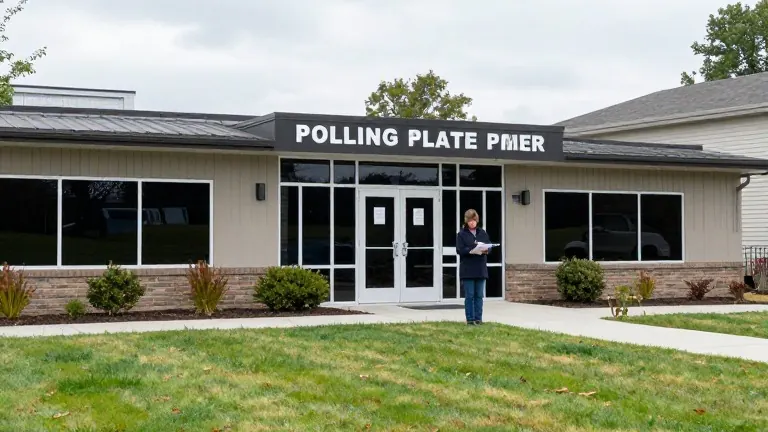
Eleven of Nebraska's smallest counties conduct elections entirely by mail, a system that election officials say saves money and increases voter participation. The practice, which has been in place for most of the 21st century, is now facing scrutiny from Scott Petersen, the Republican nominee for secretary of state. Petersen defeated incumbent Bob Evnen in the May primary and is proposing to replace automatic mail ballots with in-person voting options in these rural areas.
Morrill County, located in the Nebraska Panhandle, is one of the eleven counties, alongside Boone, Cedar, Cherry, Clay, Dawes, Dixon, Garden, Knox, Merrick, and Stanton, that use this method. Candace Panas, the county election commissioner, explained that her budget cannot support the costs of setting up polling places and hiring staff. She stated that there is no way her current financial resources would allow for the equipment and personnel needed for in-person voting.
Since 2005, Nebraska law has permitted counties with fewer than 10,000 residents to hold elections by mail. All eleven participating counties voted for Donald Trump by wide margins in the 2024 election, with support ranging from 71% in Dawes County to 90% in Cherry County. These areas also consistently report higher turnout than the state average. In the 2022 midterm election, turnout in these counties averaged 69%, compared to 55% statewide.
A 2024 analysis by Flatwater Free Press found that the number of ballots cast in these eleven counties increased by an average of 16% between the 2016 and 2020 presidential elections as they transitioned to all-mail voting. Panas noted that many voters in Morrill County are elderly or live far from the county seat, making in-person voting difficult, especially after recent flooding and wildfires damaged rural roads.
The expansion of mail voting in Nebraska was a bipartisan effort. In 1999, the state legislature allowed any registered voter to request a mail ballot without providing a reason, a measure introduced by a Democrat and supported by then-Gov. Mike Johanns. In 2005, Republican state Sen. Deb Fischer sponsored legislation for the smallest counties to hold elections by mail to avoid the expense of equipping remote polling places with accessible voting machines.
Petersen argues that extended mail voting encourages outside groups to collect ballots and influence elections. He told Nebraska Public Media that technology offers an easy way to address distance issues without making the whole county mail-in. He noted that it is prohibitive to vote if a resident lives too far from a polling place. Evnen, who served as secretary of state until losing the primary, defended the current system, noting that 300,000 registered voters chose to vote by mail in the 2024 general election.
Nebraska election officials cite several security measures for mail voting, including a photo ID requirement, signature matching on returned envelopes, and barcodes that prevent duplicate ballots. Outside of the eleven all-mail counties, residents must request a mail ballot. The state has also tightened rules for ballot drop boxes and requires identification information when requesting or returning mail ballots.
Source: Omaha Daily Record