Six thousand women blocked coal mine entrances in 1921
The 1921 protests in Pittsburg, Kansas, helped shape labor laws and drew national attention to the miners' strike.
By Madison Darwish ·
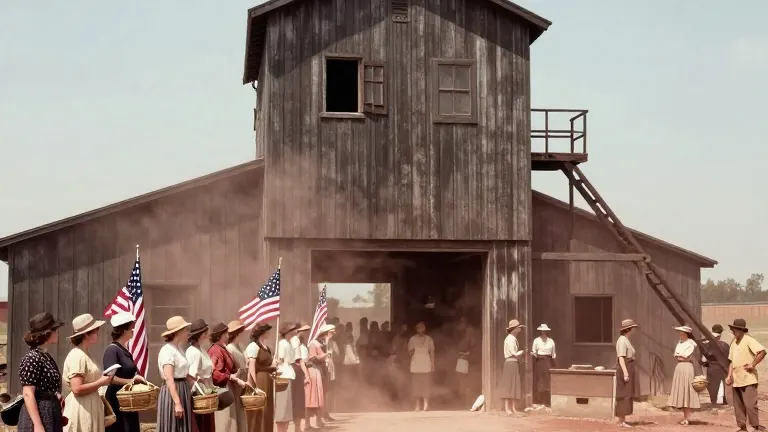
Six thousand women gathered in Pittsburg, Kansas, in 1921 to prevent mine owners from reopening coal pits during a strike. They formed a barrier at the mine entrances, a tactic that drew national media coverage and earned them the nickname "The Amazon Army."
The protest supported a local mine leader, Alex Howat, who refused to obey the Kansas Industrial Court Act. The state legislature had passed the act in 1920 after a year-long statewide strike. The law effectively banned strikes at coal mines, making Kansas the only state with such a prohibition. Other states, including Pennsylvania, passed resolutions opposing the Kansas law in support of Howat.
Mary Skubitz, a Slovenian immigrant who spoke multiple languages, emerged as a key leader among the women. The group used red pepper to deter counter-protesters and covered mine entrances with American flags. They reasoned that workers would hesitate to tear the flags to enter the mines.
Police arrested several women in 1921 for unlawful assembly. Records from these arrests are held in the Special Collections Department at the Axe Library at Pittsburg State University. Skubitz was among those detained. Her story and the broader history of the march faded from public memory until the late 1980s.
Sara DeCaro, the library’s curator of special collections, suggests the women remained quiet because they were respectful of the era in which they participated. Linda O’Nelio Knoll, a local historian, discovered that her grandmother, Maggie O’Nelio, was 23 and pregnant during the march. Maggie only revealed her participation after reading a poem about the group.
The activism of Skubitz and the miners influenced later legislation. Skubitz’s son, Joe Skubitz, served as a U.S. Representative from 1963 to 1978. He helped pass the Surface Mining Control and Reclamation Act of 1977 and the Black Lung Benefits Reform Act. These laws addressed environmental degradation and provided healthcare for miners with lung diseases.
In October, the state of Kansas officially honored Mary Skubitz with a plaque on the grounds of the Kansas Statehouse. Sarah LaFrenz, president of the Kansas Organization of State Employees, described Skubitz as an activist before the term was widely used. A mural titled "Solidarity" now hangs in the Pittsburg Public Library, commemorating the 1921 march and the miners it supported.
Phyllis Bitner, chair of the Miners Hall Museum Foundation Board of Trustees, noted that the efforts of the miners and women established current workplace standards. The museum in Franklin, Kansas, preserves the history of the industry that once drew European immigrants to the region from 1885 to 1930.