Spanish Daily Set Lunch Hits 14.70 Euro Price Point as Servings Decline
A new book by journalist Lakshmi Aguirre examines the history and current economic pressures facing the menú del día, a midday tradition serving four million people weekly.
By Alina Marshall ·
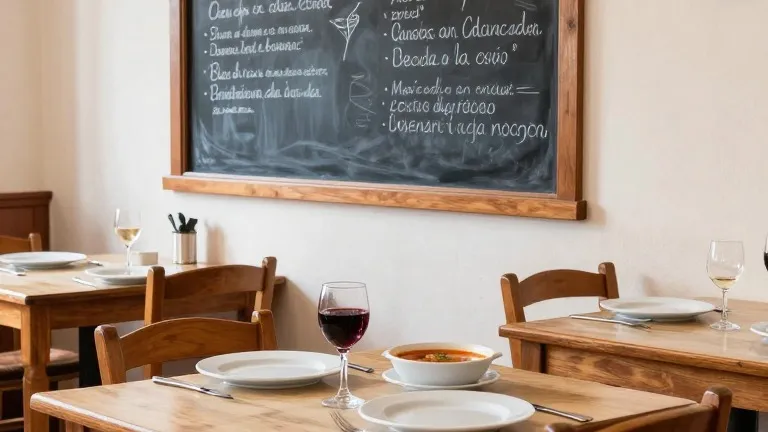
The cost of a standard midday meal in Spain has reached an average of 14.70 euros, a price point that reflects rising energy and food expenses for family-run restaurants. This increase comes as the daily set lunch, known as the menú del día, continues to lose popularity among consumers who prefer quick alternatives or bring their own food.
The tradition began in the mid-1960s as a specific tourist menu created by Manuel Fraga, who served as information and tourism minister under dictator Francisco Franco. The initiative aimed to demonstrate to foreign visitors that Spanish food was plentiful, high-quality, and affordable following the post-civil war scarcity. Regulations required establishments to serve a soup starter, a main course of egg, fish, or meat with at least three options and a side dish, plus a dessert of fruit, sweets, or cheese.
Authorities fixed the price between 50 and 250 pesetas to ensure affordability. They also mandated that the accompanying quarter-litre of wine be a pure, clean, and pleasant Spanish red or white with a minimum alcohol content of 12 percent. In the early 1970s, the offering was renamed to reduce its association with tourist pricing and to encourage domestic consumption.
Food journalist Lakshmi Aguirre documented these origins in her new book, Menú del Día: Everyday Scenes of a First Course, a Second Course and Pudding. She argues that while the tradition is facing pressure, it has not disappeared. Aguirre noted that many Spaniards were surprised to learn of the menu’s official origin, stating, "It says a lot about us Spaniards; we forget very quickly."
In 2009, chef Ferran Adrià declared the menú del día extinct, citing changing eating habits and the rise of bistro-style restaurants that charge 20 to 30 euros for simple meals. Seventeen years later, the practice persists, with approximately four million of these meals served on each working day. The format typically includes a starter, a main, and a choice of pudding or coffee, along with bread and a drink.
Economic pressures have forced many small restaurants to adjust their offerings. Some have replaced the rotating daily choice with a single dish of the day to simplify operations. Others have incorporated Latin American staples to reflect the country’s shifting demographics. Aguirre accepts these changes, noting that the menu has always mirrored the society that consumes it.
Aguirre outlined specific criteria for evaluating a traditional venue. She favors simple dishes, a regularly changing menu, and fresh ingredients such as non-frozen chips. She advises diners to avoid establishments advertising trendy items like avocado, burrata, tartare, truffle, or sourdough bread. She also looks for social cues, such as a chorus of regulars and the presence of the owners' children doing homework at a back table.
The shift in eating habits has accelerated as more people opt for time-efficient solutions. Many now bring food from home or use microwaved supermarket meals instead of sitting down for a full lunch. Aguirre describes the loss of the traditional menu as the erosion of a social meeting point where families with limited means can dine out and individuals living alone find companionship.
She emphasized that the value of the menú lies not only in the affordability of the meal but also in the time allocated to enjoy it. The current average price of 14.70 euros represents a tangible shift in the economic reality for those who rely on this daily ritual.
More Business · World news · Watch Your Wallet · Report a business · Got a Story?