UN peacekeepers pull out of Western Sahara after 35 years
A failed vote at the Security Council ended the mission, leaving a disputed desert territory without its long-standing international monitor.
By Emmanuel Faure ·
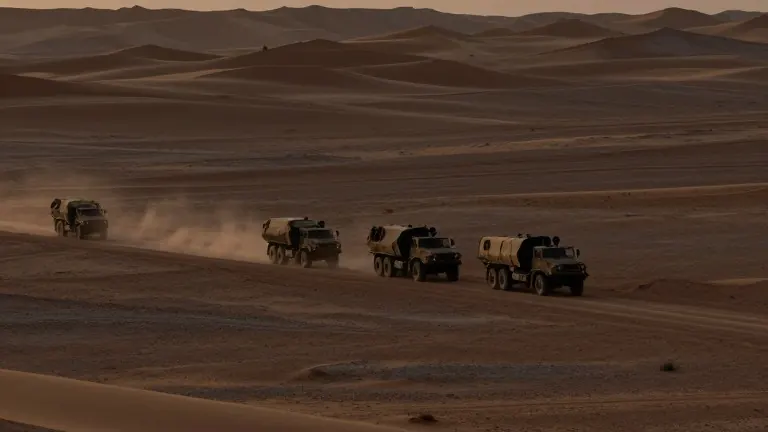
The United Nations concluded its 35-year presence in Western Sahara on Sunday, ending a mission that had monitored the disputed territory since 1991. The withdrawal follows a stalemate at the U.N. Security Council where the United States and Russia failed to agree on the region's future.
Stéphane Dujarric, spokesperson for the U.N. secretary general, announced the start of the liquidation period on November 1, 2026. A reduced team will now manage the move of assets back to troop-contributing nations and the disposal of U.N. equipment. The force had a budget of more than $62 million for the 2026-2027 period and was authorized for 534 personnel.
The abrupt end resulted from two failed votes at the Security Council on Friday. Russia vetoed a U.S. draft resolution that supported Morocco's claim to sovereignty and proposed ending the mission the following year. A competing Russian proposal to extend the mission was also voted down. This deadlock allowed the current mandate to expire without renewal.
Morocco, which administers nearly all of the territory, welcomed the decision. The royal palace described the mission as an instrument to internationalize the dispute. In contrast, the Polisario Front, a pro-independence group backed by Algeria, called the outcome an unacceptable decision. The Algerian foreign ministry expressed profound regret and criticized the U.S. draft for excessive bias.
Western Sahara is a desert region roughly the size of Colorado, located along Africa's northwestern Atlantic coast. It was formerly ruled by Spain and is now claimed by Morocco and the Polisario Front. The territory is rich in minerals and fisheries. Morocco annexed the region in 1975, leading to an armed conflict that lasted more than 15 years and resulted in over 16,000 deaths on both sides, according to the French Senate.
The original 1991 peacekeeping mission was established to monitor a cease-fire and prepare for a referendum on self-determination. The vote never took place because the parties disagreed on who should be eligible to vote. Morocco wanted to include Sahrawis living in the territory it controls, while the Polisario Front argued for using Spain's colonial census. Twenty personnel lost their lives during the mission's history.
The Polisario Front withdrew from the cease-fire in 2020 after clashes occurred in the region. The U.N. reported last month that the territory has remained a scene of tensions and low-intensity hostilities. The end of the mission risks further straining relations between Morocco and Algeria, which severed diplomatic ties in 2021.
The U.N. secretary general called on all parties to respect the rights of the people of Western Sahara and to exercise maximum restraint. He expressed concern about the security situation and the risk of escalation. The top military contributors to the departing force were Egypt, Ghana, and Pakistan.
More Business · Watch Your Wallet · Report a business · Got a Story?