
Legal Hurdles Delay Army Lead Explosive Detonations in Iowa
A federal court stay and community outcry have paused planned blasts at the Iowa Army Ammunition Plant, raising questions about transparency and lead exposure risks.
By Emmanuel Faure ·
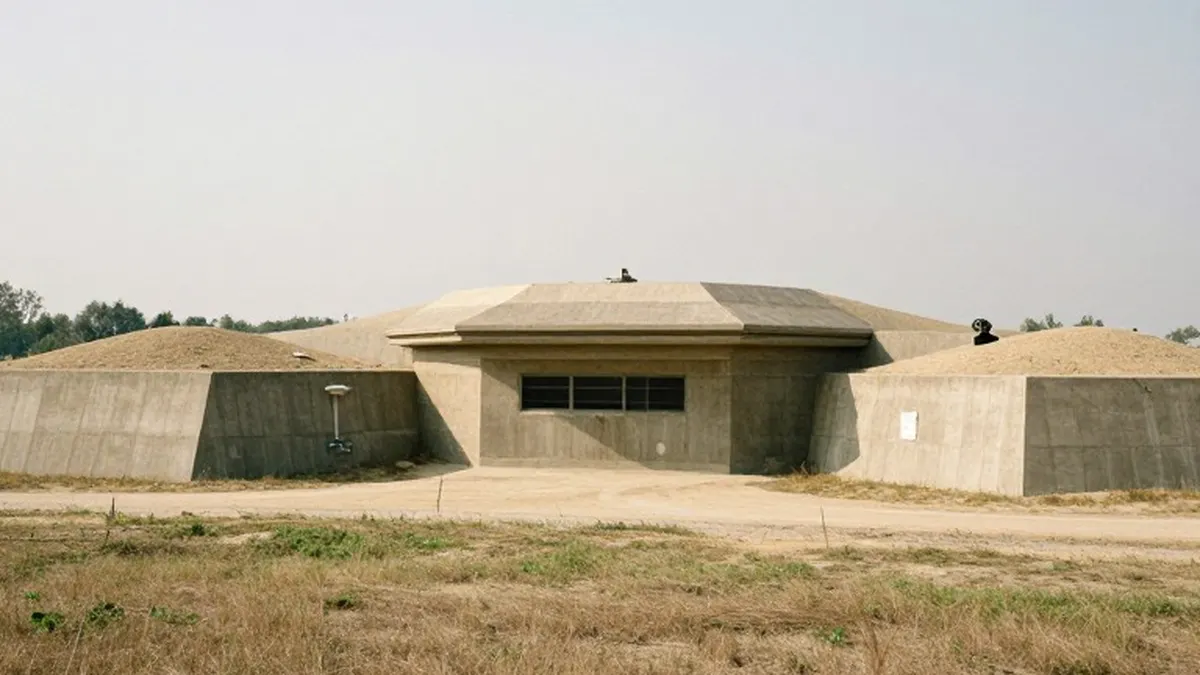
The United States Army has temporarily paused plans to detonate 68 drums of degraded lead azide at the Iowa Army Ammunition Plant. The controlled blasts, originally scheduled for Friday, November 20, were postponed to Monday, November 23, following intense public pressure and a late-stage legal challenge. The decision to destroy the volatile, lead-based explosive material was authorized by an emergency permit from the US Environmental Protection Agency, issued just five days before the initial date.
Residents, environmental health experts, and local officials have expressed concern over the lack of prior notice and potential health hazards. Iowa Democratic Senator-elect Josh Turek called for greater transparency in a statement on X, arguing that the detonation should not proceed until all safety precautions and specific health risks are clearly answered. The delay has added uncertainty to an operation that the military describes as urgent.
The legal dispute was initiated by the Iowa Environmental Council and the Iowa chapter of the Sierra Club. On the eve of the original schedule, the groups petitioned a federal appeals court to overturn the EPA permit. They argued that the agency failed to provide meaningful advance notice, did not mandate adequate safeguards for human health, and did not sufficiently consider safer disposal alternatives. The US Court of Appeals for the Eighth Circuit subsequently granted an interim stay, temporarily blocking the military from proceeding while the request for a longer-term injunction is reviewed.
The material in question is lead azide, an inorganic compound where lead constitutes approximately 71 percent of its mass. During a safety review in March, technicians discovered the stockpile had deteriorated in storage bunkers for 20 years. The evaporation of liquid in the drums caused the lead azide to recrystallize, increasing its sensitivity to shock and friction. The Army reported that the material contains roughly 9,700 pounds of explosives, including about 6,900 pounds of lead.
Army Sustainment Command spokesperson Justine Barati stated that the military faced a narrowing window to destroy the chemical before colder weather could increase the risk of spontaneous detonation. She emphasized that the goal was to minimize impact on the community and environment. The Army's containment strategy involves drenching the soil above earth-covered concrete magazines with water to suppress airborne dust. Sand-filled barriers roughly two storeys high are also positioned to direct the blast force vertically.
Despite these measures, experts question the Army's modeling predictions. Patrick O’Shaughnessy, an environmental health professor at the University of Iowa, noted that the precise amount of lead each explosion will propel into the air remains undisclosed. This uncertainty makes it difficult to estimate downwind exposure. He warned that lead could settle on playground equipment, crops, and backyards, creating long-term invisible hazards for residents.
The chemical nature of the disposal process has also drawn scrutiny. A fact sheet from the Army asserts that the heat of detonation incinerates the lead azide. However, Bruce Lanphear, a paediatric epidemiologist at Simon Fraser University, disputed this, explaining that the explosion primarily decomposes the material into nitrogen gas and lead. He stated that the lead is not destroyed but redistributed as fine particles of metallic lead and other compounds.
The health risks of lead exposure are significant, particularly for children and fetuses. According to the US Centers for Disease Control and Prevention, there is no safe blood level of lead in children. Lanphear noted that lead is a neurotoxin that can cause permanent developmental injuries, lower IQ, and attention deficits. At high doses, it can lead to encephalopathy or premature death. A 2018 study co-authored by Lanphear estimated that long-term lead exposure is linked to 412,000 annual deaths in the US.
As of Friday, the Army cannot technically detonate the chemicals under its EPA permit while the court stay remains in force. However, the pause is an interim measure, not a final ruling. Justice Department lawyers indicated that the federal government could still invoke separate emergency powers to bypass the permit requirement and proceed with the blasts if necessary.