Canada proposes splitting submarine order to limit upfront costs
Federal officials seek a guaranteed buy of eight Type 212CD boats now with an option for four more, a move that may affect the promised $86 billion in economic investment.
By Madison Darwish ·
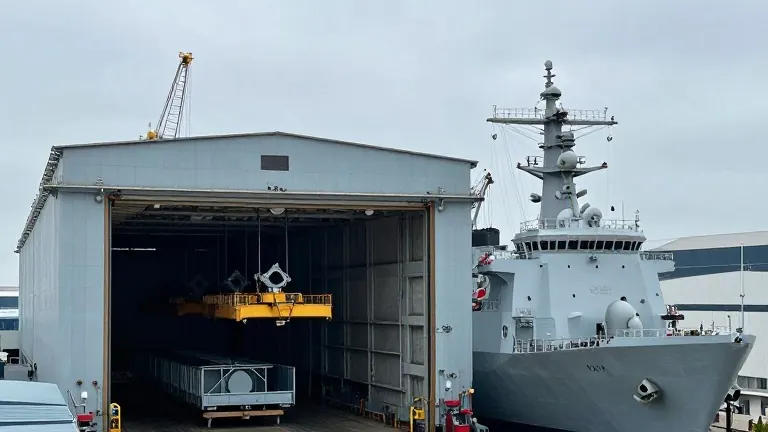
Canadian negotiators have proposed splitting the purchase of Type 212CD submarines from Germany into two separate batches. The plan guarantees an upfront purchase of eight boats and includes a proposal to acquire four additional vessels in the future. This structure aims to limit immediate financial exposure while keeping the total fleet size at 12.
The proposal emerged during meetings last week in Ottawa. Federal officials from the Defence Investment Agency met with representatives from German submarine maker TKMS and Norwegian defense firm Kongsberg. Three confidential sources said the Canadian side has discussed breaking up the order for several weeks, a strategy first floated during September meetings in Europe.
German government officials are currently assessing how a smaller initial order impacts the $86 billion in economic investment promised last summer. TKMS is simultaneously consulting its 400 suppliers to determine how a potentially reduced volume would affect their operations. The total cost of the 12 submarines is estimated between $20 billion and $24 billion, with full lifecycle costs exceeding $100 billion over 20 years.
Prime Minister Mark Carney announced in July that Canada chose the TKMS proposal over Hanwha Ocean of South Korea. At the time, he stated Canada was committed to buying up to 12 submarines. Federal officials now argue that preserving flexibility is essential because delivery will not begin until the mid-2030s. The fleet will likely be in service for more than a decade after that, leaving future governments to make long-term decisions.
Sources indicated that cost remains a key consideration. Some federal officials also debate whether crewed submarines will eventually be replaced by more effective or cheaper drone technology. The navy originally set the requirement at 12 boats to support patrols along Canada’s three-ocean coastline and participation in allied missions, particularly in the Indo-Pacific.
Sofiya Sapeha, a spokesperson for Stephen Fuhr, the secretary of state for defence procurement, said the government reiterated its pledge for up to 12 modern submarines to replace the aging Victoria-Class fleet. She stated that the Defence Investment Agency is working to secure a contract that ensures maximum benefits for Canadians. Sapeha noted that the procurement process is active, preventing the department from commenting on negotiation details.
Andrew Bernardo, a spokesperson for TKMS, said negotiations remain on track. He described the Canadian Patrol Submarine Project as an effort to acquire 12 submarines to protect Canadians. Bernardo stated that TKMS is working diligently to finalize an agreement and is focused on advancing a long-term strategic partnership that maximizes opportunities for Canadian industry.
Thomas Röwekamp, head of the German Parliament’s defence committee, visited Ottawa last week. Although not part of the direct negotiations, he confirmed awareness of the proposal. Röwekamp expressed confidence that Canada, Germany, and Norway would resolve differences. He noted that both Germany and Norway have given up production slots to ensure Canada receives four boats by 2036.
Dave Perry, president of the Canadian Global Affairs Institute, warned that breaking up the order could reduce the scale of promised economic benefits. He suggested that committing to the full order upfront is necessary to secure the largest investment package. Perry pointed to the federal government’s plan to buy 15 new destroyers, where an initial commitment of three warships was used as a risk mitigation strategy.
The German bid included plans to partner with Alberta on a large-scale carbon capture facility using TKMS technology. It also proposed direct investment in the modernization of the Port of Churchill in Manitoba for LNG and critical minerals exports. Additional elements include building a factory for heavy torpedoes and conducting joint development of hypersonic missiles. The purchase also requires dedicated maintenance facilities on both coasts. Carney set a deadline to achieve a contract by the end of 2027.
More Business · Watch Your Wallet · Report a business · Got a Story?