Dow surges 1,569 points as oil prices crash after midterm losses
Democratic control of both chambers of Congress triggered a broad market rally, with healthcare and dollar store stocks leading the charge while defense and oil firms fell.
By Madison Darwish ·
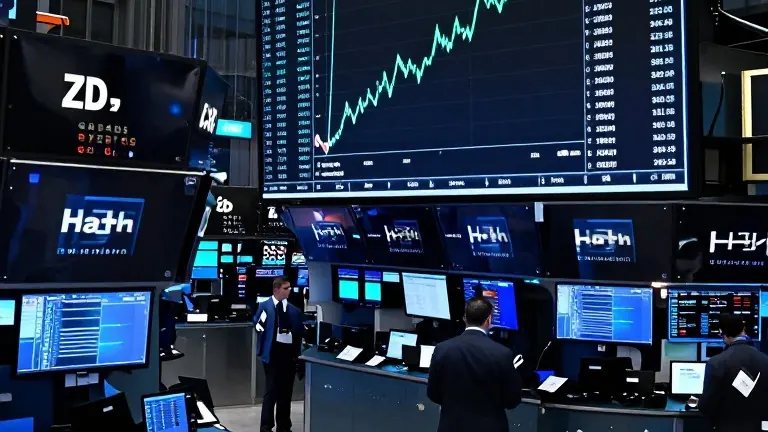
The Dow Jones Industrial Average gained 1,569.40 points on Wednesday, closing at 53,356.12. The 3% jump marked the index's largest daily gain in the current cycle. The S&P 500 added 119.70 points to reach 7,688.62, while the Nasdaq composite climbed 364.50 to 25,736.51.
The market reaction followed the November midterm elections, in which Democrats secured control of both the House of Representatives and the Senate. This shift ended the Republican Party's sole control of Washington. Investors generally view split government as a stabilizing factor, reducing the risk of sweeping legislative changes. Brian Jacobsen, chief economic strategist at Annex Wealth Management, noted that corporate earnings typically outweigh political outcomes for long-term market direction.
Oil prices fell sharply in the immediate aftermath. A barrel of Brent crude dropped 8.7% to $94.62, touching its lowest level in two months. The decline reversed the previous upward trend driven by the war with Iran. Vice President JD Vance attributed the Republican losses to that conflict, which had previously spiked energy costs. The drop in crude prices hurt major oil firms, with ExxonMobil falling 4.6% and ConocoPhillips dropping 5.2%.
Healthcare and discount retail stocks led the broader rally. HCA Healthcare, which operates hospitals and ambulatory sites, jumped 10.3%. Dollar Tree, a retailer serving low-income consumers, rose 9.6%. These gains reflect investor expectations that a Democratic Congress may reverse certain cuts to federal healthcare and food assistance programs established in the One Big Beautiful Bill Act.
Companies tied to President Donald Trump and the artificial intelligence sector faced pressure. Trump Media & Technology Group, the parent company of Truth Social, fell 24.5% to $4.49 per share. Elon Musk's Tesla dropped 3.3%, and SpaceX sank 3.8%. Musk, a major donor to Republican candidates, is seen as a potential target for oversight investigations by the new congressional majority.
AI-related stocks showed mixed results amid fears of increased regulation. Nvidia, a key chip manufacturer, declined 3.2% and weighed heavily on the S&P 500. CoreWeave, a cloud provider for AI infrastructure, dropped 9.9%. In contrast, Alphabet rose 3.2%, rebounding from its previous week's significant loss. Investors expressed concern that Democratic victories in states like Texas could slow the expansion of AI data centers.
Defense contractors also declined as traders priced in potential pressure to de-escalate the Iran conflict. Lockheed Martin fell 6.9%, Northrop Grumman dropped 4.5%, and General Dynamics lost 2.6%. In the bond market, the yield on the 10-year Treasury fell to 4.88% from 4.95% late Tuesday, reflecting lower inflation expectations and reduced deficit risks.
Global markets largely mirrored the U.S. rally. The Paris index climbed 2%, Shanghai rose 2.2%, and London gained 1.8%. The Nikkei 225 in Japan was a notable exception, falling 1.4%. Carsten Brzeski, global chief of macro at ING Bank, suggested that the new political balance might lead to a calmer executive branch, potentially focusing on trade and peace efforts rather than disruptive policy shifts.
More Business · Watch Your Wallet · Report a business · Got a Story?