Lawyer Brad Miller helped launch brief-lived Christian school in Pueblo
The academy operated for one year in a working-class district before closing following new state regulations and legal challenges.
By Madison Darwish ·

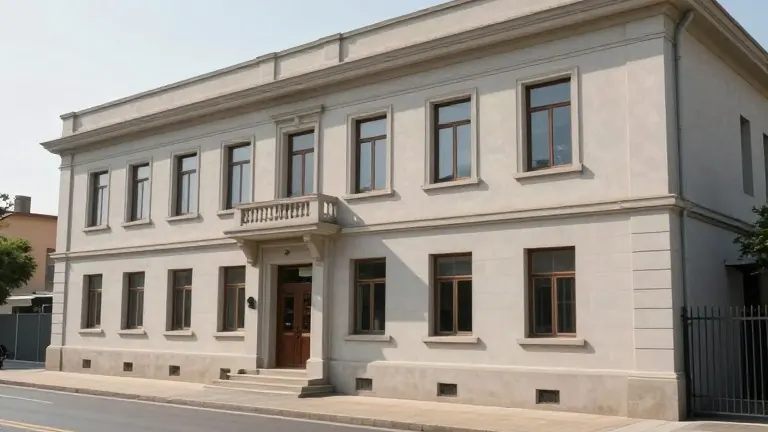
A small Christian school for kindergarten through fifth graders opened in Pueblo County in late 2025, only to close after one academic year. The academy, known as Riverstone Academy, served 30 students in a low-slung cinderblock building in an industrial area. Its existence sparked three lawsuits, a $20,000 settlement, and the resignation of a local school board member. The school was authorized by a public education co-op with the help of a state law that has since been tightened.
Riverstone was established shortly after the U.S. Supreme Court deadlocked 4-4 on April 30, 2025, in a case concerning religious charter schools in Oklahoma. The ruling preserved the status quo, leaving existing bans on religious charter schools in place. Brad Miller, a Colorado lawyer and representative for Alliance Defending Freedom, sought to relitigate the issue of public funding for religious schools. He worked with an education group to launch the new school in a community that has shifted toward Republican politics in recent years.
The school was led by Quin Friberg, a pastor who co-founded the local group Forging Pueblo in 2018. Forging Pueblo is a network of churches and individuals that sought to infuse public institutions with a Christian worldview. The academy received hundreds of thousands of dollars in state funding to provide religious curriculum. Its website described the program as offering a Christian foundation. Miller represented the authorizing body, Education reEnvisioned Board of Cooperative Educational Services, or ERBOCES, which is led by Ken Witt.
The approval process for Riverstone raised questions about transparency and legal boundaries. The unelected board of ERBOCES authorized the school during a five-minute meeting. The Pueblo County School District 70 board also signed off on the project without dissent. Miller, who also represented the district, had discussed the idea with the board in an email labeled privileged and confidential. The district never publicly revealed that the new school would be a Christian academy.
Ronda Rein, the former superintendent of Pueblo County, attempted to warn state officials about the school's religious nature. She called the Colorado Department of Education in July 2025 and learned that department officials were already aware of the religious curriculum. The department granted the school a code after days of internal debate and a meeting with an assistant attorney general. Rein stated that officials feared a lawsuit if they refused the request. She has since retired to assist her husband with health challenges.
Local residents and officials expressed mixed views on the school's impact. Bryan Kelsen, a Pueblo County pastor whose church housed Riverstone for several months, said the experiment encouraged people to consider educational options. He noted that his church is now more interested in building a school on its grounds. He believes parents who seek Christian education should have the option of a tuition-free school, provided secular choices remain available. He also acknowledged the trade-offs of accepting government funding, stating that the entity holding the purse strings makes the spending decisions.
Rein believes public schools should remain secular. She stated that families wanting religious education should pay for it privately. She warned that opening the door to fund one religion would create complications for funding others. Hannah McDowell and Chris Sutton, parents of three children in the district, said the school board and Miller tested boundaries regarding public access and approval processes. McDowell said the community's political shift made it a suitable location for the school.
The closure of Riverstone followed the passage of a state law that placed strict limits on co-ops like ERBOCES. A religious liberty lawsuit that Miller helped initiate fizzled around the same time. The Trump administration's tax credit scholarship program is expected to influence future debates on school funding. Another Oklahoma charter school case is currently moving through the court system. The state's new regulations have removed the specific start-up route used by Riverstone's backers.
Miller said he was working for his client, ERBOCES, and provided legal advice on risks and legality. He stated that he did not create the school concept and had not voted on any school board action. He responded to Rein's description of him as a puppeteer by saying he does not believe he has the power to influence boards in the way some suspect. The rapid rise and fall of the school left Pueblo County grappling with the implications for the separation of church and state.