Phoenix artist carves wood again after brain surgery
Bill Daggett, who has Parkinson's disease, underwent deep brain stimulation surgery that stabilized his hands and allowed him to resume his craft.
By Emmanuel Faure ·
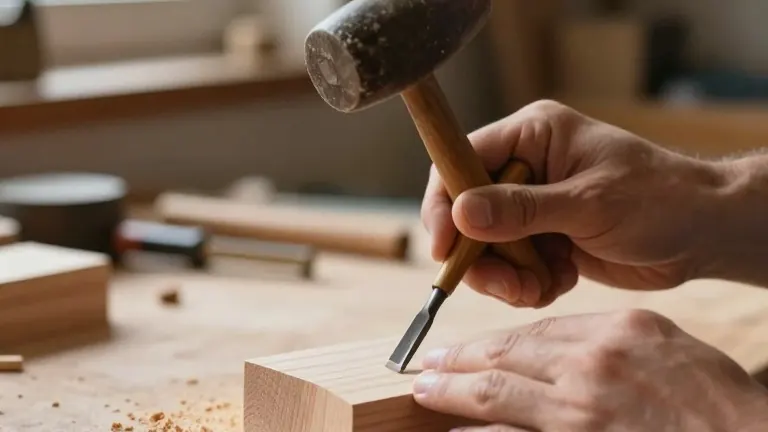
Bill Daggett, a woodcarver from Phoenix, Ariz., has returned to his workshop after years of struggling with uncontrolled tremors. The artist, who developed a passion for carving decades ago, was forced to stop working when his hands began shaking uncontrollably. A diagnosis of Parkinson's disease followed after a doctor observed his movements at a local art show.
Daggett described the physical toll of the condition before his surgery. He explained that the tremors were severe enough to interfere with basic daily tasks. "I couldn't even eat, hardly. I was shaking so bad, and I didn't want to go out anymore. That's part of the depression. You don't want to be seen when you can't hold a fork and get it to your mouth," Daggett said. The loss of motor control contributed to a decline in his mood and social life.
After medication failed to control the symptoms, Daggett opted for deep brain stimulation, or DBS. This surgical therapy involves the implantation of electrodes that send electrical pulses to specific areas of the brain. The procedure aims to interrupt the abnormal neural activity that causes tremors and other motor symptoms.
Sam Cradduck, a gerontologist and host of the program "Aging Untold," explained the mechanism of the treatment. He compared the device to a cardiac pacemaker, a technology widely used to regulate heart rhythm. "What they did was basically give his brain a pacemaker. You know, we're kind of accustomed to the thought of a pacemaker helping a heart keep rhythm. But this is a new way to go in and help that brain reset and send those electrical pulses out to give the brain the pacemaker to now reduce those tremors, reduce some of the side effects of the disease and the progression of it," Cradduck said.
The procedure has restored stability to Daggett's hands, enabling him to pick up his carving tools again. Cradduck noted that the intervention addresses both the physical and emotional impacts of the disease. He emphasized that the condition often strips patients of their identity, not just their mobility. "We talk about the physical aspects of disease and aging all the time, but we forget to talk about the emotional loss, and that's where this guy was at. He was so connected with being the artist and being able to create, and the disease was robbing him of that. We see that it's robbing him of physical abilities maybe to eat, but we forget that it's robbing him of a piece of himself," Cradduck said.
Daggett's case illustrates how DBS can restore function for patients with advanced Parkinson's disease. The therapy is designed to manage symptoms that standard medications cannot control, allowing individuals to maintain hobbies and daily routines that were previously inaccessible.