SpaceX Chief Musk Claims Moon Lander Needs Just Eight Tanker Flights
Musk disputes a NASA advisory panel's estimate of 22 launches, arguing orbital fueling logistics require far fewer Starship missions for the 2028 Artemis IV crewed lunar landing.
By Emmanuel Faure ·
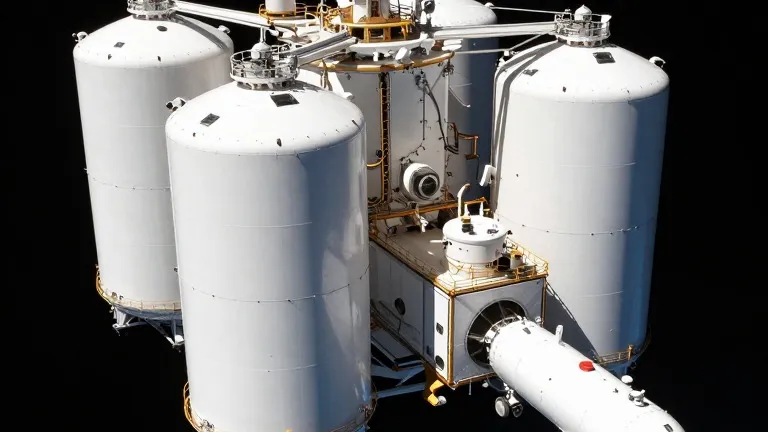
Elon Musk stated that only six to eight Starship tanker launches are necessary to fuel a lunar lander, directly contradicting a recent estimate from a NASA safety advisory panel that projected the figure at 22. The disagreement surfaced during the Aerospace Safety Advisory Panel's quarterly public meeting, where members assessed risks for the Artemis IV mission, which is scheduled to carry a crew to the Moon in 2028.
Panel member Charlie Precourt, a former NASA astronaut, identified the orbital refueling process as a primary technical risk for the upcoming mission. He cited previous internal assessments suggesting that 22 flights would be required to fill the necessary propellant depots. This comment was shared on social media by Ars Technica reporter Eric Berger, who noted that even at a launch rate of two Starships per week by late 2027, completing 22 launches would consume approximately three months of continuous operations. Musk replied to the post, describing the 22-flight estimate as "way too high" and asserting that the actual requirement would be closer to eight.
The discrepancy stems from differing assumptions about Starship's performance and propellant retention capabilities. A standard Starship rocket consumes nearly all its fuel to reach Earth orbit, necessitating an orbital depot system where tanker vehicles transfer propellant to a storage tank before the lunar lander departs. Each transfer involves physical losses, as the liquid oxygen and methane boil off at cryogenic temperatures while in storage or during the docking process. NASA's higher estimate appears to be based on current lift capacity and conservative loss calculations, whereas Musk's lower range assumes a more efficient version of the vehicle.
SpaceX intends to conduct these refueling operations using its upgraded V3 Starship, hardware that has not yet completed a full flight profile. The company faces the challenge of minimizing boil-off losses during the time tankers spend in orbit and during the physical connection between vehicles. Precourt noted that Artemis IV involves a "large number of firsts," emphasizing the complexity of coordinating multiple orbital rendezvous and propellant transfers before a crewed departure.
Musk has previously pushed back against higher launch counts for lunar operations. In 2021, he dismissed a government document suggesting 16 launches were needed, calling that number "extremely unlikely" and predicting eight tankers would suffice. The current debate highlights the technical uncertainty surrounding the orbital fueling architecture that will underpin the 2028 lunar landing, a process that must succeed before astronauts can leave Earth for the Moon.
Source: Teslarati