Urban fire smoke contained 80x more lead than typical background levels
New research reveals that the chemical makeup of city fire plumes differs sharply from wildland smoke, exposing millions to high concentrations of toxic heavy metals during the 2025 Los Angeles fires.
By Alina Marshall ·
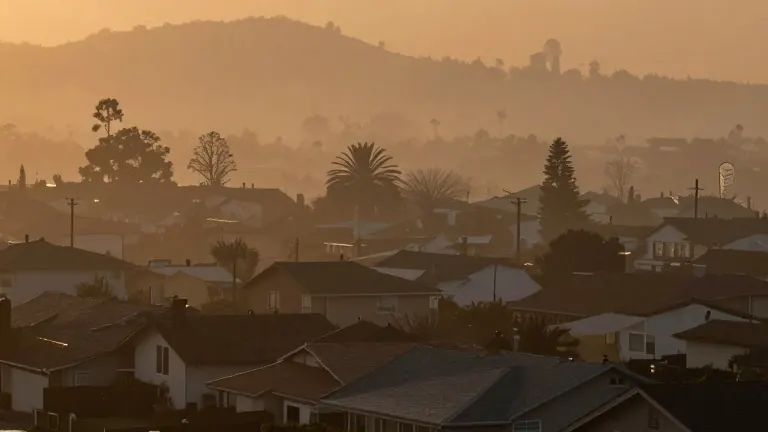
Residents in Los Angeles faced a distinct health risk during the January 2025 fires that standard wildfire safety guidelines did not account for. A new analysis indicates that the smoke from the Eaton Fire contained toxic lead levels 80 times higher than typical background concentrations during its peak intensity.
Researchers from the California Institute of Technology analyzed the chemical composition of the urban plume and found it held significantly higher amounts of lead, arsenic, and halogens compared to vegetation-based wildfire smoke. These heavy metals originated from burning vehicles, building materials, and household electronics. The study, published in Science Advances on Wednesday, marks the first detailed chemical breakdown of an urban fire plume using real-time monitoring data.
Ng, an author of the study, stated that the core discovery is that wildfire smoke is fundamentally different from urban smoke. The team utilized the Atmospheric Science and Chemistry mEasurement NeTwork, or ASCENT, to track trace elements in fine particulate matter every hour. This network allows scientists to observe the specific components in the air in real time, a capability previously unavailable for such detailed analysis.
The Eaton Fire and the Pacific Palisades fire, which began on Jan. 7, 2025, killed at least 31 people and destroyed more than 16,000 structures. The combustion of homes and contents released a complex mix of toxic chemicals. By comparing the Eaton Fire data to a 2024 vegetation fire in Riverside County, the researchers determined the urban plume contained 50 times more lead, three times more arsenic, and seven times more halogens.
During the first days of the fire, approximately 7 million people were exposed to elevated lead levels for 24-hour periods. Lead is a neurotoxin that can impair child development and increase blood pressure in adults, while arsenic is linked to various cancers. Scientists have not yet determined the long-term health effects of short-term, high-intensity exposure to these specific metal mixtures.
Experts noted that while the findings align with expectations, the ability to document them hourly is a new development. Ed Avol, a professor emeritus at the University of Southern California, said the study bridges a gap in research by providing hour-by-hour measurements rather than the standard twice-weekly checks. He described the current intersection of urban growth and climate change as a dangerous new world where fires increasingly burn human-made materials.
Yaguang Wei, an assistant professor at Mount Sinai, agreed the findings were not surprising given the prevalence of lead in wall paint and plastics. He argued that the results have policy implications, suggesting governments should invest in more prescribed fires, better monitoring, and public alerts to protect residents. The study underscores the need to adapt emergency response strategies as more fires enter densely populated areas.