Anthropic IPO: A $1.3 Trillion Valuation Hinges on Heavy Infrastructure Costs
Anthropic's market entry is defined by nearly $900 billion in compute commitments and a strategic Nvidia acquisition that could reshape AI access.
By Madison Darwish ·
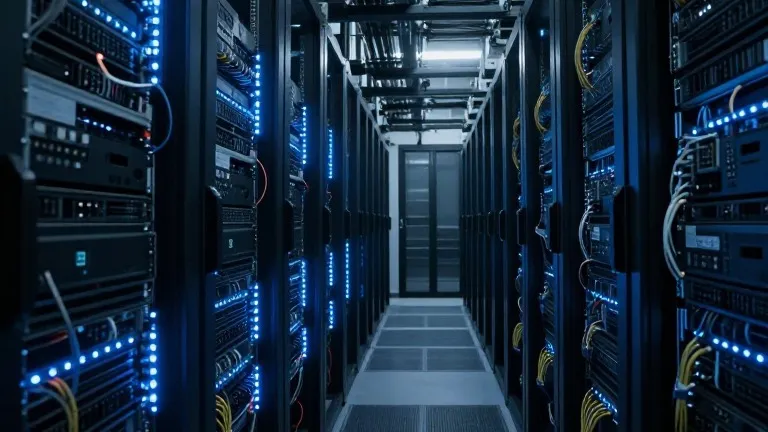
For investors and subscribers, the entry of Anthropic into the public markets signals a shift from speculative hype to hard financial reality. The company behind Claude has priced its initial public offering at approximately $1.3 trillion to $1.4 trillion. This figure sits below earlier projections of $2 trillion, yet it remains a massive valuation that demands scrutiny of the underlying costs. The core question for stakeholders is whether the revenue generated by AI subscriptions can sustain the enormous infrastructure spend required to keep the service running.
Anthropic’s disclosures reveal approximately $900.9 billion in purchase commitments and lease agreements, primarily for computing infrastructure. Of this total, roughly $451.6 billion is expected to be incurred before the end of 2030, with the remainder stretching out to 2045. About $70.7 billion is due within twelve months of September 30, 2026. While these are contractual obligations rather than immediate debt, they represent a significant future financial burden. The company’s annualized revenue run rate reached approximately $81 billion in October, a figure far exceeding the $20 billion estimates often cited. However, revenue does not equal profit, and the gap between subscription income and the cost of electricity, hardware, and personnel remains a central concern for profitability.
The economics of serving users are complex. An illustrative analysis suggests that a high-end GPU costing around $20,000 might serve 15 to 20 light users generating $400 in monthly revenue. In this scenario, it takes 50 months to recover the hardware cost alone before accounting for servers, cooling, and labor. Even at a hypothetical wholesale price of $4,000, the break-even period remains significant. Intensive users running coding agents consume more resources, which can alter unit economics. The key metric is not just customer count, but the contribution profit each user generates after the cost of serving them.
Nvidia is positioned to benefit regardless of which AI model leads the market. The company supplies the essential accelerators and memory required for these systems. When demand exceeds supply, prices rise, favoring large firms that can secure capacity in advance. In September 2026, Nvidia announced an agreement to acquire Hugging Face for approximately $12.93 billion. This platform is a major hub for distributing open models. Critics argue that a company controlling the hardware, the software ecosystem via CUDA, and the distribution channel could limit competition. Nvidia maintains that Hugging Face will remain open, but regulators are watching for enforceable safeguards to ensure fair access for rival hardware makers.
A growing threat to proprietary valuations is the rise of open-weight models. Projects from DeepSeek, Alibaba, and others allow developers to run advanced AI on their own infrastructure. This reduces dependence on centralized services and can lower costs for businesses and individuals. The ability to run these models locally is enhanced by quantization, a technique that reduces the precision of model weights to save memory. A 200 billion parameter model that requires 400 GB at 16-bit precision can be compressed to 100 GB at 4-bit precision. This makes advanced AI viable on cheaper equipment, challenging the assumption that customers will pay premium prices for cloud-based access indefinitely.
The technology is real, but the financial models are unproven. The internet existed during the dot-com bubble, yet many investors lost money. For Anthropic, the path to profitability requires sustained revenue growth that outpaces infrastructure costs. For Nvidia, the acquisition of Hugging Face adds a layer of strategic control that may face regulatory hurdles. For users, the shift toward open models and quantization offers more choices, but the cost of those choices will depend on how efficiently providers can manage their massive hardware commitments.