Democrats seize Congress as voters reject Trump-era corruption
A sweeping Democratic victory in both chambers of Congress signals a shift in voter priorities, with corruption and the state of democracy now central to the new legislative agenda.
By Madison Darwish ·
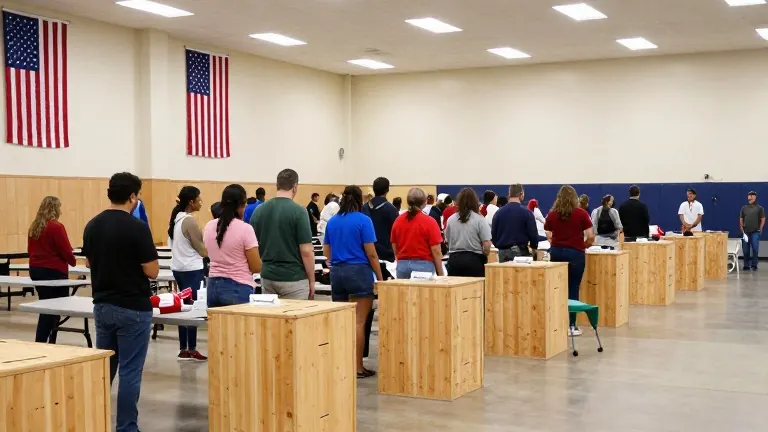
Voters across the United States delivered a decisive mandate on Tuesday, November 3, 2026, handing Democrats control of both the U.S. House of Representatives and the U.S. Senate. According to Ballotpedia, Democrats won 238 of the 435 House seats and 20 of the 35 Senate seats up for election, marking a dramatic shift in partisan balance. This outcome ended Republican control of the House, which they had held since the 2024 elections, and flipped the Senate majority from Republican to Democratic hands. The results reflect a broad national dissatisfaction with the current administration, with voters citing economic pressures and perceived government corruption as primary drivers for their choices.
Corruption topped the list of concerns for many voters who ousted Republicans in the midterms. The AP Voter Poll, which surveyed more than 100,000 voters nationwide, found that about half of U.S. Voters said government corruption was crucial to their vote for Congress. Most of those voters supported the Democratic candidate in their local U.S. House race. This sentiment was particularly strong among older voters, with about four in 10 voters aged 65 or older identifying the state of democracy as the top issue facing the country, compared with about three in 10 who cited the economy. Younger voters were more likely to prioritize economic concerns, but the overall trend showed a significant shift toward demands for accountability in Washington.
Senate Majority Leader-elect Chuck Schumer of New York stated that Americans want the new Democratic majority to clean up corruption in government. He emphasized that no American should have to make tradeoffs at the supermarket while the President makes inside trades on the stock market. Schumer is poised to return as Senate majority leader next year, and his party has vowed to use the subpoena powers and larger investigative staffs that come with their majorities to probe what they describe as self-enrichment by President Donald Trump and those in his orbit. The Republican President and his White House have long denied any wrongdoing, but the new congressional leadership is preparing a vast oversight agenda to examine how the Trump family has become wealthier since his return to office.
In the House, Democratic leader Hakeem Jeffries of New York, who is in line to become the new House speaker, has not ruled out trying to impeach President Trump for a third time. Jeffries tasked ranking Democrats on the Oversight and Judiciary committees, Rep. Robert Garcia of California and Rep. Jamie Raskin of Maryland, with leading the investigative effort. Garcia posted on X that Republicans should lawyer up as election results favoring Democrats began coming in. The Democratic plan links the costs of public corruption to the affordability concerns hitting Americans' pocketbooks. Investigation targets could include Immigration and Customs Enforcement raids, the administration's handling of the Jeffrey Epstein investigation, and the Department of Government Efficiency operations.
Sen. Richard Blumenthal of Connecticut, who is expected to become the chairman of the Homeland Security Committee's Permanent Subcommittee on Investigations, said his panel will look into Trump's real estate projects around the nation's capital and his crypto dealings with special envoy Steve Witkoff. Blumenthal stated said that the tentacles of corruption reach deep in this administration and have added costs to everyday Americans. He also wants hearings on ICE raids, the actions of the Department of Government Efficiency, and Medicare plans that he says are too restrictive and have cost some patients care. Sen. Ron Wyden of Oregon, in line to become Senate Finance Committee chairman, listed several investigative targets including banks that he contends ignored red flags about Epstein and pharmaceutical companies that have profited from their ties to the Trump administration.
The election results also highlighted the significant financial impact of Elon Musk's support for the Republican Party. The Associated Press reported that Musk spent at least $445 million to help Republicans keep control of Congress. Despite this massive investment, the Republican Party lost control of both chambers of Congress. Musk's companies, Tesla and SpaceX, saw their stock prices drop considerably on Wednesday, with Tesla wiping out about $40 billion in market capitalization and SpaceX losing about $40 billion in value. Musk lost about $45 billion in net worth on Wednesday. Investors are signaling jitters about the impact of the election on Musk's businesses, with worries that he may face congressional investigations contributing to the plunge in his firms' stocks.
In Texas, the first statewide win for Democrats in more than 30 years occurred as they secured control of the state House and the U.S. Senate. Democrats defeated Republican Gov. Greg Abbott and Republican Attorney General Ken Paxton, who effectively benefited from $158 million of Musk's spending but lost his Senate race against Democrat James Talarico. The AP Voter Poll found that slightly more than half of Texas voters had an unfavorable opinion of Musk. Democratic candidates in Texas framed the race as billionaires versus everyday Texans, targeting voters who were concerned about tax breaks and grants received by Musk's companies. Rep. Gene Wu, chairman of the newly empowered Democratic Caucus in the Texas state legislature, said the era of open corruption is going to come to an end.
The AP Voter Poll indicated that roughly four in 10 voters said the economy was the top issue facing the country, while about three in 10 said the state of democracy was the top issue. About 8 in 10 voters who said the state of democracy was the top issue supported the Democrat in their local race. This data suggests that while economic concerns remain prevalent, the perception of institutional integrity played a decisive role in the midterm elections. The new Democratic leadership in Congress plans to focus on corruption without ignoring cost-of-living issues, aiming to address both the structural problems in government and the immediate financial pressures facing American households. The coming months will see a flurry of oversight activity as the new committees begin their work.