Trump signs proclamation designating Oval Office as national monument
The order requires documentation for major changes but explicitly allows future presidents to redecorate, a move critics say mirrors Trump's own demolition of the East Wing.
By Emmanuel Faure ·
President Donald Trump signed a proclamation on Thursday declaring the Oval Office and the Cabinet Room a national monument. This was his first official executive action following the Republican defeat in Tuesday's midterm elections. The order aims to protect the physical structure of the White House's most iconic rooms from future alterations.
The proclamation places the management of the designated area under the Secretary of the Interior. It mandates that any action intended to substantially alter or demolish the monument must undergo documentation, review, and a consideration of alternatives. The document does not, however, restrict a president's authority to redecorate, select furnishings, or make ordinary operational and security modifications that do not substantially impair the historic structure or architectural character.
Trump described the order in protective terms during remarks at the White House. "It will not be allowed to be touched by anybody, destroyed, ripped down by stupid people, in order to build something in a slightly different shape," Trump said. He added, "We like the Oval Office, and it’s a symbol, like the White House itself."
The president suggested that any major changes to the room's shape or layout would require a review by Congress, although that specific requirement is not written into the proclamation's text. "If they want to say, 'Let’s not have oval anymore, let’s make it square,' what happens is they have to go back to Congress and hopefully the Congress, the people in Congress, will be smart enough not to let that happen," Trump stated. He noted that he previously demolished the East Wing of the White House to make room for his new ballroom.
This is the third day this week that the president has held remarks focused on his Washington projects. On Wednesday, he gathered reporters to sign the final beam for the construction of his ballroom. On Monday, he visited the Lincoln Memorial Reflecting Pool to discuss the renovation of that landmark. The sequence of events highlights the continued focus on physical changes to federal buildings despite the shift in congressional power.
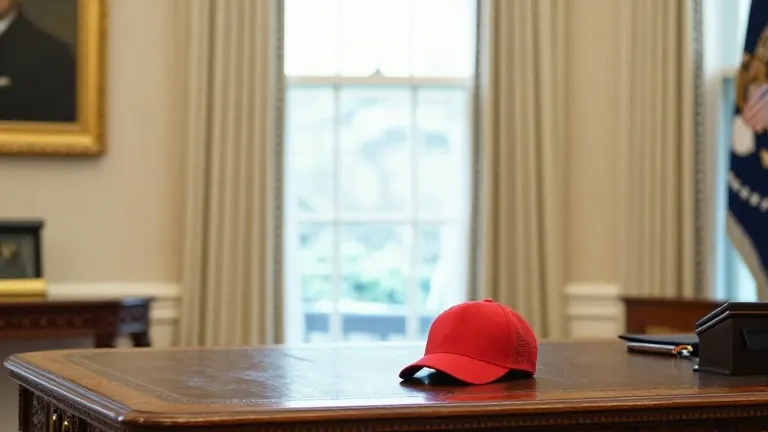
A red baseball cap with the word "VETO" on the front sat on the Resolute Desk as Trump signed the document. The placement served as a visual reference to the new balance of power in Congress following the elections. Trump has overseen numerous design changes since returning to office, filling the Oval Office wall space with portraits, a copy of the Declaration of Independence, and numerous golden accents.
During the event, Trump discussed the installation of new chandeliers in the Cabinet Room, which he said addressed "very bad lighting." He also pointed out gold wall appliqués and gold-framed portraits added to the Oval Office. He did not specify the exact threat he believed the room faced, but he said, "If anybody ever decides to come and start knocking down walls, you call me wherever I may be, and I’ll come back here and I’ll make sure it never happens."
The proclamation arrives as Democratic lawmakers prepare for increased scrutiny of the administration's projects. Richard Blumenthal, a Connecticut senator and the top Democrat on the Homeland Security Committee’s Permanent Subcommittee on Investigations, sent letters to known donors for Trump's ballroom on Thursday. The letters demand information from the donors or face "alternative measures to obtain compliance."
Trump has faced several lawsuits alleging that his Washington beautification projects proceeded without the necessary approvals. The new monument status adds a layer of federal oversight to the rooms, but legal experts note that future presidents can still reverse national monument designations. Trump himself reversed designations made by his predecessors during his first term.