Senate Stakes: The 13 Races Deciding Control in 2026
With 35 seats up for grabs, the math favors Republicans, but Democrats need just four net gains to seize the chamber.
By Alina Marshall ·

The United States Senate is the central arena of the 2026 midterm elections, with 35 of 100 seats on the ballot. This cycle includes 33 regular elections and two special elections for the remaining terms of Marco Rubio in Florida and JD Vance in Ohio. Republicans currently hold 53 seats, while Democrats hold 45, plus two independents who caucus with the minority party. The outcome of these races will determine which party controls the Senate for the final two years of President Donald Trump's second term.
The arithmetic of the Senate presents a distinct challenge for the majority party. According to Ballotpedia, Democrats need a net gain of four seats to achieve a majority. In contrast, Republicans can lose only two seats to maintain their control. This margin of safety is thin, making every contested district critical. Eleven senators, four Democrats and seven Republicans, are not running for re-election, which opens up significant opportunities for the opposition party in those states.
Thirteen races are currently rated as battlegrounds, according to Ballotpedia and major rating groups. These include open seats in Iowa, Michigan, Montana, New Hampshire, North Carolina, and Minnesota. Incumbents face tough re-election bids in Alaska, Georgia, Kansas, Maine, Nebraska, and Ohio. The ratings have shifted frequently, with Maine currently considered a toss-up on all four major rating scales. Iowa is rated as a toss-up or tilting Republican, while Kansas and Alaska are seen as leaning Republican or Democratic respectively.
The Associated Press and PBS NewsHour have highlighted several key matchups that could swing the chamber. In North Carolina, former Governor Roy Cooper faces former RNC chair Michael Whatley in the seat vacated by Thom Tillis. In Georgia, incumbent Jon Ossoff runs against Representative Mike Collins. The race in Ohio features former Senator Sherrod Brown against incumbent Jon Husted. Michigan sees former Representative Mike Rogers competing against Abdul El-Sayed, with recent endorsements adding to the volatility of the contest.
In Texas, Republican Attorney General Ken Paxton, who was backed by President Trump over Senator John Cornyn in the primary, faces Democrat James Talarico. The AP notes that the race in Maine is competitive due to economic strain and tariffs, with Senator Susan Collins running against former State Senate President Troy Jackson. New Hampshire features a contest between Representative Chris Pappas and former Senator John E. Sununu for the seat of retiring Jeanne Shaheen. Minnesota's open seat has drawn attention, with candidates including Lieutenant Governor Peggy Flanagan and former broadcaster Michele Tafoya.
Kansas, traditionally a reliable Republican stronghold, has become central to the fight for Senate control. The state is rated as a toss-up to lean Republican, making it a primary target for Democrats. Alaska presents another interesting dynamic, with the Trump administration filing a lawsuit related to the certification of the Senate result. The state is rated as a toss-up to lean Democratic, a shift that reflects the changing political landscape in western states. These ratings are fluid and subject to change as polls close across the country.
The mood among voters is characterized by economic anxiety and frustration with the administration. AP-NORC polling indicates that 35% of U.S. adults approve of Trump's job performance, while only 25% approve of his handling of the economy. About 7 in 10 respondents believe the country is heading in the wrong direction. These sentiments are likely to influence turnout, with Republicans bracing for a potential loss in the House while fighting to hold the Senate. Democrats are described as cautiously optimistic, relying on their performance in key battleground states.
Money has played a significant role in shaping the campaign. The 2026 elections are projected to be the most expensive in history. Republican committees have outraised and outspent Democratic committees at the committee level, aided by Trump-affiliated groups and Elon Musk. However, at the candidate level, Democrats have outraised their opponents. Analysis of AdImpact data shows that 88.1% of Republican general election TV ad spending went to states and districts Trump won in 2024, including more than $850 million in areas where he won by 10 points or more. This strategy aims to protect the base while contesting the swing states.
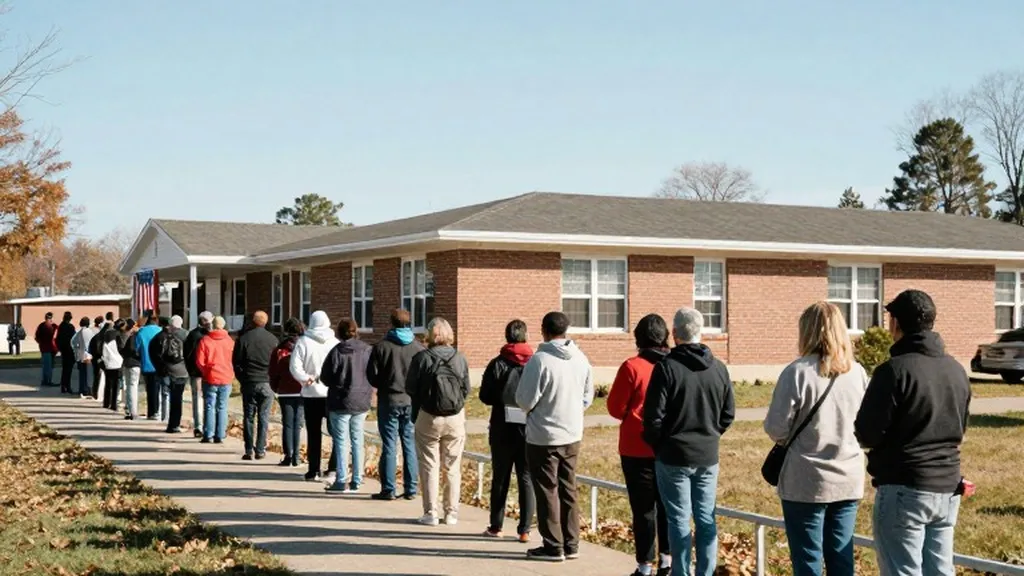
Election administration has been a point of contention, with federal judges intervening in several states. A judge temporarily barred the Trump administration from a plan to prevent noncitizen voting, while another ordered the administration to stop demanding that California segregate ballots of suspected noncitizens. The U.S. Postal Service has added resources to ensure mail ballots are counted on time. These legal and logistical developments add layers of complexity to an already high-stakes election, with voters in line at the close of polls entitled to cast their ballots regardless of state ID rules.
The stakes extend beyond immediate control of Congress. If Democrats win even one chamber, investigations and possible impeachment proceedings become likely. House Democratic Leader Hakeem Jeffries, who would be the first Black speaker if the Democrats take the House, has outlined a 100-day agenda focused on the cost of living and oversight. A strong Democratic night could also boost potential 2028 candidates like Gavin Newsom, JB Pritzker, and Pete Buttigieg, while complicating the path for Vice President JD Vance. Republicans, however, are trying to break the traditional midterm pattern where a president's party loses seats, relying on new redistricting maps in states like Florida and California.
As polls close across the nation, the focus turns to the 13 battleground states that will decide the fate of the Senate. The combination of open seats, competitive incumbents, and intense campaigning makes this one of the most unpredictable Senate elections in recent memory. The final tally will reveal whether the minority party can overcome the structural advantage of the majority or if the status quo will be maintained. The next two years of American governance will be defined by the outcome of these specific races.