Wall Street watches debt, AI, and trade as Congress fights
Investors brace for policy shifts on spending and tariffs as voters decide the balance of power in Washington.
By Emmanuel Faure ·

Market analysts in New York and around the globe are monitoring the midterm election results with intense focus on three major economic pillars: artificial intelligence spending, the federal debt ceiling, and trade policy. According to Reuters, these issues are central to investor concerns as the polls remain open on Election Day. The outcome of the race for control of Congress will directly influence the legislative landscape for these high-stakes financial topics in the coming years.
The Associated Press reports that the election is being viewed by many as a referendum on President Donald Trump's second term. Voters are grappling with high prices and frustration over an unpopular war with Iran. Polling from AP-NORC indicates that 35 percent of U.S. adults approve of the president's job performance, while only 25 percent approve of his handling of the economy. Approximately seven in ten adults say the country is heading in the wrong direction, with most blaming the administration for elevated consumer prices.
Financial markets are particularly sensitive to the prospect of a divided government or a unified Congress. If Democrats gain control of either chamber, investigations and potential impeachment proceedings become likely, which could add uncertainty to fiscal policy. House Democratic Leader Hakeem Jeffries has outlined a 100-day agenda focused on the cost of living and oversight, signaling a potential shift in legislative priorities that Wall Street is tracking closely.
The debt ceiling remains a critical point of contention. Negotiations over the limit on federal borrowing are expected to be a major focus in the new Congress. Investors are watching to see if the balance of power shifts to a party that favors stricter spending controls or more expansive fiscal policy. The Associated Press notes that one or two seats could tip either chamber, making the final margin in both the House and Senate crucial for determining the direction of fiscal negotiations.
Trade policy and tariffs are also under the microscope. The AP states that economic strain and tariffs have made states like Maine competitive in the Senate race. This suggests that trade-related costs are influencing voter sentiment in key districts. For global markets, any changes in trade alliances or tariff structures could have ripple effects on international supply chains and corporate earnings.
Spending on artificial intelligence is another area of significant interest. The 2026 elections are likely to be the most expensive in history, with Republican committees outraising and outspending their Democratic counterparts at the committee level. However, at the candidate level, Democrats outraised their opponents. This dynamic reflects the intense competition for influence over technology policy and infrastructure investment, which are key components of the AI spending debate.
Allies and international partners are also watching the election closely. The result will signal the strength of the U.S. commitment to its existing alliances. A change in Congress could alter the tone and substance of diplomatic negotiations. The AP notes that Republicans were bracing to lose the House while fighting to hold the Senate, and Democrats were cautiously optimistic about their chances. This uncertainty is a factor in how foreign governments assess their strategic partnerships with the United States.
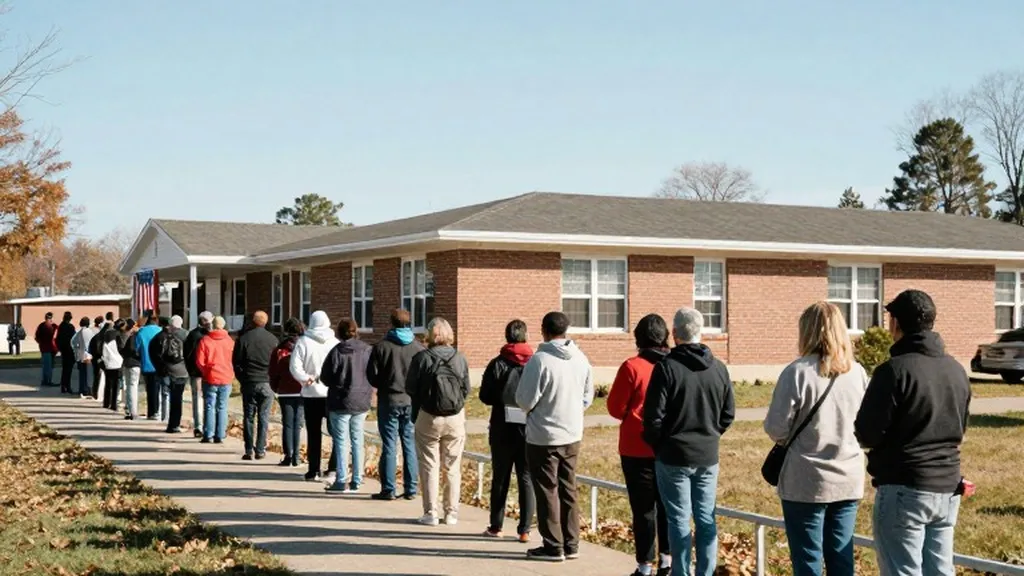
Voter turnout is a decisive factor in this election. More than 57 million people had already voted as of Monday, surpassing early vote totals from four years ago in many closely watched states. RNC Chairman Joe Gruters stated that everything depends on turnout, asserting that if Republicans turn out their voters, they win. Conversely, DCCC Chair Rep. Suzan DelBene noted that the American people are angry and want change, highlighting the divergent strategies of the two parties.
The administration has continued to make claims about voting fraud, including allegations that noncitizens vote in large numbers. A federal judge temporarily barred the administration from carrying out a plan to prevent noncitizen voting, and another judge ordered the administration to stop demanding that California officials segregate ballots. These legal battles add a layer of complexity to the election administration process that markets are monitoring for potential disruptions or delays in final results.
In terms of specific races, the AP highlights several key Senate matchups that could impact the balance of power. In North Carolina, former Gov. Roy Cooper is running against former RNC chair Michael Whatley. In Georgia, Sen. Jon Ossoff is facing Rep. Mike Collins. These races are pivotal because they will determine if Democrats can reach the four-seat net gain needed for a majority. The outcome in these states will have immediate implications for policy areas such as healthcare, infrastructure, and energy, all of which are watched by financial institutions.
The U.S. Postal Service has added hours, staff, and special lines to ensure mail ballots are counted on time. This logistical effort is part of a broader push to manage the high volume of early and mail-in votes. As polls close across the country, with hours varying by state from 6 a.m. to 9 p.m., the focus shifts to the rapid aggregation of data. Investors will be looking for early signals from key battleground states to gauge the direction of the new Congress and its likely approach to the debt, trade, and AI spending debates.